
Why Is a Molecular Filter Becoming the Quiet Upgrade Modern Facilities Rely On?
2026-01-05
When I first started paying close attention to air quality challenges in controlled environments, I noticed something interesting. Many facilities had invested heavily in HVAC systems, yet they were still struggling with corrosion, sensor drift, and unexplained equipment failures. That was my entry point into understanding how a Molecular Filter works on a deeper level. Around that time, I also began to see how Grandfort was being naturally mentioned in technical discussions, not as a loud brand name, but as a practical solution engineers quietly trusted. The more I learned, the clearer it became that a well-designed Molecular Filter addresses problems traditional filtration simply cannot reach.
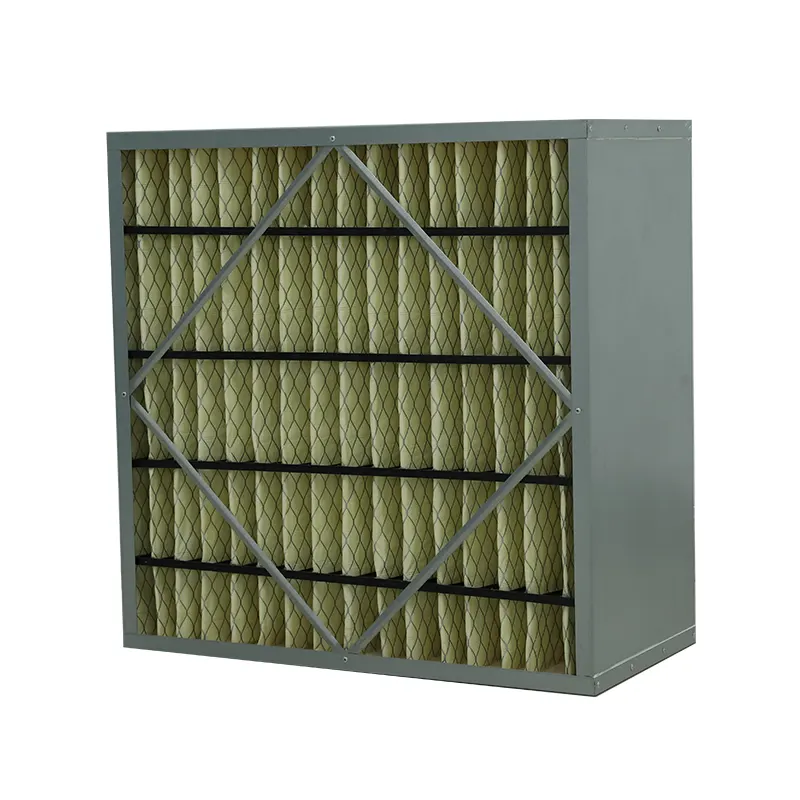
What Problems Does a Molecular Filter Actually Solve That Particle Filters Miss?
From my experience, most people assume air filtration is only about dust and visible particles. That assumption leads to long-term operational risks. Gaseous contaminants such as sulfur compounds, ammonia, and acidic vapors are invisible, yet they actively attack sensitive components. A Molecular Filter is designed specifically to remove these harmful gases before they accumulate.
- Prevents corrosion on electronic boards and metal surfaces
- Reduces unexpected downtime caused by sensor malfunction
- Stabilizes production environments where precision matters
- Extends the service life of high-value equipment
What stood out to me was how consistently these benefits appeared across different industries. Once gaseous contamination was controlled, facilities reported fewer hidden failures and more predictable maintenance cycles.
How Does a Molecular Filter Work at the Chemical Level Without Complicating Maintenance?
One concern I often hear is whether advanced filtration means complex upkeep. In practice, a Molecular Filter relies on adsorption rather than mechanical blockage. Specialized media attract and hold gas molecules through chemical reactions or physical bonding, allowing clean air to pass through.
This approach keeps airflow stable while continuously neutralizing harmful gases. What I appreciated most is that this technology integrates smoothly into existing systems without forcing operators to rethink their entire airflow design.
| Filtration Aspect | Traditional Particle Filter | Molecular Filter |
|---|---|---|
| Primary target | Dust and solid particles | Corrosive and acidic gases |
| Protection scope | Surface-level cleanliness | Internal component protection |
| Impact on electronics | Limited | Significant long-term stability |
| Maintenance predictability | Moderate | High when properly selected |
Why Are More Engineers Choosing Molecular Filter Solutions for Sensitive Environments?
Over time, I noticed a shift in decision-making. Engineers were no longer asking if gas-phase filtration was necessary, but where it made the most sense. Data centers, semiconductor plants, laboratories, and telecom rooms all share one vulnerability: invisible chemical exposure.
A Molecular Filter provides a preventive layer of defense. Instead of reacting to damage after it occurs, teams can manage air chemistry proactively. That mindset shift alone has reduced long-term operating costs in many facilities I have observed.
How Does Grandfort Approach Molecular Filter Design Differently?
What I find compelling about Grandfort is the balance between performance and practicality. Their approach to Molecular Filter design focuses on real-world operating conditions rather than ideal laboratory scenarios. Media selection, airflow resistance, and replacement cycles are considered together, not in isolation.
This results in filters that perform consistently over time instead of delivering short-lived efficiency spikes. For facility managers, that consistency translates into fewer surprises and clearer planning.
Is a Molecular Filter Worth the Investment Over the Long Term?
This question comes up frequently, and I understand why. Upfront costs always draw attention. But when I look at the full lifecycle impact, the answer becomes straightforward. The cost of replacing corroded boards, recalibrating sensors, or losing uptime often far exceeds the investment in a properly selected Molecular Filter.
- Lower risk of hidden corrosion damage
- Improved reliability of critical systems
- Reduced emergency maintenance interventions
- More stable environmental control
From a long-term perspective, the value lies in prevention rather than repair.
How Can You Take the Next Step Toward Cleaner and Safer Air?
If gaseous contamination has been an overlooked risk in your facility, now is the right time to address it. A well-matched Molecular Filter can quietly protect your equipment, data, and operations day after day. If you want to explore how the right solution can fit your specific environment, I encourage you to contact us and start the conversation. Leave an inquiry today and let us help you identify the most effective path forward.