
Yushui Village Lijiang Worth Visiting: A First-Timer's Guide
2026-10-28
Tucked away beneath Jade Dragon Snow Mountain, Jade Water Village is the Lijiang you won’t find on every postcard—it’s the quiet, turquoise-streamed secret locals try to keep. Before you follow the crowds into the old town, give this stone-paved escape a chance. Here’s what every first-timer needs to know.
The Road Into Yushui Village Already Feels Different
The moment you leave the main county road and turn onto the narrow lane leading to Yushui Village, the change is immediate. The asphalt gives way to packed earth and river stone, and the edges blur with wild mint and overgrown tea shrubs. There’s no sign pointing the way—only a rusted hand-painted board nailed to a camphor tree, half-hidden by vines. Even the air shifts: cooler, heavier with the smell of wet bamboo and woodsmoke, as if the village keeps its own weather tucked behind the hills.
The road curves steeply, forcing you to slow down, and that’s when you notice the details you’d miss at speed. Stone retaining walls are patched with moss and old roof tiles. Small shrines, no bigger than shoeboxes, sit at sharp turns with offerings of rice and half-burned incense. Every few hundred meters, a break in the trees opens to a view of terraced paddies falling away into mist, their surfaces broken by white egrets standing still as paper cutouts.
By the time you reach the first cluster of houses, the feeling is less like arriving and more like being let in on a secret. Chickens scatter from the lane, a dog watches from a warm stone step without barking, and an elderly woman waves not as a greeting but as if she expected you all along. The road doesn’t just lead to Yushui Village—it prepares you for a place that has kept its own rhythms while the world outside rushed forward.
Steps and Stone Lanes Worth Wandering Slowly
Some paths seem designed to hush your pace. In older quarters, narrow stone lanes climb between sun-warmed walls, their surfaces worn smooth by centuries of unhurried footsteps. Each turn offers a small decision: ascend a cracked stairway to a shuttered doorway or follow the lane as it dips toward a patch of shade. There is no need to rush here; the stones themselves carry the memory of slower days.
Wandering slowly brings its own rewards. You begin to notice the way ferns root in mortar joints, how a single window box spills red geraniums over a pale facade, or where a cat has claimed a sunlit step as its throne. In the late afternoon, the light rakes across the lane and deepens every irregularity, turning a simple walk into a quiet conversation with the place itself.
A Naxi Kitchen, an Open Door and a Shared Pot of Tea
In the stone-paved lanes of Lijiang's old town, a Naxi kitchen rarely has a locked door. The hearth burns low beneath an iron tripod, and a blackened clay pot sits always at the edge of the coals. Neighbors wander in without knocking, pull up a low wooden stool, and wait for the first pour of aged Pu'er tea. The hostess doesn't ask why you came—she simply fills your cracked porcelain cup, slides a plate of fried goat cheese toward you, and goes back to shredding dried chili on the cutting board. The kitchen smells of woodsmoke, fermented bean paste, and the faint sweetness of yak butter.
This shared pot of tea is more than a drink; it's a quiet contract. A Naxi grandmother once told me, her hands kneading buckwheat dough, that the first cup is for the guest, the second for the family, and the third for the ancestors who still sit at the table in memory. When you leave, the door stays open. Later, a child might run in to borrow salt, or a traveling monk might rest his staff by the threshold and drink from the same pot, uninvited but never unwelcome. The tea has cooled by then, but the conversation keeps it warm.
In this kitchen, time moves differently. The metal kettle hisses not because it's electric, but because the fire has decided to wake. You might stay for an hour or a whole afternoon, and no one checks a phone or glances at the door as if to hurry you. When you finally rise, the hostess pours a last cold cup onto the packed-earth floor—a small offering to the spirit of the hearth—and then refills the pot for whoever comes next. That open door and shared pot are the Naxi way of saying: there is always enough, and you are always known here.
The Upper Terraces Where the Crowd Thins Out
Up here, the noise of the lower levels fades into a distant murmur, like a radio left on in another room. The stone steps are wider, worn smooth by fewer feet, and the air feels thinner, as if the city itself is holding its breath. You notice small things—a crack in the parapet where a weed has taken root, the way the afternoon light pools in the corner of a locked doorway. Nobody jostles you for a better view; the view simply is, vast and indifferent, and for a moment you belong to it rather than the other way around.
The upper terraces have a way of rearranging your sense of scale. Below, the crowds move like a single animal, heads swiveling in unison toward the same landmarks. But here, you can pick out individual sounds: the dry scrape of a pigeon’s wing against stone, the soft click of a shutter from a photographer half-hidden behind a pillar. The shadows stretch longer, and the temperature drops a degree or two—just enough to remind you that you have climbed out of the crush and into a place where patience is rewarded with silence.
There is no rush to descend. The benches are empty, their green paint flaking in a way that feels deliberate, and a stray cat dozes on a ledge, unbothered by your presence. You could sit for an hour and watch the crowd below thin out as evening approaches, spilling into side streets and restaurants, while the terraces hold the last of the daylight. It’s the kind of place that doesn’t ask to be photographed or described—it just waits, quietly, for the few who bother to climb this far.
Pausing by the Village Spring Instead of Rushing Past
There is a particular kind of quiet that settles over a village spring in the early morning, before the sun climbs too high and the day takes on its usual urgency. The water moves with a patience that has nothing to do with schedules or destinations, and if you stand there long enough, you begin to notice the small dramas that unfold around it—the way a dragonfly hovers just above the surface, the slow uncurling of a fern near the stone basin, the way your own reflection wavers and then returns. Most people hurry past places like this, their minds already fixed on the next town or the next task, but to pause here is to remember that some things only reveal themselves when you stop asking them to be useful.
The spring itself is not grand or remarkable by any guidebook standard. It does not cascade dramatically or attract crowds with its roar. Instead, it offers a steady, almost shy trickle from a moss-lined crack in the rock, forming a clear pool no larger than a kitchen table. Yet there is a completeness to it—a sense that this small source has been doing exactly this for longer than anyone can name, and will continue long after we are gone. When you sit on the worn stone edge and let your fingers trail in the water, you feel the cold bite of it travel up your arm, a gentle shock that pulls you out of your own thoughts and into the present.
Perhaps the real reason we rush past springs is that they ask nothing of us, and in a world that constantly demands our output, such stillness can feel almost unsettling. But if you choose to stay, even for ten minutes, you may find that the village spring becomes a kind of teacher. It does not lecture or persuade. It simply keeps flowing, indifferent to whether you notice it or not. And in that indifference there is a strange freedom—the freedom to be, without proving anything, without arriving anywhere. That is what you find when you pause by the spring instead of rushing past: not a destination, but a different way of moving through the rest of your day.
Heading Back to Lijiang Before the Late Afternoon Rush
Leaving Baisha village just after 3 p.m. makes a real difference. The shared minivans that wait near the old mural hall fill up quickly with locals heading back to the city, and once the school run starts around 4:30, the two-lane road past Qingxi Reservoir turns into a slow ribbon of brake lights. Grab a window seat on the left side for a last view of Jade Dragon Snow Mountain before the bus drops into the northern edge of Lijiang's old town.
Back inside the old town before the late afternoon rush, the alleys are still quiet enough to wander without elbows. I usually walk straight to the waterwheel, then slip south along the narrow canal past the bakeries on Wuyi Street. A bowl of cold buckwheat noodles from a family stall near the stone bridge tastes better when you are not jostling for space. By the time the tour groups flood in around five, you have already found a rooftop corner to watch the sun slide behind Lion Hill.
FAQ
If you're at all curious about Naxi culture, yes. The village feels far less commercial than the old town and gives you a direct look at Dongba traditions, from pictograph writing to small ritual offerings near the springs. It's compact, so two hours is plenty unless you stop for tea or to watch a craftsman work.
Lijiang Old Town is mostly about shops, food, and nightlife. Baisha has the famous murals and a laid-back village vibe. Yushui Village is more of a living cultural site built around water flowing straight out of the mountain. You'll see Dongba priests, terraced pools, and prayer flags all in one compact loop.
A taxi or ride-hailing car is the easiest option and usually takes twenty to thirty minutes depending on traffic. There is also a local bus, often the number 6, that stops near the entrance, but it's worth asking your guesthouse to write the stop name in Chinese because routes can change seasonally.
Bring a hat, sunscreen, and a light layer even in summer since the village sits close to the mountains and can turn breezy. Wear shoes with decent grip because some paths and steps near the water get slippery. Cash is handy for small purchases or donations, though many stalls also accept mobile payment.
Treat the water features as sacred spaces and do not climb on the terraced pools, wade, or disturb the small offerings left by locals. If you see a ceremony or a Dongba priest writing pictographs, it is polite to ask before taking close-up photos. Dressing modestly is appreciated around ritual areas.
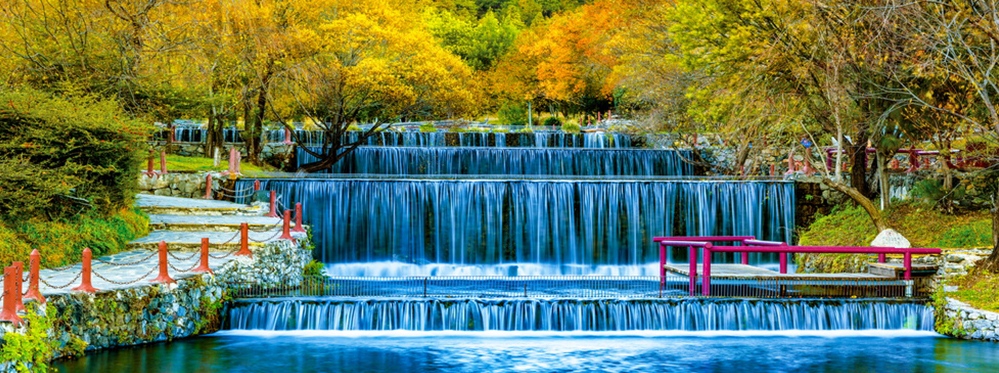
Yes, the water emerges near the base of the mountain and flows down through a series of clear, cold terraced pools. It is one of the most peaceful parts of the village. You will often see prayer flags and small carved stones nearby, so give that area a little extra quiet time.
Most people follow the main path and leave without seeing the quieter upper sections where Dongba paper is made by hand. There is also a small teahouse near the entrance serving locally grown tea that is easy to miss if you arrive with a tour group. Slowing down for an extra twenty minutes there can make the visit feel much more personal.
Conclusion
The first hint that Yushui Village isn't an ordinary stop comes on the winding road in, where the noise of Lijiang thins and the valley opens into a quieter rhythm. Once inside, the real invitation is to slow down. The stone lanes and uneven steps are not made for hurrying; they unfold past courtyards, drying crops, and the occasional donkey cart. A first-timer quickly learns that the village rewards those who pause. One open doorway might lead to a Naxi kitchen where a kettle sits over coals and an older resident gestures for you to sit. Sharing a cup of tea here isn't a performance for visitors—it's simply how the day works, and that ease leaves a stronger impression than any ticketed sight.
For a fuller sense of the place, climb toward the upper terraces. Fewer tour groups make it this far, and the view over rooftops and fields comes with a silence that the lower lanes lack. It's also worth stopping at the village spring rather than treating it as a photo point. Watch how locals fill buckets, rinse vegetables, and trade small talk. That ordinary scene is the village's pulse. As the afternoon wears on, the smart move is to leave before the late rush back to Lijiang builds. Heading down while the light softens on the hills gives you a calm exit, carrying the village's slower tempo with you instead of fighting traffic.
Contact Us
Contact Person: Changhong He
Email: [email protected]
Tel/WhatsApp: 086-0888-5190152
Website: https://vip.e-baixing.com/ysh