
Wholesale Laser Safety Curtain: Your Comprehensive Guide to Industrial Protection Solutions
2026-06-09
In today's fast-paced industrial environments, safeguarding personnel and equipment is non-negotiable. Laser safety curtains play a pivotal role in creating secure, controlled workspaces, but choosing the right solution can be daunting. Whether you're in manufacturing, automation, or research, understanding how these barriers function is key to enhancing workplace safety and efficiency. At LASERPAIR, we combine cutting-edge technology with robust design to deliver protection you can rely on. This guide breaks down everything you need to know—from selection criteria to installation best practices—so you can make informed decisions with confidence.
Understanding Laser Safety Curtain Materials and Certifications
Laser safety curtains rely on specialized materials engineered to block or attenuate specific wavelengths. Common options include polycarbonate blends, acrylics, and laminated fabrics infused with optical filters. Each material offers a distinct balance of optical density, impact resistance, and flexibility, allowing for tailored protection in welding cells, research labs, and medical suites. The choice often depends on laser power, beam diameter, and whether the setup requires rigid panels or flexible roll-up curtains.
Certifications serve as a shorthand for performance under fire—literally. In the U.S., ANSI Z136 standards outline testing protocols, but the curtain itself should carry labels like OD (Optical Density) ratings at specified wavelengths, along with fire-resistance classifications such as NFPA 701 or EN 13501. European markets lean on CE marking and EN 60825-4, which demand rigorous testing for both optical and mechanical durability. Without these stamps, even a thick curtain might fail catastrophically within seconds of an accidental exposure.
A common oversight is ignoring environmental factors that degrade materials over time. UV exposure, chemical fumes, and abrasive cleaning can erode protective layers long before a scheduled inspection. Facilities often pair initial certification with periodic re-evaluation—think handheld power meters testing optical density at the edges—because a curtain that passed fire tests three years ago might now harbor micro-cracks invisible to the naked eye. Matching material composition to the real-world conditions isn't just compliance; it's what keeps a stray beam from becoming a reportable incident.
Key Applications Across Industries: From Manufacturing to Medical
The versatility of this technology is evident in manufacturing, where automated quality checks now catch microscopic flaws in real time, dramatically reducing waste. By integrating intelligent vision systems directly onto assembly lines, factories are achieving precision that manual inspection simply cannot match, while also accelerating production cycles.
In healthcare, the impact is equally transformative. Surgeons rely on enhanced imaging during delicate procedures, accessing layered, high-contrast views that make even the smallest anomalies stand out. This isn’t just about sharper pictures—it’s about giving medical teams a new level of confidence that directly influences patient outcomes, from earlier diagnoses to more successful surgeries.
Beyond these sectors, the same core capabilities are reshaping agriculture and logistics. In farming, drones equipped with advanced visual processing analyze crop health down to individual plants, enabling targeted interventions that save water and nutrients. Meanwhile, in sprawling warehouses, autonomous vehicles navigate and sort packages with a fluidity born from seeing and interpreting their surroundings in three dimensions, turning chaos into organized flow.
Customization Options for Bulk Purchases: Tailored Protection
When ordering in large volumes, one size rarely fits all—and that’s especially true when it comes to protective solutions. Our bulk purchase customization lets you dial in exactly what you need, from material thickness and density to color coding by department or risk level. Need cut-resistant gloves with extra grip on the palm and breathable backs? Or disposable coveralls with reinforced seams and oversized hoods for visor compatibility? The spec sheet becomes your playground, and our production team treats it like a blueprint, not a suggestion.
We also get that packaging and labeling can make or break a deployment. So beyond the product itself, you can choose how each unit arrives—individually wrapped, in bulk-kit dispensers, or asset-tagged for your inventory system. Brand imprinting, safety reminders, even QR codes linking to training videos can be embedded right at the factory. It’s less about selling boxes and more about shipping a ready-to-use system that fits the workflow you already have, not one you’d need to build from scratch.
What really sets this apart is the iterative approach we take. Instead of forcing a preset menu of tweaks, we start with your operational reality: the work environment, common failure points, compliance standards, and user feedback. Then we go back and forth until the sample batch feels like it was designed in your own conference room. The result is protective gear that doesn’t just meet a generic standard—it meets your standard, scaled efficiently across thousands of units without the usual complexity or delay.
Installation Best Practices for Maximum Safety and Compliance
Before you start unboxing, take a few minutes to read through the manual—really read it. It might seem like common sense, but many accidents stem from overlooking a manufacturer's specific sequence or torque spec. Local building codes can also throw a curveball, so cross-check your plans against the latest requirements. A call to the permitting office can save you a costly redo later.
On site, clear the area and use the right personal protective equipment: gloves, safety glasses, steel-toed boots. Even if you think it’s a quick job. When lifting, get help for anything awkward or heavy—back injuries are far too common and completely avoidable. Keep your workspace organized; a stray cord or tool can cause a fall nobody expected.
After the hardware is in place, test gradually rather than at full capacity right away. Check for leaks, unusual vibrations, or anything out of alignment. Document your work with photos and a brief log. This isn’t just about covering yourself; it provides a reliable reference for maintenance down the line. If something ever gets questioned, you’ll have proof that every step followed the rules.
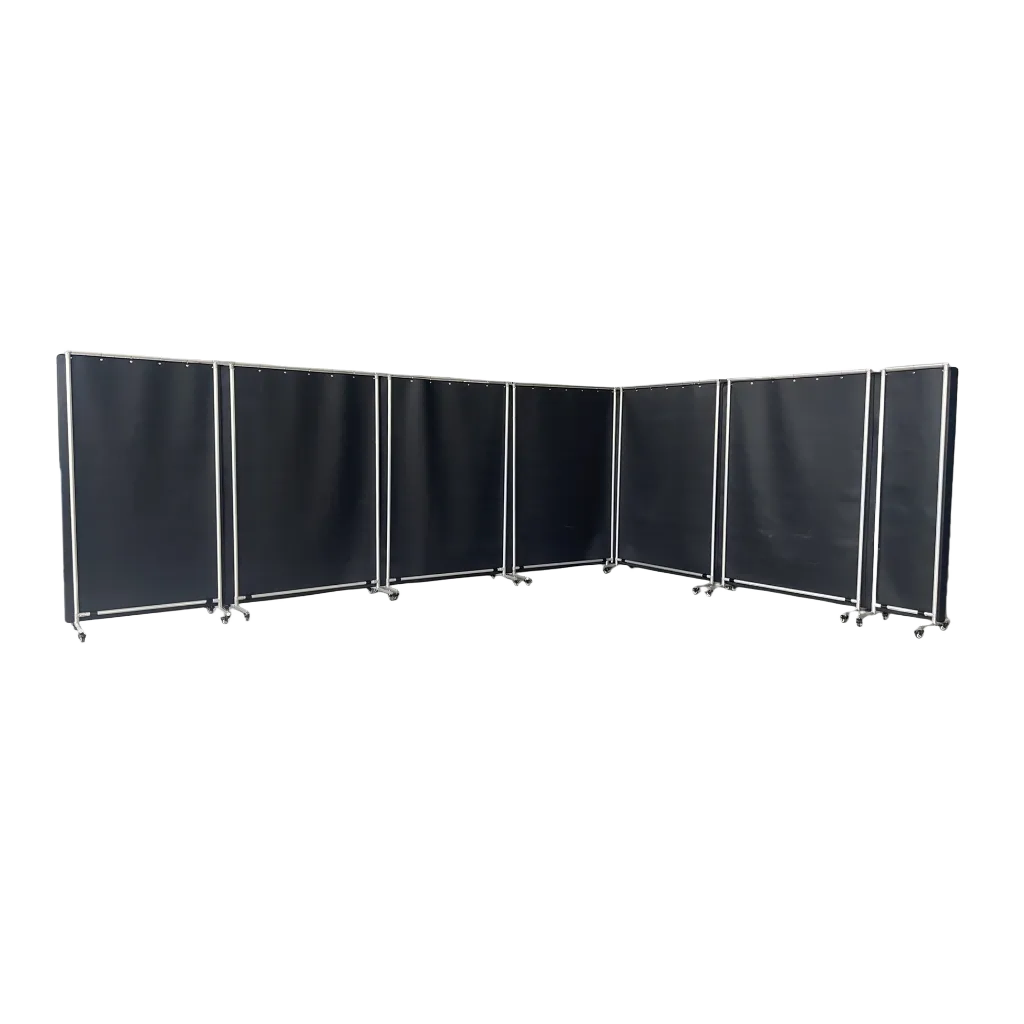
Comparing Curtain Types: Fixed, Sliding, and Modular Systems
Fixed curtain setups often appeal to those who crave a clean, unbroken line across a window. They mount directly onto a frame or wall, offering a permanent solution that rarely shifts. This rigidity makes them ideal for spaces where the curtain never needs to move, like a decorative side panel flanking a stationary glass pane. On the flip side, anything beyond a light dusting means wrestling the whole panel down for a wash, which can be a hassle in hard-to-reach places.
Sliding systems trade that permanence for movement. Running along a track, they let you easily pull a curtain across a window or a room divider without any lifting. It’s a practical choice for patio doors or wide spans, though the tracks can accumulate grit over time and may need occasional lubrication to stay silent. Not every track holds up equally well under heavy fabrics, so pairing materials thoughtfully matters—a flimsy aluminum rail with thick velvet will sag sooner rather than later.
Modular systems bring adaptability to the table, letting you clip in liners, blackout layers, or sheer panels as the light and season change. Instead of committing to one look, you can swap out sections in minutes. The catch is that all those extra pieces need somewhere to live when not in use, and the upfront cost can sting more than a straightforward rod or track. Still, if you like the idea of tweaking your window’s personality without a full redo, modular designs earn their keep in versatility.
Maintenance and Longevity: Ensuring Durable Protection
The true test of any protective solution isn’t how it performs on day one, but how it holds up over months and years of real-world use. Materials degrade, coatings wear thin, and environmental factors slowly chip away at even the most robust barriers. To truly safeguard what matters, it’s essential to adopt a regimen that addresses both the visible signs of wear and the hidden vulnerabilities that develop over time. Regular inspection routines can catch small cracks or thinning areas before they become critical failures, while proactive cleaning removes substances that might otherwise accelerate deterioration.
Material choice plays a foundational role in long-term resilience. Surfaces exposed to UV radiation, temperature swings, or chemical contact demand tailored treatments that won’t break down prematurely. For instance, polymer-based sealants often outperform traditional waxes because they bond at a molecular level, creating a flexible shield that moves with the substrate instead of flaking away. Pairing the right product with a consistent application schedule—whether it’s twice a year for exterior coatings or quarterly for machinery—creates a rhythm that becomes second nature, drastically extending the functional life of the protected item.
Ultimately, durability isn’t a one-time purchase; it’s a habit. Documenting maintenance actions, noting dates and conditions, builds a personalized history that reveals patterns and anticipates needs. This mindful approach turns protection from a reactive chore into a deliberate practice, ensuring that every layer of defense continues to serve its purpose long after the initial application. Over time, these small, intentional efforts compound, preserving both appearance and structural integrity far beyond typical expectations.
FAQ
It's a flexible barrier crafted from specialized fabrics that absorb or reflect laser radiation, creating a safe perimeter. When a laser beam hits the curtain, the material prevents dangerous exposure by containing the energy within a controlled area.
Bulk purchasing drives down the price per unit considerably, which matters for large facilities needing extensive coverage. It also streamlines procurement for multi-site operations and often unlocks bespoke fabrication options from the manufacturer.
They usually feature multi-layer composites like silicone-coated fiberglass or aluminized fabrics. These choices offer high thermal resistance, durability against repeated impact, and compatibility with different laser wavelengths.
Many providers offer made-to-measure solutions, including cutouts for cables, angled panels, or overlapping sections. This flexibility means you don't have to redesign your workspace around stock dimensions.
The OD rating corresponds to how much light the curtain blocks at a specific wavelength. A laser safety officer typically calculates the required OD by considering the laser's output power, beam diameter, and the distance from the source to the curtain.
Quality curtains are engineered to satisfy guidelines like ANSI Z136.1 in the U.S. or the EN 12254 series in Europe. Ask for test reports to confirm they meet the exact attenuation levels cited on the label.
Inspect them monthly for surface damage, discoloration, or mounting hardware wear. Clean gently with mild soap and water to avoid degrading the protective coating, and replace modules that show any sign of delamination.
Some versions include UV-stabilized outer layers and sealed edges for outdoor deployment. However, prolonged contact with oils, solvents, or extreme humidity can degrade performance, so always verify the environmental ratings with the supplier.
Conclusion
Investing in wholesale laser safety curtains means looking beyond basic barriers to a system that aligns with your facility's specific risks and workflow. Material selection is the foundation—polycarbonate and acrylic panels offer optical clarity for visible lasers, while specialized fabrics embedded with metallic coatings block higher-power beams and resist punctures. Certifications like EN 60825-4 or ANSI Z136 compliance aren't just checkboxes; they confirm the curtain can withstand direct hits for defined durations. Across industries, these solutions adapt: in automotive welding cells, curtains shield against stray reflections, while in medical aesthetics clinics they create flexible procedure zones that contain Class 4 lasers without sacrificing patient throughput.
Bulk purchases unlock customization that off-the-shelf products rarely provide, from exact dimensions for seamless floor-to-ceiling coverage to integrated viewing windows and interlock-ready frames. Installation hinges on mapping laser hazard zones accurately—anchoring tracks into structural ceilings and overlapping panels prevent scatter leakage. Fixed walls suit permanent enclosures, sliding tracks optimize tight spaces, and modular designs let you reconfigure as production lines shift. Longevity depends as much on regular inspection as on material choice: even the toughest curtains degrade under continuous high-intensity exposure, so maintenance schedules based on hours of laser operation rather than calendar months keep protection reliable and audit-ready.
Contact Us
Contact Person: Jenny
Email: [email protected]
Tel/WhatsApp: +86 13537713281
Website: https://www.laserpair-safety.com/