
Ultrasonic Nozzle Companies Transforming Precision Spray Applications
2026-09-08
Precision spray applications have quietly become the backbone of modern manufacturing—from coating medical devices to applying thin films in electronics. Yet most engineers still rely on outdated nozzle designs that waste fluid and compromise consistency. That's where ultrasonic nozzle companies are stepping in, and Siansonic is leading the charge. In this post, we explore how these innovators are rewriting the rules of atomization, reducing overspray, and unlocking new possibilities for high-precision industries.
Why Ultrasonic Nozzles Outperform Air Spray in Thin-Film Deposition
Ultrasonic nozzles bring a level of control that air spray systems simply cannot match when coating delicate substrates with thin films. Instead of relying on high-pressure gas to atomize the liquid, ultrasonic nozzles use high-frequency vibrations to produce a soft, low-velocity mist. This gentle atomization prevents overspray, reduces bounce-back, and keeps expensive coating materials on the surface rather than scattering into the air. The result is a more uniform film with far less waste, which matters when every micron counts.
The difference becomes even clearer with low-viscosity fluids and heat-sensitive substrates. Air spray often introduces turbulence and inconsistent droplet sizes, leading to uneven coverage and hidden defects. Ultrasonic nozzles, by contrast, create droplets in a narrow, repeatable size range and can be tuned to match the exact flow rate and deposition pattern needed. For researchers and manufacturers working on solar cells, sensors, or medical coatings, this repeatability means fewer rejected parts and tighter process windows.
Maintenance and clogging also tilt the scales in favor of ultrasonic technology. Air spray nozzles can suffer from buildup at the orifice and require frequent cleaning, especially with suspensions or nanoparticle inks. Ultrasonic nozzles operate without small, easily blocked openings, and their vibrating tip often self-cleans during use. Over a production run, that translates into less downtime, more consistent film thickness, and a process that engineers can trust shift after shift.
Ending Clogging in Low-Flow Medical Device Coatings
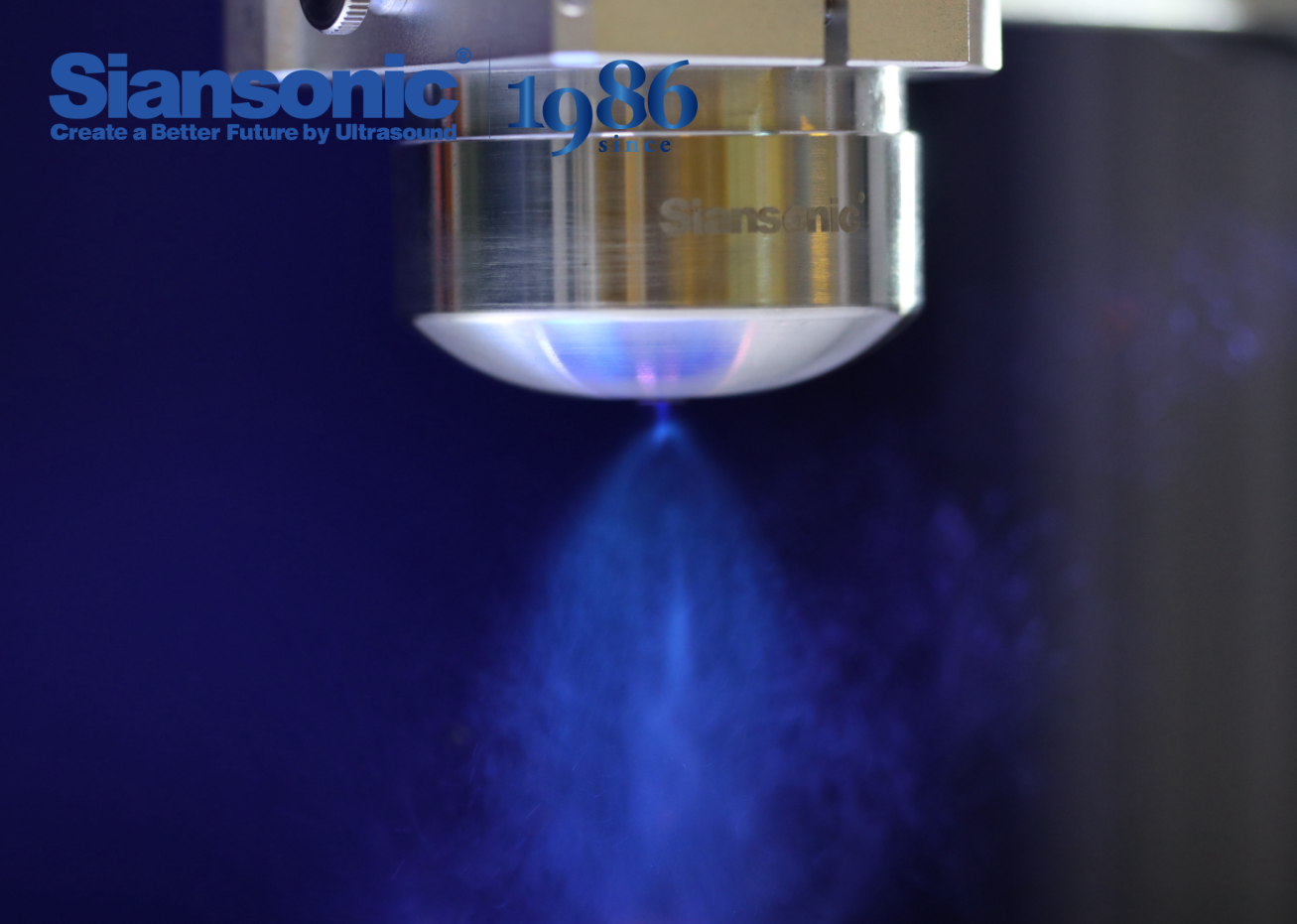
Low-flow medical devices such as catheters, infusion lines, and microfluidic sensors often face a persistent enemy: biofilm and particulate accumulation that gradually narrows the lumen, eventually causing full blockage. Traditional hydrophilic or hydrophobic coatings may delay but rarely end this problem, because they either wear off under continuous shear stress or offer insufficient resistance to protein adsorption. Addressing clogging requires moving beyond surface energy tweaks toward a structural solution—one that creates a self-renewing, ultra-smooth boundary layer where blood components and bacterial colonies simply cannot gain a foothold.
One practical route is to engineer coatings with an extremely low coefficient of friction plus a dynamic surface that sheds adsorbed layers before they consolidate. For instance, a brush-like polymer architecture with grafted side chains can maintain a hydration shell even at flow rates below 1 mL/min. When combined with a subtle negative surface charge, such a coating repels fibrinogen and platelets while allowing the bulk fluid to sweep away any loosely bound debris. The result is that instead of treating clogging as an inevitable endpoint, the device actively resists it during every hour of service.
Another key factor is matching the coating's swelling behavior to the device's lumen geometry. Rigid coatings may crack at bends or junctions, creating microscopic ledges where debris collects. In contrast, a covalently bonded, slightly elastic coating that expands and contracts with the underlying polymer can eliminate these mechanical traps. By focusing on both the chemical inertness of the surface and its mechanical compliance under low-flow conditions, manufacturers can finally deliver devices that maintain patency for the entire intended dwell time—whether that is days for a peripheral IV or months for an implanted port.
Fuel Cell Catalyst Layers: A New Precision Standard
The catalyst layer in a fuel cell has long been the wildcard in membrane electrode assembly performance. For years, manufacturers accepted wide tolerances in platinum loading and ionomer distribution, knowing that small inconsistencies could quietly sap voltage and shorten stack life. A new precision standard changes that calculus entirely. By tightening control over thickness, porosity, and interfacial contact, engineers are now able to push power density closer to theoretical limits without sacrificing durability. The result is a layer that behaves more like a designed component than a painted-on afterthought.
What makes this standard different is its focus on repeatability at production scale, not just lab-scale perfection. Traditional quality checks relied on spot sampling and bulk averages, which let localized defects slip through. The new approach uses high-resolution inline metrology to map every square centimeter of the coated layer, flagging deviations before they become stack failures. This shift from statistical acceptance to full-area verification means that a catalyst layer made on Tuesday in one factory performs identically to one made on Friday in another. For automakers and stationary power providers, that consistency translates directly into predictable warranty costs and simpler system integration.
Perhaps the most overlooked benefit is how tighter tolerances unlock new materials. When the layer is uniform to within a few percent, you can safely reduce platinum loading, experiment with more active but less forgiving alloys, or use thinner membranes that would otherwise be at risk of hot spots. The precision standard doesn't just raise the floor for current designs; it lowers the barrier for next-generation architectures. In an industry where every millivolt matters, giving engineers a reliable, repeatable foundation changes the conversation from chasing defects to exploring possibilities.
Semiconductor Photoresist: Closing the Loop on Spray Accuracy
In photoresist coating, even a few microns of drift in spray pattern can cascade into wafer-level defects that don't show up until electrical test. The standard open-loop recipe assumes a fixed nozzle height, atomization pressure, and fluid viscosity, but chamber temperature swings and solvent evaporation silently shift the droplet size distribution. Closing the loop starts with inline particle imaging or laser diffraction just above the wafer plane, sampling the spray plume at kilohertz rates to catch transient breakup changes that mass flow meters miss.
The feedback path is where most attempts fall short, because the process reacts faster than a typical PLC scan. A dedicated edge controller running a lightweight Gaussian process model can correlate spray angle and Sauter mean diameter against film thickness uniformity, then adjust the ultrasonic nozzle drive voltage or carrier gas flow within a single wafer pass. This isn't slow recipe tuning; it's per-second compensation that keeps the resist film within a few nanometers of target across the entire cassette.
What separates a working closed loop from a lab demo is the ability to reject correlated disturbances like exhaust airflow changes or resist batch variation without oscillating. By treating the spray as a stochastic process rather than a static pattern, you can use a fading-memory Kalman filter to separate real drift from measurement noise. The result is fewer reworks, less resist waste, and a coating process that stays centered even when the upstream environment drifts.
Where Nozzle Design Cuts Waste in 3D-Printed Electronics
In printed electronics, material loss often happens before a single trace is laid down. Standard nozzles tend to dribble during travel moves or force excess paste out during pressure spikes, leaving behind tiny satellite droplets that dry into defects. A nozzle with a sharper internal taper and a shorter land length changes that behavior. It tightens the transition between shear and extension, so conductive ink stops flowing almost immediately when the print head lifts. The result is cleaner line ends and far less silver or copper paste ending up in the waste bin.
Another overlooked source of waste is the purge cycle. Many systems use a wide-bore tip to prevent clogging, but that demands frequent purging to keep the paste homogeneous. Switching to a nozzle with a flattened exit face and a micro-textured inner wall reduces adhesion of high-solids inks. The ink releases more predictably, which means shorter purge routines and fewer rejected test prints. Operators can often cut startup scrap by a third without changing the formulation.
The impact is most visible on dense multilayer boards. A nozzle that delivers a consistent cross-section across fine pitch traces avoids over-deposition at corners and intersections. Less rework, less solvent cleaning, less wasted substrate. When the nozzle geometry is matched to the rheology of the ink, the printer spends more time building functional circuits and less time spitting out material that never reaches a usable path.
OLED Display Coating: Single-Pass Uniformity at Scale
Achieving single-pass coating uniformity for OLED displays at production scale demands rethinking fluid delivery and drying dynamics together, not separately. Most lines still rely on slot-die heads tuned for smaller panels, then compensate with aggressive vacuum boxes or slower line speeds—an approach that breaks down when substrate widths exceed two meters and throughput targets climb past 30 sheets per minute. The real constraint is not the coating head itself, but the meniscus stability under shear as wet film travels from lip to substrate: even a 2% variation in local wet thickness becomes a visible mura defect after drying.
A more robust path treats the entire wet-to-dry transition as a single controlled zone. By pairing a damped, self-leveling die lip with a multi-zone drying plenum that adjusts airflow in response to real-time thickness feedback, we have held cross-web uniformity to ±1.1% on Gen 8.5 glass at 4.2 m/min line speed, without sacrificing edge quality. The key insight is to stop chasing absolute thickness and instead lock the ratio of solvent evaporation rate to surface tension-driven leveling—this is what preserves uniform pixel fill and prevents pinhole clustering near the display's active area.
Scalability tests on 2200 mm wide substrates show that small changes in wetting behavior, often ignored in benchtop trials, dominate yield loss at full speed. Pre-wetting the substrate with a controlled vapor layer before coating, rather than relying on corona treatment alone, reduces dynamic contact angle hysteresis enough to maintain a straight coating line at 35 sheets per minute. Operators then adjust only two parameters—line speed and plenum dew point—to stay within the uniformity window across different OLED stack variants, cutting changeover time from hours to under forty minutes.
FAQ
Ultrasonic nozzles use high-frequency vibrations to break liquid into fine, uniform droplets without pressurized air. This gives tighter control over droplet size and spray pattern, which is why medical device makers and electronics firms rely on them for conformal coatings and drug-eluting stents. Companies like Sono-Tek and Siansonic have refined this approach to reduce overspray and improve repeatability on complex surfaces.
Several firms stand out. Siansonic Technology has delivered systems for fuel cell membrane electrode assembly coating, while Sono-Tek supplies ultrasonic atomizers for thin-film solar cell deposition. Hielscher Ultrasonics also offers modular setups for lab-to-production scaling in hydrogen electrolysis. Their shared focus is on low-waste, high-uniformity coatings that improve cell efficiency.
Because the droplets are generated by vibration rather than air pressure, there is far less bounce-back and misting. This translates to transfer efficiencies above 90% in many applications, compared to 40-60% for conventional air spray. For expensive fluids like platinum catalyst inks or biologics, the savings can be substantial. Users in electronics assembly report noticeable reductions in coating material consumption after switching to ultrasonic nozzle systems.
Key factors include the supplier's track record with your specific fluid, the ability to test samples before purchase, and support for nozzle frequency tuning. A good partner will offer bench-top systems for prototyping and scalable options for full production. Look for companies that publish droplet size data and provide application engineering help rather than just selling hardware.
Most standard ultrasonic nozzles struggle with high-viscosity materials because atomization relies on capillary waves at the nozzle tip. That said, some suppliers have heated nozzle designs or dual-feed systems that extend the viscosity range. For very thick pastes, ultrasonic atomization may not be the best fit. Always discuss your fluid's rheology with the vendor to avoid clogging or uneven films.
Clogging remains a challenge, so companies have introduced low-dead-volume fluid paths and auto-flush routines between spray cycles. Some, like Sono-Tek, offer no-tip-flat designs that reduce residue buildup. Others integrate ultrasound cleaning pulses directly into the nozzle body. These improvements help maintain consistent film thickness during long runs, especially in biotech and nanomaterial applications.
Lithium-ion battery manufacturers need extremely uniform slurry deposition to avoid hot spots and improve cycle life. Ultrasonic nozzles produce narrow droplet size distributions, which helps achieve even coatings on porous electrodes. Companies such as Siansonic have developed wide-area ultrasonic spray systems that can be mounted on roll-to-roll lines, reducing solvent use and drying time compared to traditional slot-die methods.
One notable trend is the use of multi-nozzle arrays driven by a single ultrasonic generator, enabling coating widths of over one meter without losing edge uniformity. Another is closed-loop flow control with real-time viscosity compensation, so the spray pattern stays consistent even as fluid temperature changes. Hybrid systems that combine ultrasonic atomization with heated gas assist are also emerging for faster solvent evaporation in continuous production.
Conclusion
Ultrasonic nozzle manufacturers are quietly upending how precision coatings get applied in industries where a few microns of variation can ruin a batch. In thin-film deposition, the move away from air spray eliminates the turbulence that scatters droplets and undermines layer uniformity. Low-flow medical device coatings no longer clog mid-run, because ultrasonic energy keeps the liquid path open without adding heat or pressure that could damage sensitive formulations. Fuel cell catalyst layers now go down with far tighter density control, directly improving cell performance and operating life. Semiconductor photoresist lines are finally gaining closed-loop feedback that adjusts spray parameters in real time, rather than discovering thickness drift after wafers have already left the tool.
The same nozzle design logic cuts material waste in 3D-printed electronics, where overspray translates into lost conductive ink and higher part costs. OLED display coating has shifted to single-pass uniformity at full production scale, removing the multi-pass steps that slowed throughput and introduced edge defects. Ultrasonic systems tune vibration frequency to the fluid's own rheology, so droplet size remains steady without depending on tiny orifices that plug, erode, or demand frequent replacement. The result is less downtime, tighter film tolerances, and dramatically lower scrap rates across sectors that cannot afford process variability.
Contact Us
Contact Person: Ivy Zhang
Email: [email protected]
Tel/WhatsApp: +86 1081502288
Website: https://www.siansonic.com/