
Top RCBO Brands Compared for Reliable Circuit Protection
2026-08-16
Choosing the right RCBO isn’t just about ticking a safety box—it’s about trusting a device to interrupt fault currents before they become real hazards. With so many brands competing for attention, comparing what actually matters gets harder. This guide cuts through the noise, pitting top RCBO manufacturers against each other on build quality, trip performance, and long-term reliability. Among the names worth watching, ETEK has been steadily building a reputation for practical, dependable protection. Read on to see how the leading options stack up—and where ETEK fits into the picture.
What Actually Separates a Solid RCBO From a Risky One
A solid RCBO doesn't just pass a bench test; it stays predictable after years of thermal cycling. The difference often begins with the current-sensing toroid. Cheap units use low-permeability cores that drift as they age, so a 30mA trip threshold can wander into 45mA or worse. Quality manufacturers calibrate each core and seal the winding against moisture, which keeps the residual current detection tight even in humid distribution boards.
The mechanical side separates the rest. Risky breakers rely on flimsy contact springs that lose tension after a few thousand operations, leading to welded contacts or nuisance tripping under inrush. Solid ones use silver-alloy contacts with a defined opening speed and an arc chute that actually splits the arc instead of just containing it. You can feel the difference in the toggle action—crisp and positive, not spongy.
Then there's the overcurrent calibration. A reputable RCBO trips within its published time-current curve, not just at the final overload point. Copies often have sloppy bimetal strips, so a 16A breaker might hold 20A for far too long. That extra delay can be the difference between a slightly warm cable and a melted insulation fire.
Brand Battle: How Major Manufacturers Approach Residual Current Protection
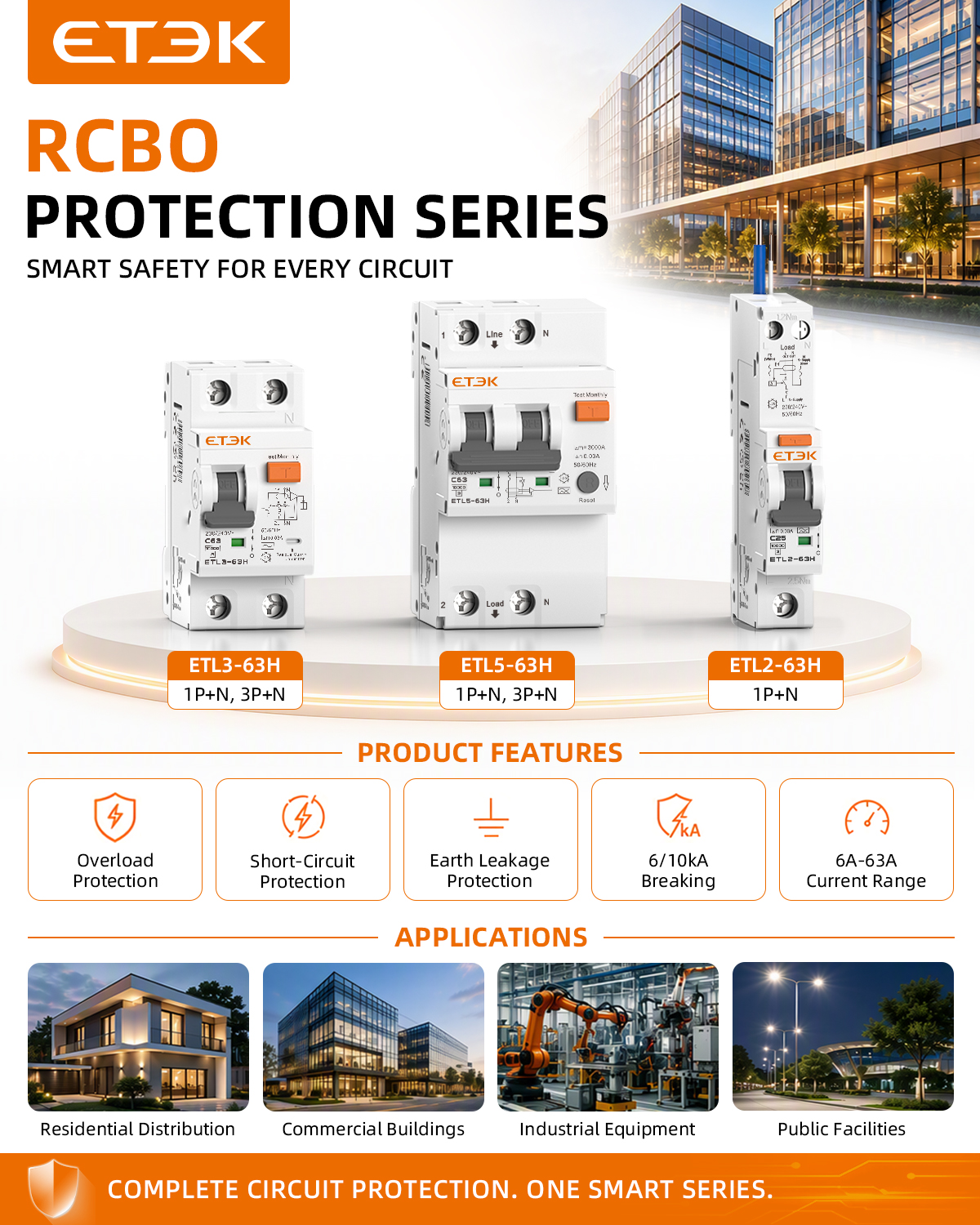
Residual current protection sits at an awkward crossroads between commodity electrical safety and brand-defining engineering. Walk through any major manufacturer's catalogue and the differences emerge less in the basic trip thresholds than in how each company frames the problem. ABB pushes hard on selectivity and coordination, building residual current devices that slot into broader distribution systems without forcing panel redesigns. Siemens leans into digital diagnostics, giving maintenance teams a clearer view of nuisance tripping and insulation drift before a fault becomes a shutdown. Schneider Electric, meanwhile, wraps its offers around connectivity and energy visibility, treating ground fault protection as one node in a larger monitoring ecosystem. These are not just feature checklists; they reflect distinct assumptions about who installs the device, who responds when it trips, and what data should travel beyond the breaker.
Smaller but influential players like Eaton and Legrand take different slices of the same problem. Eaton often pairs residual current detection with arc fault technology in a single footprint, aiming at residential and light commercial settings where space and installer familiarity matter. Legrand focuses on smooth integration into wiring accessories and distribution boards, favoring tactile indicators and straightforward test workflows over software depth. Hager and Chint compete on regional standards compliance and price-sensitive projects, fine-tuning response times and immunity to transient leakage that plague older installations. The result is a market where no single design philosophy dominates; instead, specifiers choose a residual current protection approach that matches the electrical infrastructure, local codes, and maintenance culture of the building it will serve.
The Overlooked Specs That Matter More Than Marketing Claims
Most spec sheets are written to sell, not to inform. A phone with a 108-megapixel camera sounds impressive until you notice the tiny sensor behind it, struggling in anything but bright daylight. Meanwhile, a 12-megapixel sensor with larger individual pixels can pull cleaner, more usable shots at night. The same gap shows up in laptop displays: two panels might both claim 300 nits, yet one washes out near a window because its contrast and anti-glare coating are worse. These quieter numbers—pixel size, native contrast, color uniformity—rarely make the headline but decide how a device actually feels day to day.
Battery claims are another place where the label misleads. A 5,000mAh cell can drain faster than a 4,400mAh one if the processor is inefficient and the software is bloated. Looking at screen-on time or real-world mixed-use tests tells you far more than the printed capacity. Similarly, Wi-Fi 6 support on a budget tablet doesn't mean much if the antenna design is weak and the receiver sensitivity is poor. The spec exists, but the implementation is what you live with.
Audio is full of these gaps too. Hi-res certification on earbuds doesn't guarantee good tuning; a well-tuned pair without fancy codecs can sound dramatically better. Latency figures, microphone pickup in noisy rooms, and how quickly a device reconnects after a drop are seldom advertised, yet they shape everyday annoyance. When you start paying attention to the overlooked specs—things like touch sampling rate, standby drain, or actual usable storage after the OS takes its cut—you begin to see why two devices with identical marketing lines can feel completely different in your hands.
Installation Nightmares: Which Brands Make Wiring Easier and Why
There’s a particular kind of frustration reserved for opening a fixture box and finding a tangle of thin, color-coded wires that all look the same in dim light. Some brands clearly design for the person holding the screwdriver, not just the engineer who drafted the schematic. Wago’s lever connectors, for example, eliminate the twisting and taping ritual entirely — you lift the orange tab, push the stripped copper in, and snap it shut. No wire nuts rolling under the fridge, no guessing whether the connection is solid.
Lutron’s Caséta line takes a different route by shrinking the components. Their smart switches are shallow enough to fit in older boxes crowded with decades of borrowed neutrals, and the included wire leads are actually long enough to work with. Compare that to cheaper no-name dimmers that expect you to make pigtails with half an inch of slack and a prayer. Even the screw terminals are positioned so your flathead isn’t fighting the drywall.
Then there’s Leviton’s newer Decora Edge series, which sidesteps screw terminals altogether with snap-in lever clamps. The housing has a small release slot for a flat tool, so swapping a switch later doesn’t mean cutting wires and starting over. It’s these unglamorous details — lead length, terminal type, box depth — that separate a ten-minute swap from a two-hour drywall patch session.
Real-World Testing: What Electricians Discover After Years on the Job
Ask any seasoned electrician about the difference between textbook theory and real-world wiring, and you'll get a knowing laugh. What the manuals don't tell you is that the most critical lessons come from troubleshooting in cramped attics, dealing with decades-old insulation, or discovering that the previous installer cut every corner imaginable. Over time, you learn to read a building's electrical history like a detective—flickering lights might be a loose neutral, a hot breaker could point to an undersized wire, and a tripping GFCI often hides a daisy-chain of outlets wired out of phase. These patterns aren't found in any code book; they're earned through thousands of service calls where the real test isn't whether you can follow a diagram, but whether you can adapt when the reality doesn't match the schematic.
Another hard-won insight is that safety isn't a checklist—it's a habit born from a few close calls. You quickly discover that a non-contact voltage tester is only as good as its batteries, that aluminum wiring from the '70s needs special attention, and that just because a circuit is off at the panel doesn't mean some hidden junction box isn't back-fed. After years on the job, you also realize that the most important tool isn't your meter or your fish tape; it's your ability to communicate with homeowners who are scared, frustrated, or simply unaware of how their electrical system works. Explaining why a breaker keeps tripping without jargon, or calming someone down after a spark flew from an outlet, becomes second nature—and it's a skill no apprenticeship can fully teach.
Perhaps the biggest surprise is how much the industry shifts beneath your feet. Electricians who started with knob-and-tube wiring now install solar inverters, EV chargers, and smart panels that talk to the grid. But the core lessons remain: never trust a wire's color alone, always verify with a meter, and document every change you make for the next person. The real world will throw curveballs—like a ground wire that's actually carrying current because of a shared neutral on a multi-wire branch circuit. That's when experience pays off: you don't panic, you isolate, test, and solve. It's not about being smarter than the problem; it's about having seen enough weirdness to stay calm and methodical when the unexpected shows up.
Cost vs. Longevity: When a Cheaper RCBO Ends Up Costing More
The sticker price on a budget RCBO can make it tempting, especially when you're quoting a job against competitors. But open one up and the differences show: thinner contacts, weaker arc extinguishing chambers, and a test button that feels loose from day one. Those aren't cosmetic issues. They translate directly into a shorter service life. Cheap units often start nuisance tripping after a couple of years—or worse, fail to trip when they should. When that happens, you're not just buying another RCBO; you're paying an electrician to drive out, isolate the board, and rewire a device that should have lasted a decade or more. The labour alone can wipe out whatever you saved on the part.
Then consider what an unexpected outage actually costs. In a workshop or small office, a single afternoon of lost productivity because a breaker tripped for no reason can exceed the price difference between a value-engineered unit and a reputable one by several times. Callbacks also burn your reputation. Clients don't remember the initial quote—they remember the second and third visits. Over a realistic service window, a mid-range RCBO that runs for fifteen years may end up cheaper per year than two or three cheap replacements plus the labour to fit them. The cheaper unit didn't save money; it just shifted the cost downstream.
FAQ
For homes, Schneider Electric and Hager tend to get the most consistent praise from electricians. Schneider's Acti9 range trips quickly and has solid build quality, while Hager's compact design makes wiring easier in tight consumer units. Eaton and ABB are also worth mentioning, especially if you want something that feels a bit more robust without jumping to industrial-grade prices.
Look beyond the basic certification. Check the trip curve options, physical size, and how clearly the test button and indicators are laid out. Some brands like Legrand and MK Electric use wider terminal tunnels, which saves time if you're working with multiple earth or neutral conductors. Real-world feedback from installers often highlights small details like that over raw specifications.
In many cases, yes, but it depends on the installation. Cheaper brands such as Chint or Wylex can pass safety tests, but they might have stiffer levers, less consistent torque on terminals, and shorter warranties. Premium brands like Siemens and ABB often last longer in damp or dusty environments, so if the board is in a garage or outbuilding, the higher price usually pays off.
Both are European, but their design philosophies differ slightly. Hager leans toward compactness and easier busbar alignment, which speeds up installations in crowded boards. Schneider focuses on modularity and a huge range of accessories, so you can expand or reconfigure without changing the whole rail. Neither is objectively better; it's about what fits your existing setup and working style.
Eaton and Schneider come up often in commercial settings because their ranges include higher breaking capacities and better discrimination with upstream breakers. ABB is another frequent choice, especially in buildings with a lot of motor loads, since their trip curves handle inrush currents without nuisance tripping.
Yes, noticeably. Some brands design their RCBOs with a slight delay or use different filtering components to avoid trips from switch-on surges. Legrand and Hager tend to be more forgiving with large LED drivers or older washing machines, while budget brands may trip more often under the same conditions. If nuisance tripping is a problem, switching brand can sometimes solve it without changing the circuit design.
Certification is non-negotiable, but it only proves minimum compliance. Brand reputation fills in the gaps: whether the device still works smoothly after five years, whether the plastic doesn't become brittle near heat, and whether the warranty is actually honoured. Electricians often stick to brands they have seen in the field for a decade or more, which is why names like Wylex and Crabtree still carry weight despite newer competitors.
Conclusion
When you pull a stack of RCBOs off the shelf, the gap between a unit that quietly does its job for a decade and one that fails when a ground fault sneaks in often comes down to details that never make the brochure. Internal contact quality, the precision of the toroidal sensing coil, and how the trip mechanism behaves under repeated thermal cycling separate the sturdy workhorses from the ones electricians learn to distrust. Major manufacturers like Schneider, ABB, and Hager each have distinct personalities: some prioritize a forgiving DIN-rail footprint and clear terminal orientation, while others focus on tighter calibration for residual current thresholds. But marketing phrases like “high immunity” mean little if the neutral lead is awkwardly placed or the test button feels flimsy after a few months. What genuinely matters in the field are specs like minimum operating voltage, resistance to nuisance tripping from harmonics, and whether the device can handle back-up fuse coordination without letting through dangerous energy. Electricians with years of installs will tell you that a brand with a slightly wider terminal opening and a visible contact indicator can save more callbacks than any claimed response time.
Real-world testing, the kind that happens in dusty distribution boards and damp garages, reveals a quieter truth: a cheaper RCBO often becomes the most expensive choice once you factor in replacement labour, intermittent tripping, or a failed test button that forces a full panel shutdown. Brands like Eaton and Legrand frequently earn their premium because the internal mechanism doesn't rely on a single fragile link, and the casing resists the micro-cracks that appear after repeated temperature swings. The overlooked numbers—endurance under short-circuit conditions, ageing behaviour of the residual current transformer, and how the device behaves when multiple are stacked side by side with poor airflow—tell you more than any glossy datasheet. When an installer chooses a brand based on how naturally the wires settle into the terminals and how confidently the lever snaps, that is not preference; it is longevity talking. Cost versus longevity is not a simple equation, because a device that trips reliably at 30mA for fifteen years is not just a component—it is the reason a family doesn't wake up to a silent electrical fire. In the end, the best RCBO brand is the one that disappears into the background, letting electricians sleep as soundly as the homeowners they protect.
Contact Us
Contact Person: Andy
Email: [email protected]
Tel/WhatsApp: +86 13356133008
Website: https://www.etek-china.com/