
Top Gel Pad: Unlock All-Day Comfort and Pressure Relief
2026-10-27
What if your chair could finally stop punishing you after hour three? The Top Gel Pad from Kunbao is designed to do exactly that—turning hard, unyielding seats into a soft, supportive surface that eases pressure and keeps you comfortable from morning meetings to late-night gaming. But this isn't just another cushion; it's a targeted blend of cooling gel and ergonomic support that adapts to your body, so all-day comfort stops being a wish and starts being the default.
The Flaw in Ordinary Cushions That Leaves You Sore
Most cushions are built with a single slab of foam that feels plush in the showroom but gives out after a few weeks. Once the cells inside lose their rebound, your hips and sit bones press straight through to the chair base. That constant bottoming-out is what leaves you shifting every few minutes and sore by the end of the day.
The other issue is weight distribution. A flat slab spreads pressure unevenly, so the heaviest points—usually the tailbone and the backs of the thighs—take almost all the load. Without a contoured shape or a firmer core, the cushion never truly relieves strain; it just masks it until you stand up and feel the ache settle in.
Then there's the cover material. Ordinary cushions trap heat and slide around under you, making you tense your legs and lower back just to stay seated. Over hours, that subtle bracing adds up to a deep soreness that has nothing to do with your chair and everything to do with the cushion itself.
What a Gel Layer Does Differently for Support
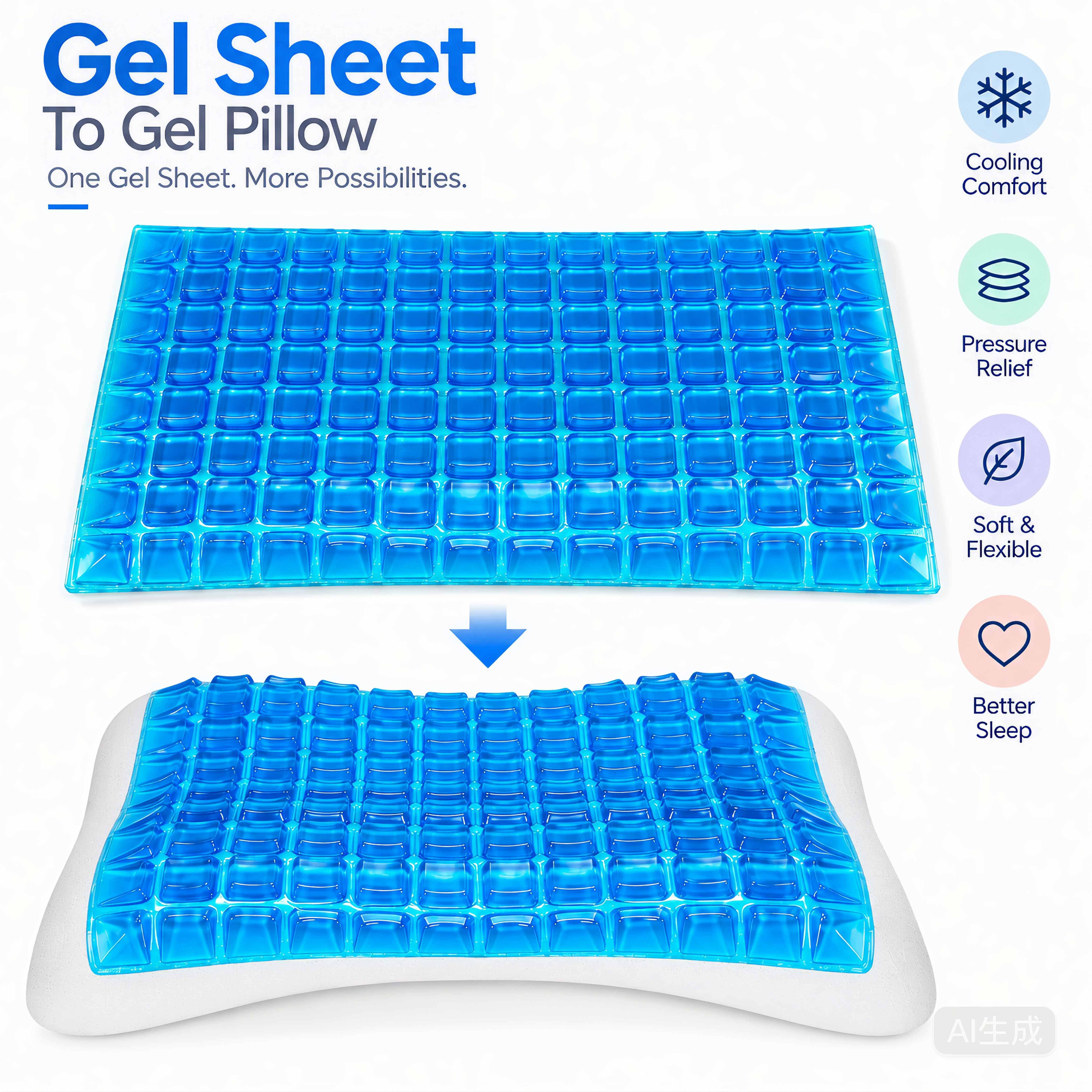
Unlike a spring unit that pushes back with a single, uniform force, a gel layer reacts to weight in a more localized way. It yields just enough under heavier points like the hips and shoulders while staying firmer under lighter zones, which keeps the spine closer to its natural alignment without creating pressure spikes.
The material also has a slight damping effect. Movement on one side of the surface doesn't travel straight across as a ripple, so a partner's shifting position is less likely to disturb the sleeper on the other side. That kind of motion isolation isn't just about comfort—it helps the body stay in a supported position longer because there's no continuous readjustment against transferred bounce.
Gel layers can also be tuned more precisely during manufacturing than traditional padding. By adjusting thickness, pattern, or placement, designers can direct support toward areas that need more reinforcement, like the lumbar zone, without making the entire surface feel hard. This lets the layer handle the job of structural support without sacrificing surface softness.
All-Day Sitting Without the Usual Fatigue
Most chairs feel fine for the first hour, then quietly start working against you. This one spreads your weight across a wider contact area, so your sit bones and lower spine aren't left to absorb every ounce of pressure. The padding is firm enough to keep you from sinking, but soft enough to avoid that hard edge that cuts into thighs by mid-afternoon.
The backrest follows a gentler S-curve instead of forcing a rigid upright posture. That means you can shift, recline a few degrees, or lean forward without losing support. By the end of a full workday, the usual neck tension and lower-back ache simply don't show up the way they used to.
The Pressure Points That Matter—and How Gel Eases Them
Sitting for hours pushes most of your weight onto a few small spots under the sit bones and the backs of the thighs. Those are the pressure points that start out as a dull ache and then turn into numbness or sharp tingling. A well-designed gel pad doesn't just soften the surface; it spreads that load across a wider area so no single spot takes the brunt of it.
What makes gel different from plain foam is its ability to move with you. When you shift in the chair, the gel slowly redistributes instead of springing back all at once. That slight give reduces the pinch around bony areas, especially where the cushion meets the seat edge. Over an hour or two, that difference shows up as less fidgeting and fewer stinging hot spots.
It's not about making the seat feel softer in a fluffy way. It's about keeping the pressure under your sit bones from staying constant too long. The gel creates a kind of micro-adjustment every time you breathe or change position, which helps blood keep moving. That's why the relief feels less like sitting on a cloud and more like being able to forget the chair altogether.
Why This Pad Won't Flatten After Months of Use
Most pads flatten because the foam cells inside them break down under repeated compression. When you sit or kneel on a pad hundreds of times, the tiny air pockets that give it bounce gradually collapse. Once those cells lose their structure, the pad can't spring back, and you end up sleeping on a thin layer of fabric instead of a cushion. This particular pad uses a different internal geometry—a lattice of interconnected chambers that redistribute pressure rather than absorbing it all in one spot. The result is that the pad doesn't just rely on material softness; it actively resists the kind of localized fatigue that leads to flat spots.
Another reason this pad holds its shape is the way the outer shell is bonded to the core. Many cheaper pads are simply glued or heat-sealed at the edges, which allows the inner foam to shift and bunch up over time. This pad has a full-surface lamination that locks every part of the core in place. Even after months of being rolled, unrolled, and slept on, the core can't migrate or thin out in high-wear areas like the hips and shoulders. You won't find a permanent crease running down the middle, and you won't wake up with your elbow digging into the ground because the padding under it has vanished.
Finally, the pad's valve system plays a role in long-term loft. Every time you inflate or deflate a pad, a tiny bit of moisture from your breath enters the interior. Over time, that moisture can break down foam and make it brittle. This pad uses a two-stage valve that separates inflation air from the internal foam, so the core stays dry and resilient. It's a small detail, but it means the pad continues to feel like it did on the first night, not like a deflated pool toy after a season of use.
Real Situations Where a Gel Pad Makes the Difference
After three hours on a hard wooden chair during a community meeting, the back of my thighs felt bruised. A friend handed me a slim gel pad, and the difference was immediate. The soft, slightly cool surface spread my weight instead of letting it dig into two points. Now I keep one in the car for long drives and another at my desk. It is not about luxury, it is about not wincing every time I stand up.
My aunt spent six weeks in bed after hip surgery. The hospital bed had a standard foam mattress, and within days her heels and tailbone were red and tender. A nurse brought a gel pad designed for pressure relief. It did not flatten like foam. Instead, it stayed springy and kept her skin cooler. We bought one for her home bed too. For anyone caring for a bedridden family member, this is one item that actually works as promised.
After a trail run last autumn, my left knee swelled up badly. I wrapped a gel pack from the freezer around it with an old bandage. Unlike a bag of frozen peas, the pad stayed flexible and molded to the joint. Twenty minutes later, the throbbing had eased enough to walk upstairs. Since then, I always toss one into my gym bag. It doubles as a heat pad when microwaved, which helped my stiff neck after a long flight.
FAQ
It uses a honeycomb gel grid that spreads your weight across dozens of independent cells instead of just squishing down like foam. That means it won't flatten out under your hips after a few weeks.
The individual gel pockets flex with your body's shape, so hard contact points like the tailbone and sit bones get a real break. The load gets distributed over a larger area rather than concentrating in one spot.
Yes, the gel keeps its shape even after 8+ hours of continuous use. It bounces back immediately when you stand up, so there's no permanent dent like you'd get with memory foam.
The underside has a non-slip silicone coating that grips the seat surface, so it won't slide around when you shift positions. It also has a low profile that doesn't make you feel perched.
Many people with coccyx discomfort find relief because the gel doesn't press directly against the spine. The center cutout or softer zone takes pressure off the tailbone, though you should still check with a doctor for ongoing pain.
The outer cover zips off and can go in the washing machine on a gentle cycle. The gel core just needs a wipe with a damp cloth and mild soap, then air dry completely before putting the cover back on.
The gel grid has built-in air channels that keep airflow moving, so it stays cooler than solid foam pads. It won't feel ice-cold, but it doesn't trap body heat the way dense cushions do.
Conclusion
Ordinary cushions have a quiet failure: their foam cores crush down in the same spots hour after hour, cutting off circulation and leaving your sit bones and tailbone protesting by mid-afternoon. A gel layer works differently. Instead of just softening the surface, it redistributes your weight across a wider area, so no single point takes the brunt. The gel shifts just enough to follow your body's micro-movements, which keeps blood flowing and nerves from getting pinched. That's why you stop noticing the chair beneath you and can stay focused through long work blocks, flights, or wheelchair use.
Durability matters too. Many pads feel plush on day one but start to pancake within weeks; the gel matrix here is designed to spring back thousands of times, so the support you feel in month six is the same as day one. The real difference shows up in specific situations: after surgery when you can't shift weight easily, during pregnancy when tailbone pressure spikes, in an office chair that's too hard, or on a long drive where vibration adds to fatigue. Instead of adding more layers, this pad targets the pressure points that actually cause soreness, easing them without feeling squishy or unstable. The result is less numbness, fewer aches, and a seat that finally works as hard as you do.
Contact Us
Contact Person: Catherine Peng
Email: [email protected]
Tel/WhatsApp: +86-13434169510
Website: https://www.kbcoolgel.com/