
Top Fine Chemicals Driving Innovation in Modern Industries
2026-07-30
Fine chemicals are the unsung heroes powering breakthroughs across pharmaceuticals, electronics, and advanced materials. From life-saving drugs to next-gen batteries, their precision and purity set the stage for innovation. At the forefront of this transformation, DSL Chemicals delivers high-performance fine chemicals that help industries push boundaries. In this blog, we explore the top fine chemicals shaping the future—and why they matter more than ever.
Precision Catalysts Redefining Reaction Efficiency
The era of one-size-fits-all catalysis is fading. Precision catalysts, designed at the molecular level, now allow us to steer reactions with pinpoint accuracy, dramatically boosting efficiency while slashing waste. By tailoring active sites and controlling nanoscale architecture, these catalysts unlock pathways that were once too costly or energy-intensive to consider.
What sets precision catalysts apart is their ability to operate under mild conditions, often at room temperature and atmospheric pressure, sidestepping the high-energy demands of traditional processes. This not only cuts operational costs but also aligns with the growing push for greener, cleaner chemical manufacturing. The result is a leap in atom economy—more product per input molecule, and far fewer unwanted byproducts.
Industries ranging from pharmaceuticals to renewable energy are already feeling the impact. Precision catalysts are enabling the synthesis of complex molecules with fewer steps, higher selectivity, and less reliance on rare or toxic metals. It’s a quiet revolution that’s reshaping how we think about reaction engineering, moving from empirical trial-and-error to deliberate, data-driven design.
Advanced Polymers for Next-Gen Material Science
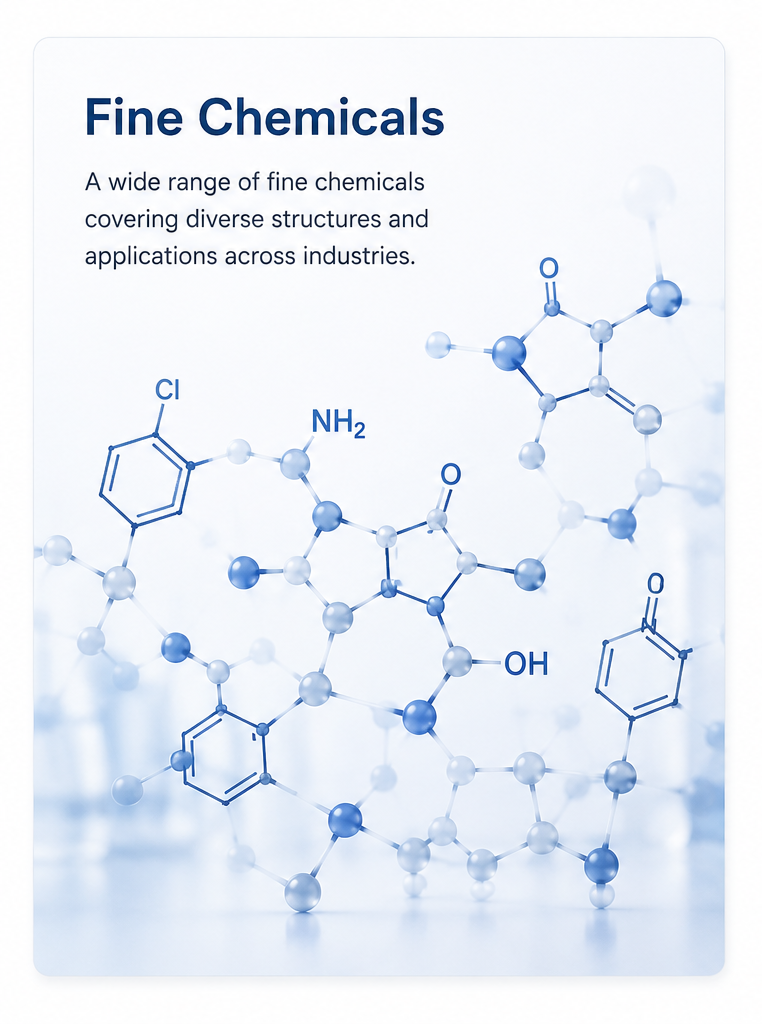
The evolution of material science hinges on polymers that challenge traditional boundaries, blending molecular precision with unprecedented functionality. From self-healing networks that mend cracks autonomously to stimuli-responsive matrices that shift properties on demand, these advanced materials are redefining what’s possible in aerospace, biomedicine, and electronics. Their secret lies in engineered architectures—cross-linked, branched, or block copolymer designs—that deliver tailored mechanical strength, thermal stability, and chemical resistance without sacrificing processability.
One standout frontier is the integration of dynamic covalent bonds, enabling materials that can be reprocessed or recycled under mild conditions, sidestepping the end-of-life pitfalls of conventional thermosets. Coupled with nanocomposite reinforcement, polymers now exhibit conductivity, piezoelectricity, or even shape-memory effects, opening doors to soft robotics and wearable tech. The shift isn’t just about incremental improvement; it’s about building a library of smarter, leaner macromolecules that sense, adapt, and perform in ways once reserved for metals or ceramics.
Manufacturing breakthroughs like vat photopolymerization and melt electrowriting now allow these polymers to be fabricated into intricate geometries with microscale precision, blurring the line between material and device. Researchers are also leveraging bio-derived feedstocks to synthesize high-performance polymers that rival petroleum-based counterparts, a critical step toward sustainability without compromise. As the toolkit expands, the next generation of advanced polymers promises to be as dynamic and diverse as the challenges they aim to solve.
Bio-Based Solvents Shaping Sustainable Manufacturing
The shift toward greener production methods has pushed manufacturers to reconsider every material that enters their facilities. Bio-based solvents are emerging as a practical answer, derived from renewable resources like corn, soybeans, citrus peels, and even agricultural waste. Unlike their petroleum-based counterparts, these solvents break down more readily in the environment and often carry lower toxicity profiles, making workplaces safer and reducing long-term ecological harm.
What makes them truly transformative is their performance. Early iterations struggled to match the solvency power of traditional chemicals, but modern formulations now clean, dissolve, and extract just as effectively. They’re finding applications across paints, coatings, adhesives, and precision cleaning—sectors where reducing volatile organic compounds delivers immediate air quality improvements. This isn’t a niche experiment; it’s a supply chain evolution that aligns product quality with genuine sustainability targets.
Cost and availability were once barriers, but scaling production and smarter chemical engineering are changing that. Bio-based solvents are moving from lab curiosity to industrial mainstay, offering a realistic path for manufacturers to cut fossil fuel dependency without sacrificing throughput. As regulatory pressures mount and consumer expectations rise, these solvents aren’t just a substitute—they’re actively reshaping how we think about responsible production for decades to come.
Electronic-Grade Chemicals Powering Miniaturization
The relentless drive toward smaller, faster, and more powerful electronic devices hinges on a silent workhorse: electronic-grade chemicals. Unlike their industrial-grade cousins, these substances are refined to staggering purity levels, often exceeding 99.9999%—a requirement that becomes non-negotiable as chip features shrink to atomic scales. Even a handful of stray metal ions can cripple a transistor or short a nanoscale interconnect, making ultrapure solvents, etchants, and deposition precursors the invisible architects of modern microelectronics. Without them, the smartphone in your pocket would be a pipe dream.
As chip architectures evolve from planar designs to gate-all-around transistors and beyond, the chemical toolbox has had to keep pace. For instance, atomic layer deposition relies on precursors that react with surgical precision, building films one atomic layer at a time. Meanwhile, advanced etching chemistries must selectively remove materials without undercutting or damaging delicate 3D structures. This dance of creation and subtraction demands not only extreme purity but also a molecular-level understanding of surface reactions. The result is a new breed of custom-engineered molecules—often guarded as trade secrets—that enable the sub-3-nanometer node.
The miniaturization marathon is far from over, and chemical innovation remains a critical bottleneck. Future technologies like nanosheet transistors, high-numerical-aperture EUV lithography, and 3D stacking will push purity requirements to parts-per-trillion levels and demand chemistries that work uniformly on non-planar surfaces. Meeting these challenges requires rethinking synthesis, packaging, and delivery to eliminate contamination at every step. Ultimately, the continued march of Moore's Law depends as much on these rarefied liquids and gases as it does on lithographic lenses or plasma etchers—a testament to the quiet, essential role of electronic-grade chemicals in shaping the digital world.
Custom Synthesis Unlocking Niche Pharmaceutical Breakthroughs
In the specialized world of rare disease treatments and targeted therapies, custom synthesis has become an indispensable engine of progress. When off-the-shelf compounds fail to meet the unique demands of novel drug candidates, bespoke chemical synthesis steps in to bridge critical gaps. This tailored approach enables the creation of molecules with precise stereochemistry, isotope labeling, or conjugated payloads that are simply unavailable through conventional routes. For many niche pharmaceutical innovations, the ability to access these specialized building blocks is not just a convenience—it’s the difference between a stalled pipeline and a life-changing therapy reaching patients.
What sets truly impactful custom synthesis apart is a seamless fusion of deep organic chemistry expertise and agile process development. It’s about more than just replicating a literature procedure; it’s about designing scalable, cost-effective pathways to compounds that have never existed before. The most successful partnerships thrive on iterative problem-solving, where synthetic routes are refined in tandem with evolving biological data. This collaborative rhythm—often obscured behind the scenes—fuels breakthroughs in areas like proteolysis-targeting chimeras (PROTACs), antibody-drug conjugates (ADCs), and gene therapy vectors, each requiring a level of molecular precision that standard catalog chemicals can never offer.
Ultimately, the quiet power of custom synthesis lies in its ability to transform a conceptual lead into a tangible reality without fanfare. It upends the one-size-fits-all model of drug discovery, placing molecular uniqueness at the forefront. By enabling access to otherwise unattainable chemical space, it empowers small biotech firms and academic labs to compete in competitive therapeutic arenas. In this landscape, the invisible craftsmanship of synthetic chemists becomes the catalyst for medical leaps that might otherwise remain forever out of reach.
Smart Coatings with Self-Healing and Adaptive Properties
Materials that can mend themselves after damage have long captured the imagination of engineers and scientists. Smart coatings with self-healing capabilities take this concept and apply it to surfaces, enabling scratches, cracks, or wear to close up without external intervention. Often these coatings rely on embedded microcapsules filled with healing agents that rupture when the coating is breached, releasing a reactive compound that fills the gap and hardens. Other approaches use dynamic chemical bonds—such as hydrogen bonding or reversible Diels-Alder reactions—that can re-form after being broken, essentially giving the coating a molecular memory. The result is a surface that maintains its protective or aesthetic functions far longer than conventional paints or finishes, reducing the need for frequent reapplication and lowering maintenance costs in industries ranging from automotive to aerospace.
Adaptive properties add another layer of functionality, allowing a coating to respond intelligently to changes in its environment. Think of a clear coat that becomes more hydrophobic when it detects moisture, or a marine paint that shifts its surface texture to deter barnacle attachment as water temperature changes. These adaptations can be driven by stimuli such as pH shifts, temperature fluctuations, light exposure, or mechanical stress. Researchers achieve this by incorporating stimuli-responsive polymers or nanoparticles that alter their conformation, color, or surface energy on command. For instance, a coating might include a network of shape-memory polymers that temporarily deform under impact but recover their original shape when heated, effectively erasing dents and protecting the substrate beneath. Such dual-action coatings—combining both healing and adaptation—are pushing the boundaries of what surface engineering can accomplish.
Bringing these technologies out of the lab and into real-world applications requires overcoming practical hurdles like long-term stability, cost, and compatibility with existing manufacturing processes. Early successes have emerged in specialized fields: self-healing clear coats for electronic device screens, anti-corrosion layers for offshore structures, and adaptive camouflage systems for military vehicles. Yet the most exciting promise lies in making such coatings commonplace—imagine a building exterior that repairs weather-induced microcracks autonomously, or a surgical tool coating that adjusts its lubricity in response to bodily fluids. Balancing complexity with reliability is the key challenge, but as material science continues to merge with polymer chemistry and nanotechnology, the line between inert surfaces and living, responsive systems grows increasingly blurry.
FAQ
Fine chemicals are complex, high-purity substances produced in limited quantities for specialized applications, unlike commodity chemicals that are manufactured in bulk for general use. They often serve as key ingredients in pharmaceuticals, agrochemicals, and electronics, requiring precise synthesis and stringent quality control.
One standout is Tofacitinib citrate, a citrate salt of a JAK inhibitor used in treatments for rheumatoid arthritis. Its complex chiral synthesis exemplifies how fine chemicals enable targeted therapies with fewer side effects compared to traditional disease-modifying drugs.
High-purity electronic grade solvents and etchants, such as ultrapure hydrogen peroxide and buffered oxide etchants, are critical for semiconductor fabrication. They ensure defect-free surfaces and precise etching at nanoscale dimensions, driving progress towards smaller, faster chips.
Flupyradifurone, a novel butenolide insecticide, addresses pest resistance while posing lower risks to pollinators. Its selective mode of action and favorable environmental profile are direct results of advanced fine chemistry, helping farmers adopt integrated pest management.
Biocatalysts like engineered enzymes are revolutionizing production by enabling greener, more selective reactions under mild conditions. For instance, transaminases are now used to synthesize chiral amines for pharmaceuticals, reducing toxic waste and energy consumption significantly.
Ingredients like bisabolol produced via fermentation rather than extraction from chamomile, and tailored peptide-based anti-aging actives, offer consistent quality and enhanced efficacy. These fine chemicals allow formulators to create high-performance creams and serums with proven results.
High-purity lithium hexafluorophosphate is essential as the electrolyte salt in lithium-ion batteries. Its synthesis under rigorously dry and inert conditions ensures battery safety, longevity, and energy density—key factors for electric vehicles and grid storage.
The main hurdles include maintaining chiral purity at large volumes, controlling exothermic reactions safely, and managing complex supply chains for rare starting materials. Continuous flow chemistry and real-time analytics are increasingly used to address these issues without sacrificing yield or quality.
Conclusion
Precision catalysts are quietly reshaping industrial chemistry, enabling reactions that proceed with remarkable selectivity and minimal waste. By precisely controlling molecular interactions, these catalysts boost yield and slash energy consumption, making processes not just faster but fundamentally more sustainable. Advanced polymers, meanwhile, are breaking old limits in material science, offering combinations of strength, flexibility, and thermal stability that were once inconceivable. From lightweight aerospace components to durable biomedical implants, such polymers are enabling design paradigms where function dictates form. In parallel, bio-based solvents derived from renewable feedstocks are displacing traditional petrochemicals in manufacturing, cutting volatile organic compound emissions and toxic residues without sacrificing performance, and thus allowing industries to meet tightening environmental regulations while maintaining process integrity.
On the electronics frontier, high-purity, electronic-grade chemicals are the unseen enablers of ever-shrinking circuitry, providing the ultra-clean etchants, dopants, and cleansers essential for fabricating nanoscale features without defects. Bespoke custom synthesis services are propelling niche pharmaceutical breakthroughs, delivering rare intermediates and complex molecules that standard catalogues cannot supply, thereby accelerating drug discovery and allowing personalized medicine to advance from concept to clinic. Closing the loop, smart coatings embedded with self-healing and adaptive capabilities are transforming protective surface technologies. These coatings can autonomously repair scratches, adjust to environmental stimuli, or resist corrosion on demand, dramatically extending the service life of everything from infrastructure to consumer electronics. Together, these high-value fine chemicals form an interconnected toolkit, driving innovation through precision, performance, and sustainability across the most dynamic sectors of modern industry.
Contact Us
Contact Person: Wei Zhang
Email: [email protected]
Tel/WhatsApp: 862163529955
Website: https://www.dslchem.com