
Top Aluminum Intake Manifold Parts for Enhanced Engine Performance
2026-07-08
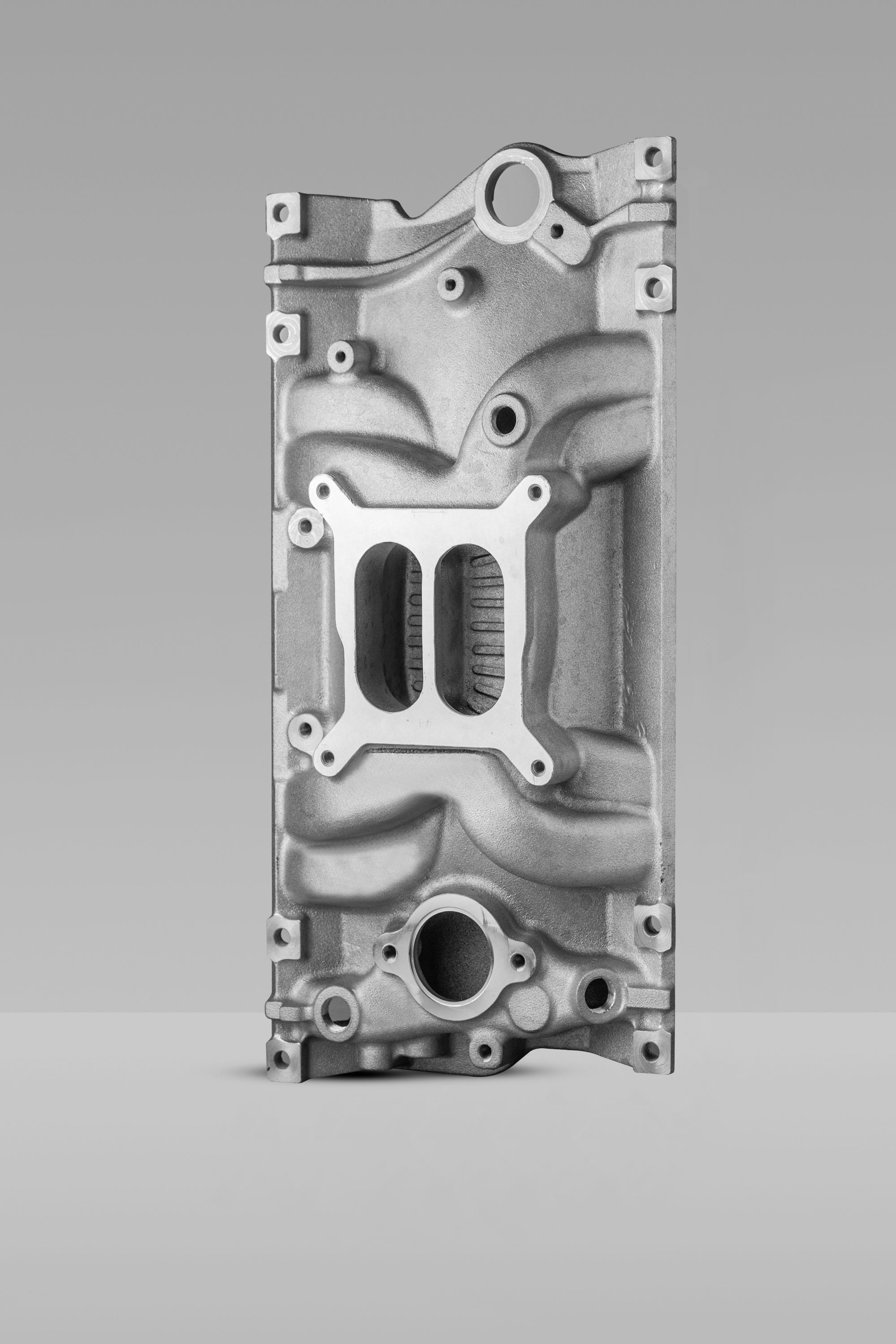
Looking to unlock more power from your engine without major overhauls? The secret often lies in one critical component: the aluminum intake manifold. From improved airflow dynamics to superior heat dissipation, upgrading your intake manifold can transform throttle response and horsepower. At the forefront of this upgrade is DDR, a brand that engineers top-tier manifold parts designed to maximize your engine's potential. Whether you're a weekend warrior or a dedicated gearhead, these parts promise noticeable gains. In this post, we'll dive into the best DDR aluminum intake manifold options that truly deliver on performance and durability.
Why Aluminum Intake Manifolds Outperform Plastic
Aluminum intake manifolds hold a decisive edge over their plastic counterparts in high-heat and high-pressure environments. The material's innate ability to dissipate heat rapidly prevents the intake charge from losing density, which directly supports more consistent combustion. Under sustained load, plastic units can warp or develop micro-cracks around the mounting flanges; aluminum stays dimensionally stable, maintaining a perfect seal and avoiding vacuum leaks that would otherwise throw off air-fuel ratios.
Durability is another realm where cast aluminum simply leaves plastic behind. It shrugs off the constant thermal cycling that eventually makes nylon-composite manifolds brittle, and it won't degrade when exposed to fuel vapors or oil mist from the PCV system. The rigid structure also resists flex under rapid throttle transitions, so you get sharper tip-in response without the lag that sometimes plagues plastic designs. For engines with forced induction, the added burst strength of aluminum becomes non-negotiable, as plastic can crack at boost levels that aluminum handles without flinching.
From a builder's perspective, aluminum offers possibilities that injection-molded plastic simply cannot match. You can port-match the runners to the cylinder head, smooth out casting ridges, or even extrude-hone the entire piece for a mirror-like internal finish—all of which reduce pumping losses and improve volumetric efficiency. When you factor in that many aftermarket aluminum manifolds feature replaceable plenum spacers or adjustable runner lengths, the material becomes a gateway to fine-tuning power curves that a sealed plastic unit could never accommodate.
The Role of Runner Length in Power Delivery
In any fluid distribution network, the geometry of the channels is decisive, and runner length is one of the most influential parameters. When a runner is extended, the resistance to flow increases predictably, causing a pressure drop that directly scales with the distance the melt must travel. This is not merely a matter of friction; longer paths give molecules more time to shear against the walls, leading to localized heating or cooling that can shift viscosity and alter the filling pattern. Shorter runners, by contrast, preserve more of the injection pressure for the cavity, allowing faster filling and reducing the chance of premature solidification in thin sections. The key is to view the runner not as a passive conduit but as an active component that throttles or liberates energy based on its length.
The real art lies in balancing this length against the overall feed system design. A runner that is too short may seem ideal for minimizing pressure loss, but it can force abrupt directional changes that create shear imbalances and uneven flow fronts. A longer, more gently curved path often distributes melt more evenly into multiple gates, even if the peak pressure is slightly lower. Moreover, when working with shear-sensitive materials, the additional residence time in a longer runner can either break down polymer chains or allow additives to disperse more uniformly. Engineers often iterate through simulation to find the point where the hydraulic power delivered to each cavity matches the thermal and rheological requirements, recognizing that a few millimeters in runner length can tip the balance between a robust process and constant adjustment.
Material choice further complicates the picture. Semi-crystalline resins tend to demand a more careful length calculation because their shrinkage behavior is tightly coupled with cooling rate, which in turn depends on how much frictional heat the runner adds. Amorphous plastics can be more forgiving, but they still exhibit noticeable differences in part weight and dimensional stability when runner length is changed. Even the wear and tear on molds enters the conversation—a longer runner system concentrates stress at certain bends or transitions, potentially eroding steel over thousands of cycles and altering the effective diameter, which then skews the pressure–flow relationship. Mastering power delivery through runner length is therefore not a one-time calculation but an ongoing understanding of how mechanical energy transforms into thermal and kinetic energy along the entire melt path.
Single-Plane vs Dual-Plane: Choosing the Right Design
When starting a new project, one of the first decisions that shapes the entire layout is the choice between a single-plane and a dual-plane design. A single-plane setup keeps everything on one level—think open floor plans where living, dining, and kitchen flow together without barriers. This approach maximizes visual continuity and can make a space feel larger and more sociable. On the other hand, dual-plane configurations deliberately separate functions across two levels, often creating distinct zones for public and private life. The right choice hinges on how you intend to use the space day to day.
Practical considerations often tip the balance. Single-plane designs are inherently more accessible, eliminating stairs and reducing construction complexity, which can lower both upfront costs and long-term maintenance. They’re a natural fit for smaller footprints or for anyone prioritizing ease of movement. Dual-plane layouts, while requiring more structural investment, offer a clear separation of activities—bedrooms upstairs remain quiet even when the downstairs is lively, and they can capture better views or natural light on upper floors. Think about your tolerance for stairs and how much you value that physical divide between relaxation and entertainment areas.
There’s no universal right answer, but the best designs come from aligning the structure with your lifestyle. If you love hosting and want a seamless indoor-outdoor connection, a single-plane might be the canvas you need. If you crave the psychological detachment of leaving work or social areas behind at the end of the day, a dual-plane home can provide that sanctuary. Often, the most compelling spaces borrow elements from both—a two-story living room in a mostly dual-plane house, for instance—proving that the smartest choice is the one that serves how you truly live, not just the rulebook.
Port Matching Secrets for Maximum Flow
Think of port matching as removing the speed bumps from your intake and exhaust path. When the manifold runner meets the cylinder head, any misalignment creates a ledge that trips up the air/fuel charge. By carefully scribing the head port shape onto the manifold flange and grinding back the excess material, you create a seamless transition. Use a carbide burr for the rough work and switch to a sanding roll to smooth the ramp. The goal isn’t to hog out the entire runner—just taper the entry so the air sees a gradual change in cross‑section, not a wall.
One often‑overlooked trick is to focus on the floor and the short‑side radius of the port. These areas have the biggest influence on how the mixture navigates the turn into the combustion chamber. A slight offset in the gasket alignment can be your friend here; many builders deliberately open the manifold side a fraction larger than the head to create an anti‑reversion step. This step disrupts pressure waves that try to push spent gases back up the intake, especially at part throttle. It’s a subtle detail that sharpens throttle response without costing peak flow.
Don’t chase perfect gasket matching for its own sake. Air doesn’t care if the port openings are perfectly concentric; it cares about the path’s overall shape. A tiny ledge on the roof of the port often matters far less than a smooth, wide radius on the floor. Prioritize blending the critical transition zones and leave the rest alone. You’ll end up with a port that flows strong across the entire rev range, not just at wide‑open throttle on a flow bench.
Heat Management: Coating and Insulation Wins
In the relentless pursuit of thermal efficiency, modern engineering has turned to a dynamic duo: advanced coatings and high-performance insulation. Coatings designed to reflect solar radiation or emit thermal energy can drastically reduce heat absorption on exposed surfaces, keeping interiors cooler without relying solely on active cooling systems. Meanwhile, insulation materials—from vacuum-insulated panels to aerogels—create formidable barriers that slow conductive and convective heat transfer, locking in comfort and slashing energy demands.
What makes these solutions truly compelling is their ability to work in harmony. A roof coated with a reflective elastomeric layer paired with a layer of closed-cell spray foam beneath can double down on heat defense, tackling both radiant and conductive heat paths simultaneously. This layered strategy isn’t just about stacking materials; it’s about engineering a thermal envelope that responds intelligently to real-world conditions, maintaining stable temperatures even as the sun beats down or winter winds howl.
The wins here go beyond energy savings. By minimizing thermal stress on structures, these coatings and insulations extend equipment lifespan, reduce maintenance headaches, and create quieter, more consistent indoor environments. Whether it’s an industrial facility shielding piping or a sustainable home staying cozy with minimal HVAC use, the combination proves that smart material choices can turn heat management from a constant battle into a silent, reliable victory.
Surprising Gains from a Properly Sized Throttle Body
When enthusiasts talk about bolt-on performance, they often jump straight to cold air intakes or exhaust systems, overlooking the humble throttle body. Yet, swapping to a correctly sized unit can unlock surprisingly tangible benefits that go beyond a spec sheet. It’s not just about peak horsepower—it’s about how the engine breathes during the moments that actually matter on the street or track. A throttle body that’s too small chokes the engine at higher RPMs, while one that’s overly large can kill low-end velocity and make part-throttle response feel lazy. Getting the diameter right strikes a balance that makes the engine feel more alive everywhere.
One of the most noticeable improvements is the immediacy of throttle response. With the right size, the engine doesn’t have to work as hard to pull air past a restrictive bottleneck, so there’s less delay between your foot and the tach needle. This translates to a snappier launch off the line and more precise modulation mid-corner. On a road course, that means you can pick up the throttle earlier and with more confidence. The engine simply feels more eager, and that psychological connection between driver and machine gets a real boost. It’s the kind of change that doesn’t always show up huge on a dyno chart but is impossible to ignore from the seat.
Beyond the butt-dyno effect, there are genuine efficiency gains lurking in a properly sized throttle body. When airflow is optimized, the engine doesn’t have to expend as much energy on pumping losses—the work it takes just to pull air in. This can lead to a slight improvement in cruising fuel economy, especially if you’re mindful of your right foot. And because the throttle plate itself is no longer a major restriction, part-throttle torque often fills in, making daily driving more effortless. It’s one of those rare modifications that can make a car both more fun and more livable at the same time.
FAQ
Aluminum manifolds handle heat much better, resist cracking under high pressure, and can be ported or polished for extra flow. They're also more durable in the long run, especially if you're pushing higher boost levels.
By reducing air turbulence and allowing for larger, smoother runners, it helps the engine breathe more efficiently at higher RPMs. This translates to noticeable gains in horsepower and torque, particularly in modified engines.
They're heavier than plastic ones, can transfer more heat to the intake air if not properly shielded, and often cost more upfront. Some setups may require tuning to avoid issues like heat soak or idle hiccups.
Forced induction applications see the biggest gains because the sturdier design handles boost without flexing. Older engines with restrictive factory manifolds and high-revving naturally aspirated builds also love the extra airflow.
Runner length and diameter matter most depending on your power band goals. Also check compatibility with your throttle body, fuel rails, and hood clearance. Port finish and gasket sealing surfaces can make or break the install.
If you're comfortable with basic engine work, it's totally doable with common hand tools. Just be meticulous about torque specs and vacuum line routing. If a tune is needed, having a shop handle the install and dyno session together might save headaches.
Conclusion
Upgrading to an aluminum intake manifold isn’t just about shedding weight—it’s a fundamental shift in how your engine breathes and performs. Unlike plastic counterparts that can flex under pressure and degrade with heat cycles, a well-crafted aluminum manifold stands up to boost and maintains structural integrity, ensuring consistent airflow. But material is only part of the story. The length of the runners plays a decisive role in where power peaks; longer runners fatten the mid-range torque, while shorter runners chase high-RPM horsepower. Finding that sweet spot means matching runner length to your camshaft profile and driving style. Then there’s the architecture: a single-plane manifold delivers a rush of top-end power ideal for drag strips, while a dual-plane design preserves low-speed throttle response for the street. Choosing between them depends entirely on how you use the car.
Once the manifold is in place, the details make or break the system. Port matching is a time-tested secret where the intake ports are precisely aligned and blended to eliminate flow-stepping edges, yielding gains that a bolt-on alone can’t achieve. Thermal management also separates mild builds from serious performers. Applying ceramic coatings or insulating the manifold base shields the incoming air from engine bay heat soak, keeping intake temperatures lower and air denser—a direct path to more power. Often overlooked, the throttle body size works hand-in-hand with manifold volume. A slightly larger throttle body can uncork top-end breathing without sacrificing drivability, but go too big and you’ll lose low-end crispness. These components, when selected and matched as a system, transform an ordinary engine into one that revs eagerly and pulls harder across the board.
Contact Us
Contact Person: Shelly
Email: [email protected]
Tel/WhatsApp: 8613967667688
Website: https://www.yongyu.com/