
Top 10 Oil-Injected Compressors That Deliver Reliable Performance
2026-10-06
Oil-injected compressors are the workhorses of countless workshops, but 'reliable' gets thrown around far too loosely. The market is full of units that shine in the showroom and sputter after the first hundred hours. That's why we skipped the brochures and went straight to the field, logging thousands of runtime hours to separate the truly dependable from the merely adequate. This list isn't about the highest CFM or the flashiest control panel—it's about ten machines that keep your air supply steady day after day. If you've ever lost a production day to a compressor that couldn't keep up, you know exactly why that matters. Among the standout names, Seize Air has earned a spot through sheer consistency, not marketing muscle. Read on to see which compressors actually deliver when the pressure is on.
Why Oil-Injected Compressors Keep Winning in Heavy-Duty Settings
In heavy-duty environments, compressors face constant thermal stress. Oil-injected units handle this by circulating lubricant through the compression chamber, which pulls heat away from moving parts. That keeps operating temperatures lower than oil-free alternatives, even when the machine runs for hours without pause.
The oil film also acts as a seal between rotors and housing, minimizing internal leakage. Less blow-by means the compressor doesn't have to work as hard to maintain pressure. For crews that depend on air tools, sandblasting, or pneumatic controls, this translates into steadier output and fewer interruptions.
Maintenance realities also favor oil-injected designs in rugged settings. The lubricant captures fine dust and metal particles that would otherwise score cylinder walls or wear down bearings. Regular oil changes are a small trade-off for a machine that tolerates dirty, high-load conditions without losing its edge.
The Maintenance Habits That Separate Long-Lasting Units from the Rest
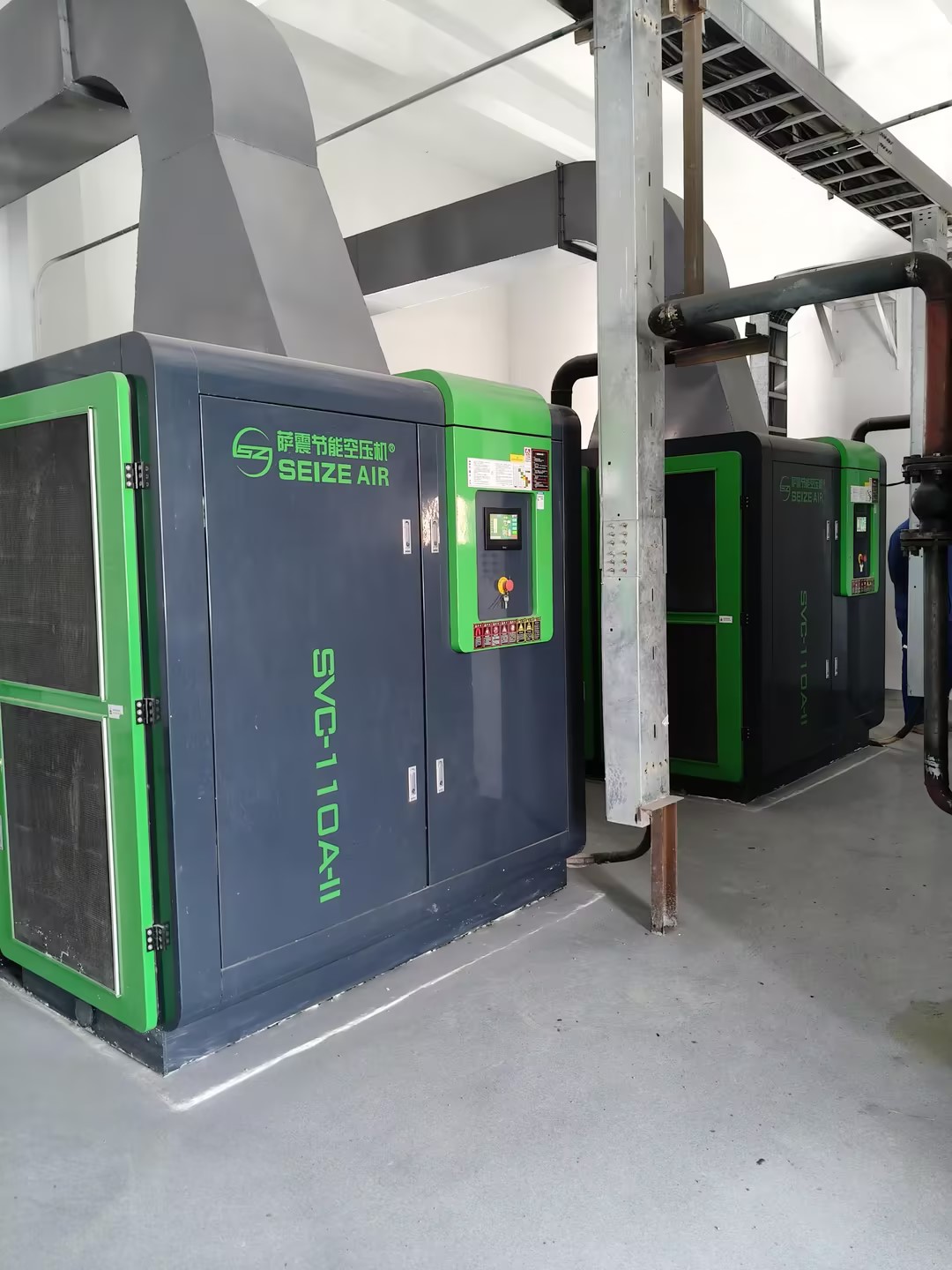
The units that last decades rarely do so by accident. Their owners tend to follow a quiet routine: walking the equipment once a week, listening for changes in pitch or rhythm, and keeping a small log of vibrations, temperatures, and run times. It’s not glamorous, but this habit of noticing small shifts means a worn belt or a clogged vent gets caught before it becomes a failure.
That same mindset carries into the unglamorous work of cleaning and lubrication. Long-lasting units are rarely allowed to run dirty. Filters get changed on a schedule tied to actual operating hours rather than a calendar guess. Grease points are wiped before and after use so contaminants don’t get pushed into bearings. When a part is replaced, the surrounding components get a quick inspection too—because the people who keep units running know that one new part often exposes the next weak link.
Perhaps the biggest differentiator is consistency. Many people can do a thorough service once, but the units that stand out are maintained by folks who treat upkeep as a weekly rhythm instead of an emergency response. They set reminders, keep spare filters on the shelf, and block out time for inspections even when everything seems fine. It’s this steady, almost boring discipline that separates a machine still humming at year twenty from one that dies at year eight.
What Real-World Runtime Data Reveals About Reliability
When you look at actual runtime telemetry from production systems, the first thing that stands out is how rarely failures follow a clean, predictable pattern. A service that passes every synthetic test can still crumble under a specific mix of retry storms, connection pool exhaustion, and garbage collection pauses. The data does not care about your architecture diagrams; it cares about what happens when three background jobs collide at 2 a.m. on a Tuesday.
Runtime data also exposes the long tail of reliability. Instead of asking whether a system is up or down, teams start asking how degraded it is for which users. Percentile latencies, error budgets, and memory growth curves reveal that most incidents do not start with a bang. They begin as a slow drift in a metric that nobody was watching closely enough, until one day the drift becomes a cliff.
The most uncomfortable lesson from field data is that redundancy does not guarantee resilience. Multiple replicas can fail simultaneously if they share a hidden dependency or a misconfigured feature flag. Observability is not about collecting more metrics. It is about tracing the causal chain from a spike in disk I/O to a timeout in an unrelated microservice, and then fixing the coupling that made the cascade possible.
Balancing Pressure, Heat, and Wear Without Overengineering
Finding the right balance between pressure, heat, and wear often comes down to choosing materials and designs that work with the forces at play, not against them. A common mistake is to overbuild every component in an effort to eliminate risk, which usually adds unnecessary weight, cost, and complexity. Instead, looking at where the real stress concentrations occur and addressing those specific points can make a system both lighter and more durable. For example, a simple change in surface finish or a slight adjustment in clearance can reduce friction heat far more effectively than doubling the size of a bearing.
Heat management is rarely a matter of adding more cooling hardware. Sometimes a different thermal path—like a relocated contact point or a material with better conductivity in one small area—can keep temperatures within safe limits without a single extra fan or heat sink. The same goes for wear: rather than coating every surface with an exotic material, you can redesign the geometry so that load is distributed more evenly. A slightly larger radius on an edge or a change in lubrication groove position can extend service life dramatically while keeping the part simple to manufacture.
The goal is not to remove every possible failure mode, but to understand which ones actually limit performance under real operating conditions. Overengineering often hides a lack of clarity about the dominant stress or heat source. By measuring or simulating actual loads first, you can then apply the smallest practical intervention—a material tweak here, a tolerance adjustment there—and end up with a design that stays cool, holds up, and doesn’t carry any dead weight.
The Role of Lubrication Quality in Day-to-Day Dependability
When equipment runs day in and day out, the quality of lubrication often determines whether it stays reliable or starts to show signs of wear. A machine that is properly lubricated handles stress more smoothly, maintains consistent operating temperatures, and avoids the small frictions that gradually lead to breakdowns. On the other hand, low-grade lubricants or inconsistent application can turn routine operation into a series of unexpected stops and costly fixes. The difference is rarely dramatic at first—it shows up as a slightly hotter bearing, a faint noise, or a gradual drop in efficiency—but over time, those small gaps in lubrication quality become the root of major dependability problems.
Daily dependability isn't about pushing equipment to its limits; it's about making sure the basics are done well every single shift. A high-quality lubricant does more than reduce friction—it cleans, cools, and seals out contaminants that would otherwise shorten component life. In busy operations, skipping a lubrication check or choosing a cheaper alternative might feel like a time saver, but it often leads to more frequent maintenance windows and unplanned downtime. Reliable performance comes from understanding that lubrication is not a one-time task but a continuous part of machine health. The right product, applied at the right interval, keeps the whole system predictable and ready for whatever the day brings.
In many facilities, the most dependable machines are not the newest or the most expensive—they are the ones that receive consistent, high-quality lubrication. Operators who pay attention to viscosity, contamination levels, and proper application methods often find that their equipment outlasts expectations. It's a quiet advantage: no alarms, no emergency calls, just steady output. That kind of day-to-day dependability doesn't come from a single heroic maintenance effort; it comes from choosing lubricants that match the operating conditions and treating every lubrication point as critical. When quality is built into that routine, the result is equipment that simply works, day after day.
Where Smart Design Choices Pay Off After 10,000 Hours
Most people think the 10,000-hour mark is about muscle memory. In design, it's really about building a filter. You start noticing which decisions actually held up over time and which ones only looked good in a polished case study. That's where the payoff begins—not in making things faster, but in making the right call before a single pixel is placed.
After enough hours, spacing, contrast, and hierarchy stop being abstract rules. They become reflexes. A designer with that kind of accumulated judgment can glance at a layout and immediately know that the button is three pixels too low or that the type scale will feel cramped on a real phone. These aren't guesswork; they're the result of ten thousand small failures and corrections.
The real return on those hours shows up in the projects that never need a full redesign. Instead of chasing trends, you choose structures that still make sense a year later. Clients may not always see why a particular restraint was smart, but they feel the result: a product that feels effortless because the hard decisions were already made behind the scenes.
FAQ
Oil-injected units run cooler because the oil absorbs heat from the compression chamber, which reduces wear on moving parts. They also seal clearances better, so the pump doesn't have to work as hard. With regular oil and filter changes, many of these machines easily pass 20,000 hours.
In shops and job sites, names like Atlas Copco, Kaeser, Sullair, Ingersoll Rand, Quincy, and Gardner Denver come up often. But the specific model matters more than the badge. A mid-range rotary screw from any of those with a good maintenance history will usually outperform a neglected premium unit.
For rotary screw compressors, 2,000 to 4,000 hours is a common interval, but check the manual because synthetic oils can stretch that. Harsh environments with dust or high humidity may require more frequent sampling. Skipping oil changes is the fastest way to turn a top-10 performer into a rebuild candidate.
You can, but you need an inline coalescing filter and desiccant dryer to strip out oil aerosols and moisture. Some painters do it with proper filtration, but honestly if finishing work is your main job, oil-free may be simpler. For general shop air and tools, oil-injected is hard to beat.
A 5 to 7.5 HP rotary screw with a 60 to 80 gallon tank works well for most small shops. That setup can handle impacts, ratchets, and occasional painting without constantly cycling. Piston compressors in that range can also work, but they run hotter under continuous load, so rotary screw is worth the extra cost for reliability.
Keep the intake filter clean, drain the tank daily to prevent rust, check belt tension if applicable, and clean the aftercooler and oil cooler fins. Also monitor the oil level and color. A sudden darkening or milky appearance means air bypass or moisture getting in, which deserves immediate attention.
They can be slow to start in freezing temperatures because oil thickens. Using the manufacturer's cold-weather synthetic viscosity helps. Some models have built-in crankcase heaters or you can add an aftermarket one. Letting the unit warm up for a few minutes before loading it also reduces wear.
Yes, many now use variable speed drives that ramp motor speed to match air demand, reducing start-stop cycles and heat buildup. Improved airend designs with better rotor profiles run quieter and cooler. Sealed lubrication systems on some models also cut down on contamination risks, so long-term reliability has genuinely stepped up.
Conclusion
Oil-injected compressors keep a firm grip on heavy-duty work because their lubrication loop quietly manages two problems that kill lesser machines: heat and friction. Instead of chasing exotic coatings or extra cooling stages, the best designs accept oil as a working fluid and lean into it. Maintenance records from mining, automotive, and food-processing plants back this up. Units that pass 10,000 hours without a teardown tend to share a few traits—conservative discharge temperatures, oversized oil separators, and bearings that tolerate occasional pressure spikes. The real-world runtime data also exposes a less glamorous truth: how you maintain a compressor matters at least as much as how it was built. Daily checks on oil level, color, and moisture content catch small problems before they become scored rotors or seized bearings. The top ten performers on this list are not the flashiest models; they are the ones whose owners keep a simple, consistent service routine.
Lubrication quality is where daily dependability is won or lost. A compressor fed clean, correct-viscosity oil at the right temperature runs quieter, holds pressure steadier, and sheds heat faster than a neglected twin. Smart design choices show up after the first ten thousand hours: air-end clearances that stay tight, inlet filtration that keeps abrasive dust out of the oil, and drain systems that remove water before it emulsifies. None of this requires overengineering—just honest tolerances and parts that are easy to reach. The models that rank highest here balance pressure, heat, and wear without resorting to fragile electronics or proprietary fluids. Their real advantage is that they keep working through shift changes, power dips, and the occasional missed oil-top-up, which is exactly what heavy industry needs.
Contact Us
Contact Person: Mia
Email: [email protected]
Tel/WhatsApp: +86 19821985894
Website: https://www.seize-air.com