
Stainless Steel Casting Vendor: How to Choose the Right Partner for Your Project
2026-11-16
Choosing a stainless steel casting vendor can feel like a gamble—surface finish, dimensional accuracy, and lead times all hang in the balance. Yet most procurement teams still pick suppliers the same way they did twenty years ago. That's a costly mistake. In this post, we break down what actually separates a reliable foundry from a one-time order taker, drawing on lessons learned at Supreme Machinery. If your next project involves stainless steel castings, these insights will help you avoid the usual pitfalls and find a partner worth keeping.
Pin down tolerances, finish, and testing needs before you reach out
Locking down specific tolerances early prevents expensive back-and-forth later. Instead of defaulting to “standard” or “tight,” list the exact dimensional ranges each part must hold, and flag the few features where variation truly matters. This lets a shop assess whether your job fits their equipment before they quote.
Finish calls are just as easy to overlook. Say whether a part needs anodizing, powder coat, bead blast, or simply a clean machined surface—and reference the standard you expect, such as a roughness average or a coating thickness. Without this, you may receive parts that look right but fail in the field.
Testing requirements should be written down, not assumed. If you need material certs, dimensional inspection reports, pressure testing, or first article approval, state it up front. Shops budget for this differently, and adding it after the quote often means delays or change orders.
Match the vendor’s alloy range to your part’s real service conditions
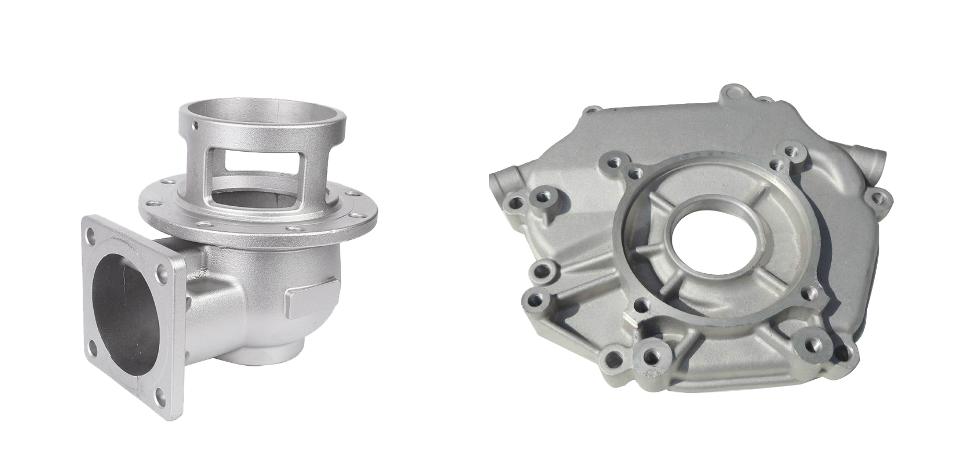
A vendor's alloy list is rarely arranged around what your part actually goes through. The grade names and datasheet numbers give you a starting point, but temperature swings, steady versus cyclic loading, chemical contact, and even downtime moisture can push a material into a different failure mode than the one listed first on a brochure. Before comparing alloys, write down the two or three conditions that have caused past parts to crack, wear out, or corrode.
Then ask the vendor not for a general recommendation, but for curves and test results under those specific conditions. Pay attention to creep behavior if heat is constant, fatigue strength if loads repeat, and local pitting or stress corrosion data if your environment contains halides or acids. Sometimes an alloy with a lower room-temperature tensile number survives longer simply because it handles thermal expansion or wet-dry cycling better. A small prototype run under your actual load and temperature cycle will tell you more than any polished chart.
Probe their process control with questions no sales sheet answers
Most suppliers will happily walk you through their shiny certifications and polished case studies. But if you want to know whether their process control actually holds up when things go sideways, ask about the last time a batch drifted out of spec. What triggered the deviation? Who caught it, and how long did it take to trace the root cause? The answers—or the awkward pauses—tell you more than any audit checklist.
Push further into the details that sales decks never cover. For example, how do they handle raw material variability from lot to lot? Do they adjust parameters in real time, or do they wait for a quality hold and rework? A genuinely mature process control system has feedback loops that don't rely on heroic efforts from a single operator. If their story starts and ends with “we inspect every unit before shipping,” that's not control—that's sorting.
You might also ask what happens when a key piece of equipment drifts toward its tolerance limits. Do they have live SPC charts that trigger maintenance before the process goes out of control? Or do they discover the problem only when reject rates spike? The distinction matters because true process control is proactive, not reactive. If they can't describe their control limits, reaction plans, and last containment event without pulling up a slide, assume the system exists mostly on paper.
Ask for a scrap and rework policy that doesn’t hide behind averages
Most manufacturing reports hand you a tidy scrap rate like 2.3% and call it a day. That number is a lie by omission—it buries the one production line that hit 9% waste last Tuesday behind three lines that stayed under 1%. When you ask for a scrap and rework policy, insist on granularity: per shift, per operator, per SKU, per machine. Averages let chronic problems hide for months while your true cost per unit quietly climbs.
A real policy doesn’t just count defects; it names who caught them and when. Was it the press operator at 2 a.m. sorting out twenty warped housings, or the final inspector catching the same issue after value was already added? Rework that happens before it reaches the customer is still waste—time, energy, and floor space spent fixing what should have been right the first time. Ask for a log that separates first-pass yield from total yield, because those two numbers tell very different stories about your process.
Finally, demand that the policy link scrap and rework to root cause, not just to a monthly target. If a supplier hands you a chart showing “acceptable” rework levels without explaining the top three failure modes and their countermeasures, you’re looking at wallpaper. The difference between a good policy and a bad one is simple: a bad policy reports the average, a good policy forces you to confront the worst number on the page and do something about it before the next production run.
Check how fast they respond during the quoting stage
A slow reply here usually says more than any portfolio piece. When you ask about materials, lead times, or a revised scope, a contractor who gets back to you within a few hours—or at least the same business day—tends to carry that urgency into the actual build. It is not about instant answers to complex questions, but about acknowledging the message and setting a clear expectation for when the full quote will land.
The quoting stage also reveals how organized their process is. If you are chasing an estimate for a week or getting vague updates with no timetable, that is a preview of how the project might run. A fast, clear response is not a guarantee of perfection, but it is a proven signal that you will not be left guessing once work begins.
Get eyes on the foundry floor before you commit
Walking a foundry floor tells you things no spec sheet ever will. You see whether the sand is actually being screened, if the cope and drag lines move without bottlenecks, and whether the crew has to shout over a badly maintained shakeout. That kind of detail only shows up in person.
Ask for a walkthrough during a live pour, not a staged tour. Most foundries will happily schedule one if they're confident in their process. You want to watch how they handle last-minute pattern changes, check if the ladle preheat is consistent, and notice if nonconforming castings are piled in a corner like a bad secret.
A half-day visit will save you from months of corrective action reports later. When you can match a face to the quality manager and see the melt deck with your own eyes, the supplier stops being a name on an audit checklist and becomes someone you can actually hold accountable.
FAQ
Ask for examples of parts similar to yours in terms of size, weight, and alloy grade. A vendor that has already cast thin-walled duplex components or large pump housings will understand your tolerance and surface finish requirements far better than one starting from scratch.
Request their inspection reports from past jobs—not just a generic quality policy. Look for evidence of spectrographic alloy verification, pressure testing, dye penetrant inspection, and dimensional layout reports with actual measurements rather than pass/fail stamps.
A good partner will ask about your service environment before suggesting an alloy. They should be able to explain why 316L might fail where 2205 duplex would hold up, or when a precipitation hardening grade like 17-4 PH beats standard austenitic steel.
It reduces finger-pointing when a casting arrives out of tolerance. If one team controls both the raw casting and the final machined surfaces, they are forced to understand how shrinkage and distortion affect the finished part instead of blaming the other shop.
Ask about their current backlog, the number of shifts running, and what happens when a furnace goes down. A vendor that confidently describes backup equipment or a sister plant is far more reliable than one that simply promises an optimistic delivery date.
Local sourcing typically shortens feedback loops and makes urgent design changes easier, but overseas vendors often win on piece price for simple, high-volume parts. If your project requires frequent prototyping or tight tolerances, the lower transport cost and time zone overlap of a local foundry usually outweigh the savings.
Be wary of vendors who refuse to share reference contacts, cannot explain their gating and riser design approach, or quote significantly below competitors without a clear reason. Also watch for vague answers about scrap rates—every foundry has them, and honest discussion is a good sign.
Conclusion
Choosing a stainless steel casting vendor starts long before you send an inquiry. You need a clear picture of the tolerances, surface finish, and any non-destructive or mechanical testing your part will require. Without that, two shops can quote the same drawing and deliver wildly different parts. Once the basics are set, dig into whether their available alloy grades actually match the conditions your component will face—temperature swings, corrosion, pressure, or repeated thermal cycling. A foundry that only pours 304 and 316 might not be the right fit for a part that sees chlorides at elevated temperature. Beyond the alloy list, ask process-control questions that a glossy brochure won’t answer: how do they track melt chemistry, how often do they calibrate heat-treatment furnaces, and what happens when a batch drifts out of spec? The way they answer tells you more than any certification wall.
Next, get specific about scrap and rework. Many vendors hide behind an average scrap rate, but you need to know what happens to your parts when things go wrong—who pays, how quickly the issue is flagged, and what corrective action looks like. During quoting, pay attention to response speed: a vendor that takes two weeks to answer a simple technical question will likely be slower when a production problem hits. Finally, if the order size justifies it, visit the foundry floor before you commit. Watch how molds are handled, whether the melt deck is organized, and whether workers follow the procedures they claim to have. A short walk through the shop often reveals more than a dozen email exchanges.
Contact Us
Contact Person: Paul
Email: [email protected]
Tel/WhatsApp: 8615067447509
Website: https://www.spironcasting.com