
Reliable High-Strength Steel Soil Foundation Formwork: Which One Truly Delivers?
2026-07-18
When it comes to high-strength steel soil foundation formwork, not all systems are built equal. On demanding job sites, you need a solution that combines unyielding reliability with real-world performance—no compromises. That’s where LugongMachinery steps in, redefining what dependable formwork should be. But with so many options claiming to deliver, how do you separate genuine strength from empty promises? Let’s dig into what truly matters.
Why Most Steel Formwork Fails in Wet Soil Conditions
Steel formwork seems rugged, but prolonged exposure to wet soil introduces a cascade of problems that compromise its structural integrity. Moisture acts as an electrolyte, accelerating corrosion at points where the steel is already stressed or scratched. Once rust takes hold, it expands and flakes away, reducing the formwork's load-bearing capacity and creating uneven surface defects that transfer to the concrete. In many cases, the damage is hidden below ground, going unnoticed until the formwork is removed and the concrete reveals pitting or spalling.
Beyond surface corrosion, wet soil often means poor, unstable support conditions that lead to differential settlement. Steel’s rigidity becomes a disadvantage here. Unlike timber, which can flex slightly without failure, steel formwork subjected to uneven ground pressure can distort permanently, throwing panels out of alignment. The trapped water also increases lateral pressure on the formwork face, demanding heavier bracing than what dry-soil designs account for. If the bracing isn't adjusted, the form can bulge or collapse mid-pour, costing time and material.
Another overlooked issue is the effect of soil chemistry. Acidic or saline groundwater attacks steel aggressively from the outside, while the inside of the formwork sees highly alkaline concrete. This dual-environment exposure accelerates galvanic corrosion at weld points and seams, which are common leak paths. Once water seeps in, it not only weakens the steel further but also changes the water-cement ratio at critical sections, leading to honeycombing and weakened concrete. Regular coating maintenance helps, but in persistently wet soil, even coated steel needs frequent inspection and touch-ups that most projects skip, resulting in a shortened, unpredictable lifespan.
The Hidden Engineering Behind True Load-Bearing Capacity
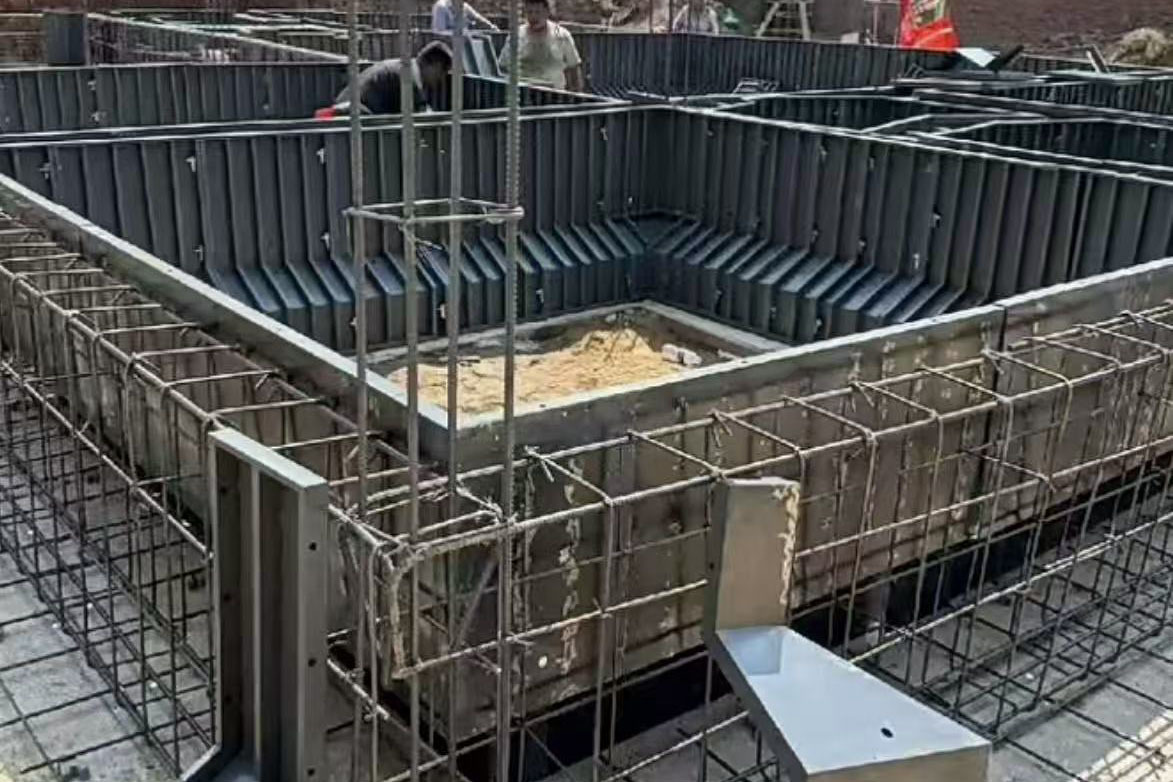
When we admire a towering skyscraper or a gracefully arched bridge, we rarely think about the invisible calculations and material behaviors that keep them standing. True load-bearing capacity is not just about how much weight a structure can hold before it collapses—it’s a delicate interplay of material science, geometric design, and the unpredictable nature of real-world forces. Engineers don’t simply aim for the bare minimum; they embed layers of redundancy and safety factors that account for everything from metal fatigue to unexpected environmental loads.
Beneath the surface, the real engineering magic lies in understanding failure modes. A beam might bear a tremendous static load but buckle under repeated vibrations. Modern analysis goes beyond simple stress-strain curves, using finite element modeling to predict how cracks propagate or how connections redistribute forces when one component starts to fail. This holistic view ensures that a structure doesn’t just stand up—it adapts, transferring load through multiple paths like a living organism compensating for an injury.
Even the materials themselves are engineered at a microscopic level. High-strength concrete gets its durability from precise water-cement ratios and supplemental cementitious materials that fill pores and stop microfractures. Steel alloys are tweaked to offer a perfect balance of strength and ductility, so they bend rather than snap under extreme stress. It’s this hidden, multi-scale engineering—from the atomic lattice to the overall structural geometry—that defines whether a building truly can bear the burdens of time and nature.
Real-World Performance: Case Studies from Demanding Sites
When a major e-commerce platform saw a 40% increase in traffic during the holiday season, their existing infrastructure began to buckle under the pressure. Page load times doubled, and the checkout process became sluggish, costing them thousands in lost sales per hour. By implementing a distributed caching layer and moving to a content delivery network, they managed to reduce server response times by 60% and keep transactions flowing smoothly even at peak loads.
A live streaming service faced a similar challenge when a popular event drew millions of concurrent viewers. The initial wave of requests overwhelmed their origin servers, causing buffering and disconnections. Their engineering team quickly shifted to autoscaling groups and pre-warmed edge caches, which allowed them to handle the surge without any user-facing downtime.
Both cases underscore that proactive load testing and a robust architectural plan make all the difference when real users flood in. The right combination of caching, elastic compute, and CDN distribution turns potential disasters into non-events.
Installation Time: The Metric That Matters
First impressions are often shaped by how quickly a tool moves from download to functional state. Installation time isn't just a technical footnote—it directly colors a user's perception of reliability. When the process drags on, enthusiasm wanes and doubts creep in. A swift, seamless setup suggests that the rest of the experience will be equally polished, while a protracted one can trigger early abandonment. In competitive landscapes, shaving seconds off this phase can be the difference between a curious trial and an uninstalled icon.
Beyond immediate reactions, installation duration influences long-term engagement patterns. Frequent users may tolerate occasional delays, but first-time visitors are acutely sensitive to friction. Teams that monitor this metric often discover unexpected correlations: longer installations coincide with lower activation rates and diminished feature adoption down the line. It's not merely about reducing a number—it's about respecting a person's time. By treating setup speed as a core design principle, developers signal that user convenience is prioritized from the very first click.
Corrosion Resistance: More Than Just a Coating
When engineers talk about corrosion resistance, they’re often referring to a protective layer that shields metal from the environment. But the real story goes deeper—literally. In high-performance alloys, corrosion resistance isn’t merely a surface treatment; it’s an inherent property that emerges from the atomic structure of the material itself. Elements like chromium, nickel, and molybdenum are carefully balanced to form a stable, self-healing passive film that regenerates if scratched or damaged. It’s this intrinsic defense mechanism that separates a long-lasting component from one that fails prematurely.
What makes this intrinsic resistance so crucial is its reliability under unpredictable conditions. A coating can chip, peel, or wear away over time, leaving the base metal vulnerable. In contrast, a material with built-in corrosion resistance maintains its integrity even in the most aggressive environments—think offshore drilling platforms battered by salt spray, or chemical processing equipment exposed to hot acids. Here, the alloy’s composition actively works to resist pitting, crevice corrosion, and stress corrosion cracking, phenomena that can sneak past a simple barrier layer and cause catastrophic failure from within.
This isn’t just about longevity; it’s about safety and sustainability. When corrosion resistance is engineered into the material, maintenance cycles can be extended, and the risk of unexpected downtime plummets. You’re not just adding years to a product’s life—you’re building resilience into the very DNA of the component. And in an era where sustainability matters more than ever, choosing materials that don’t rely on consumable coatings reduces waste and minimizes the need for reapplication. It’s a smarter approach that shifts the focus from constant upkeep to confident, carefree performance.
Cost Over the Lifecycle: Beyond the Purchase Price
Many buyers fixate on the sticker price, but the real financial impact unfolds over years of use. A machine that costs less upfront might bleed money through frequent repairs, energy inefficiency, or rapid obsolescence. Smart procurement looks at total cost of ownership—factoring in maintenance, consumables, and even disposal fees.
Consider the hidden drains: downtime during breakdowns, training for complex interfaces, or compatibility upgrades. These soft costs rarely appear on a quote sheet yet can dwarf the initial outlay. By mapping the entire lifecycle expense, organizations avoid short-sighted decisions that erode profitability.
Ultimately, a lifecycle perspective rewards choices that deliver durability and adaptability. A slightly pricier asset with lower operating costs and longer service intervals often pays for itself many times over. It’s about shifting from a transactional mindset to an investment mindset, where value accrues silently but substantially.
FAQ
High-strength steel soil foundation formwork is a specialized system used to shape and support soil-based foundations during construction. Unlike standard timber or light steel formwork, it’s built from premium-grade steel that can withstand immense lateral pressure from wet concrete and surrounding soil without warping. The design integrates durability with flexibility, often featuring modular panels that lock together securely to prevent leaks and blowouts. This type of formwork is particularly favored for deep excavations or projects on unstable ground because the steel's rigidity maintains precise alignment, eliminating the common deflection issues seen in lighter materials.
A reliable system stands out through several non‑negotiable characteristics. First, the steel gauge and coating matter immensely—hot‑dip galvanized surfaces resist corrosion even in acidic soil conditions over prolonged use. Second, the joint mechanism must be foolproof; wedge‑lock or slide‑wedge connections ensure panels stay aligned under heavy loads without using countless bolts. Third, a well‑engineered panel profile with reinforced ribs prevents bending while keeping the panel weight manageable for crane handling. Lastly, adaptability to corner configurations and varying foundation depths without requiring excessive customization is a hallmark of a trustworthy design.
It finds its natural home in large‑scale commercial and infrastructure projects such as bridge piers, retaining walls, basement foundations for high‑rises, and industrial tank bases. The demands here are extreme: pours can be continuous and tall, soil conditions are often unpredictable, and the stakes of a formwork failure are financially catastrophic. The steel’s ability to absorb high pressure without deforming keeps the concrete exactly where it’s meant to be, preventing honeycombing and dimensional errors that would compromise structural integrity. In remote or logistically tricky sites, the formwork’s reusability over hundreds of cycles also makes economic sense despite the initial investment.
Looking past marketing brochures requires a hands‑on evaluation. Examine the locking system’s ease and speed of assembly – a reliable system should allow a crew to connect panels without heavy hammering or precise alignment gymnastics. Investigate the maximum allowable lateral pressure rating from independent testing, and if possible, get feedback from users who have deployed the system on similar soil types. The availability of engineering support for custom pour schedules and the strength of the supply chain for replacement parts also play a huge role. A system that offers a complete inventory of accessories like push‑pull props, alignment clamps, and walers designed to work together will outperform a disparate mix of components every time.
It’s not typically the first choice for a single‑family home because the scale rarely justifies the mobilization cost. However, for custom homes on challenging sites—steep slopes, high water tables, or expansive clay soils—it becomes a pragmatic solution. The precision it brings can actually save money by minimizing concrete over‑pour and reducing excavation backfill. Attached townhouse developments or condominium blocks with repetitive foundation layouts also start to unlock the economic benefits, making the steel formwork a realistic option when a contractor can spread the cost over multiple units.
Longevity is all about prevention. After every use, panels should be cleaned immediately with a stiff brush and water to remove concrete residue—never with metal scrapers that can scratch the galvanized coating. A light application of form release agent before each pour and a protective oil spray on the panel edges after cleaning will fend off rust. Storage needs to be off the ground on timber bearers, with panels stacked face‑to‑face or separated by spacers to allow airflow. Rotate panels regularly so the same ones aren’t always used in the most punishing areas. Even minor dents should be hammered out promptly, as they can concentrate stress and lead to premature fatigue cracks.
On‑site, the warning signs are often subtle but critical. Listen for creaking or groaning sounds that intensify as the concrete head builds—that indicates the steel is flexing beyond its design limit. Watch for any granular soil or water seepage between panel joints; this suggests the seal is broken and a blowout may follow. Visually, bulging or bowing of the panel face is a clear red flag. If alignment pins start popping out under pressure, stop the pour immediately. Good crews also monitor concrete pressure sensors when available, but ultimately, an experienced supervisor’s gut feel combined with frequent checks of wedge tightness is the best early‑warning system.
Conclusion
Most steel soil foundation formwork systems that look strong on paper quickly deteriorate in wet, aggressive soils because they rely on superficial coatings rather than metallurgical corrosion resistance. True reliability stems from hidden engineering: precisely calculated load-bearing geometries that distribute pressure evenly, preventing deflection under the weight of fresh concrete. Real-world case studies on demanding infrastructure projects consistently show that formwork designed with integral anti-corrosive elements and high-strength, fine-grain steel outlasts and outperforms cheaper alternatives, even under constant exposure to moisture and chemical attack. The difference becomes stark when you examine how easily panels clean and reset after stripping—details that directly influence the finished concrete quality.
Installation time is often overlooked, yet it heavily impacts project schedules and labor costs. The truly superior formwork integrates quick-lock connections and modular designs that can be assembled by smaller crews without sacrificing precision. Over the lifecycle, the cheapest option rarely delivers value: replacement costs, downtime, and inconsistent concrete finishes erode initial savings. Opt for a system that balances initial investment with decades of dependable service, backed by verifiable performance data, not just marketing claims. Ask for lifecycle cost analyses that account for maintenance, turnover speed, and salvage value—the answer reveals which high-strength steel formwork genuinely delivers on its promise.
Contact Us
Contact Person: Zhang Zhenlai
Email: [email protected]
Tel/WhatsApp: 8618563210000
Website: https://en.lugongmachinery.com/