
Recovery Machine Factory: A Look Inside Modern Recovery Equipment Manufacturing
2026-11-16
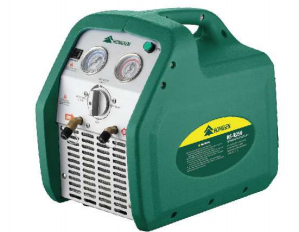
Step into a modern recovery machine factory and you won't find greasy floors or clanging metal—instead, you'll witness precision robotics, rigorous testing, and a quiet obsession with efficiency. At the heart of this evolution is HONGSEN, a manufacturer redefining what recovery equipment should be. But what actually happens behind those factory doors? From raw coil winding to final refrigerant recovery cycles, the process is far more intricate than most technicians realize.
Where Raw Frames Become Recovery Units
The journey from a damaged video file to a playable clip starts with a fundamental shift in how we see the data. Every raw frame pulled from a corrupt source is more than just a block of pixels—it's a fragment of a larger story, waiting to be reassembled. Instead of treating these fragments as isolated pieces, we group them into what we call recovery units: small, self-contained sequences that can be validated, repaired, and stitched together independently.
This approach changes everything about the recovery workflow. Rather than attempting to fix an entire file in one pass, we break the process down into manageable units. Each unit carries enough context—timestamps, frame references, and structural markers—to stand on its own. If one unit fails, the others remain intact. That isolation lets us apply targeted fixes, test different repair strategies, and preserve the maximum amount of original footage without cascading errors.
The result is a system where raw frames are no longer fragile leftovers but building blocks. By converting them into recovery units, we turn a chaotic stream of corrupted data into a structured, resilient pipeline. It's not about rescuing a single file anymore; it's about reassembling a story, one recoverable unit at a time.
The Calibration Bay Most Customers Never See
Tucked behind the showroom’s polished floor and the service counter’s busy hum, there’s a narrow corridor that ends in a door marked only with a faded “Authorized Personnel” sticker. Past that door, the air smells faintly of ozone and machined steel. This is the calibration bay, a space no customer has ever asked to tour, yet every gauge, sensor, and torque wrench passing through it decides whether the work out front holds up for the next fifty thousand miles.
On any given Tuesday, a technician might spend three hours rebuilding the zero-point baseline on a laser alignment head, checking it against a granite reference block worn smooth by decades of use. The process isn’t fast, and it never makes the schedule board. But when a vehicle leaves the shop with steering that tracks dead straight at eighty miles an hour, the reason sits back here in a temperature-controlled cabinet, recalibrated to within half a thousandth of an inch.
Most customers will never see the hand-scrawled logbook on the workbench, the one with entries like “drift correction – 0.02 mm – humidity 41%” written in pencil. They only notice that their brake pedal feels firm, their fuel trim stays quiet, and the dashboard warning lights stay off. That’s the quiet victory of this room: it turns invisible precision into ordinary, forgettable reliability, which is exactly what you want when you’re driving home at night.
Pressure Testing Is Not a Rubber Stamp
The phrase “rubber stamp” suggests a process that exists only to confirm what everyone already expects. Pressure testing, when treated that way, quickly loses its value. A real test should be capable of producing an answer you do not want to hear. If the outcome is guaranteed in advance, the exercise is just theater — and everyone in the room knows it.
That is why the design of the test matters more than the label attached to it. A genuine pressure test introduces conditions that force weak assumptions to surface: overloaded inputs, unexpected dependencies, cascading failures. It does not ask whether the system works under ideal circumstances. It asks which part breaks first, and what happens when it does.
Teams that use pressure testing as a rubber stamp eventually stop paying attention to the results. Alarms become background noise, and near-misses get filed away as successes. The antidote is to treat every test as a chance to learn something uncomfortable, not as a box to tick before launch.
A Walk Past the Leak Test Stations
The first thing you notice is the low hum, a steady vibration that rides just under the clatter of the factory floor. Rows of stainless steel stations sit in a neat line, each one marked by a small digital readout blinking green or red. A technician drifts between them with a clipboard, tapping a gauge here, nudging a fitting there, her movements unhurried but precise. The air smells faintly of compressed oil and warm circuitry.
At one station, a freshly assembled valve is locked into a clear acrylic chamber. Hoses snake in from above, and a soft hiss escapes as air pressure climbs. You watch the needle on the analog meter twitch, then settle. The green light flashes — no leak. A few feet down, a different part, a manifold maybe, gets dunked into a water bath. Tiny bubbles would betray any flaw, but the surface stays smooth, only the gentle ripples from the dunk itself moving across the water.
Further on, an older machine has been retrofitted with a touchscreen, its casing scratched from years of use. The operator there works slowly, deliberately, as if testing not just the part but the patience of the morning. Every few cycles, he logs a result on a grease-smudged notepad, a backup to the system. Passing by, you get the sense that this corner of the plant holds its breath — each station a threshold, each test a quiet verdict on whether something is ready to leave the line.
Building for the Field, Not the Showroom
Most products are polished to death in conference rooms before they ever touch real dirt. Bright lighting, clean desks, and a captive audience can make almost anything look functional. But the moment that same gear gets hauled onto a muddy job site or into a cramped factory aisle, the story changes. Clips break, screens glare, and interfaces that seemed intuitive suddenly demand three hands. Designing for the field means accepting that users will wear gloves, drop devices, and work in weather you wouldn't drive through. It's less about impressing a buyer on day one and more about surviving month twelve.
Field-first thinking starts with questions showroom teams rarely ask. How does this handle vibration from a diesel engine? Can a user with wet hands read the display at noon? What happens when the battery dies mid-task and there's no outlet for a mile? These aren't edge cases in industries like construction, agriculture, or logistics; they're Tuesday. So we test early prototypes on actual sites, hand them to operators during their shift, and watch where they struggle. That feedback loop is brutal but honest. It kills features that look great in demos but add weight or complexity, and it forces simplicity that only real conditions can teach.
The payoff isn't a flashy launch photo. It's a tool that becomes part of someone's routine because it doesn't fight them. A field-built product earns trust through dents and scratches, through firmware that stays stable after repeated drops, through a screen that remains readable under dust and rain. Showrooms reward first impressions; the field rewards staying power. Build for the latter, and you won't need to chase the former.
What Final Inspection Reveals Before Shipping
Final inspection often uncovers the quiet discrepancies that slipped past earlier checks. It might be a hairline scratch on a metallic surface, a slight color mismatch between batches, or a thread that wasn't trimmed cleanly. These defects rarely affect core function, yet they can undermine the perceived quality the moment a customer opens the box. Inspectors document every such finding, knowing that visual perfection carries heavy weight in first impressions.
Beyond surface flaws, this stage reveals assembly errors hidden under casings or behind panels. A screw torqued too tightly may have cracked an internal bracket. A connector might be improperly seated, causing intermittent failure only after prolonged use. These are the problems that don't show up on quick power-on tests but emerge during vibration, temperature cycling, or drop simulations. Final inspection acts as the last filter for issues that would otherwise surface in the field.
The most valuable insights, however, come from patterns. When inspectors repeatedly find the same misalignment or the same missing label on multiple units, it points to a process failure upstream. Shipping can be delayed not because of one bad piece, but because the data reveals a need to correct a jig, retrain an operator, or adjust a supplier's tolerance. Final inspection thus becomes less about catching individual defects and more about signaling whether the entire batch is truly ready for the customer's hands.
FAQ
Most lines turn out refrigerant recovery units, vacuum pumps, and oil-less compressors, but the high-volume items are portable machines built for HVAC service crews who need to pull refrigerant from systems before repairs.
A lot of the hand-fitting has been replaced by CNC-machined manifolds and automated leak testing. Assembly cells now handle multiple models on the same line, and every unit gets a barcode-tracked pressure test before it leaves the floor.
The frames are usually powder-coated steel or impact-resistant aluminum. Internal tubing tends to be copper with brazed joints, while seals and gaskets are chosen from HNBR or PTFE to stand up to refrigerant exposure.
Each machine is charged with nitrogen, run through a simulated recovery cycle, and checked for leak-down rates. Some manufacturers also pull a deep vacuum on the unit and run it against a calibrated restriction to verify recovery speed.
The best shops use in-process checks at every station, including torque verification on fasteners, ultrasonic testing on brazed joints, and a final functional audit on a random sample from each batch. They also keep traceability records for every major component.
The price usually reflects the compressor type, oil-less design, pressure ratings, and whether the unit is certified to AHRI standards. Cheaper machines often use smaller condensers, thinner tubing, and skip the long-term endurance testing.
You need a clean assembly area for compressor and motor pairing, a separate brazing section with fume extraction, a test bay with multiple charging and recovery stations, and a packaging line that can handle palletized freight.
Many are, but not fully. Robots handle repetitive tasks like screw driving and label placement, while skilled technicians still do the final refrigerant circuit connections because those joints require judgment and visual inspection.
Conclusion
Step inside a recovery machine factory and the first thing that strikes you is the sheer transformation taking place on the floor: raw steel frames, cut and bent days earlier, are bolted, wired, and plumbed until they become the compact recovery units service techs rely on daily. It is not an assembly line of identical clones but a series of skilled stations, each with its own rhythm. Welders tack mounting brackets while a nearby bench routes capillary tubing in loops that will later pull refrigerant from a system. Every operator knows the machine they are building will end up in a field where a failed O-ring or a misaligned sensor means lost time and angry customers, so the work carries a quiet intensity. No one is rushing to fill a showroom; these units are destined for rooftops, utility rooms, and the back of service vans.
The calibration bay is the hidden heart of the factory. Here, technicians spend hours dialing in pressure transducers and temperature probes against certified references, often repeating a single adjustment until the drift is less than a tenth of a percent. Most customers never see this room, but they feel its absence the moment a machine misreads a system charge. From there, the units move to a gauntlet of leak tests: first a nitrogen hold, then a vacuum decay, and finally a helium sniffer that can find a leak the size of a human hair. Passing a leak test is not a rubber stamp here; it is a repeated trial, because any recovery machine that cannot hold vacuum is just a very expensive paperweight. Final inspection pulls everything together—torque marks on fittings, label alignment, serial number verification, and a last run with a reference refrigerant to confirm the unit hits its recovery rate. Only then does it get crated for the field, ready for mud, rain, and the kind of abuse only a real job site can deliver.
Contact Us
Contact Person: KOPASS HO
Email: [email protected]
Tel/WhatsApp: 8613606566112
Website: https://www.hongsenref.com/