
Oil Immersed Transformers in China: A Comprehensive Overview
2026-08-08
In the heart of China's rapidly evolving power infrastructure, oil immersed transformers stand as unsung heroes, quietly shaping the reliability of energy distribution. But what makes them so vital, and how are they adapting to modern grid demands? This deep dive uncovers the engineering nuances and market dynamics, with insights from Deepwill that challenge conventional thinking.
The Backbone of China's Power Grid: Why Oil Immersed Transformers Remain Essential
Oil immersed transformers have long served as the silent workhorses of China's vast electricity network, their dominance rooted in a unique combination of reliability and efficiency that few alternatives can match. Unlike dry-type transformers, these liquid-filled units use carefully refined mineral oil to both insulate and cool internal components, enabling them to handle much higher voltages and power capacities without overheating. This makes them indispensable for the long-distance transmission corridors that stretch from western hydroelectric plants and northern coal-fired stations to the densely populated eastern and southern provinces. Without the immense load-bearing capability of oil immersed designs, maintaining grid stability during peak summer cooling demand or the rapid ramp-up of industrial production would be far more challenging.
The longevity of oil immersed transformers also sets them apart in a country where infrastructure must endure harsh and varied climates, from the humid subtropical zones of Guangdong to the frigid winters of Heilongjiang. The oil not only dissipates heat effectively but also preserves the solid insulation by preventing oxidation and moisture ingress, often allowing these units to operate reliably for 40 years or more with proper maintenance. Field crews can periodically test and regenerate the oil, extending the asset's life without a complete overhaul—a crucial economic advantage when replacing a major transmission transformer can cost millions and cause extended outages. In a grid as expansive and complex as China's, this durability translates directly into system resilience and lower whole-life costs.
Even as solid-state technologies and alternative insulating fluids emerge, oil immersed transformers continue to evolve rather than retreat. Modern versions incorporate advanced monitoring sensors that track dissolved gases, moisture levels, and temperature in real time, enabling predictive maintenance that reduces the risk of catastrophic failure. Meanwhile, Chinese manufacturers have become global leaders in producing ultra-high-voltage oil immersed transformers that form the backbone of the country's ambitious west-to-east power transfer projects. Their ability to withstand extreme voltage stresses while maintaining efficiency above 99% underscores why this century-old technology remains not just relevant, but essential for China's energy future.
Inside the Tank: How Chinese Manufacturers Are Redefining Oil Immersed Transformer Design
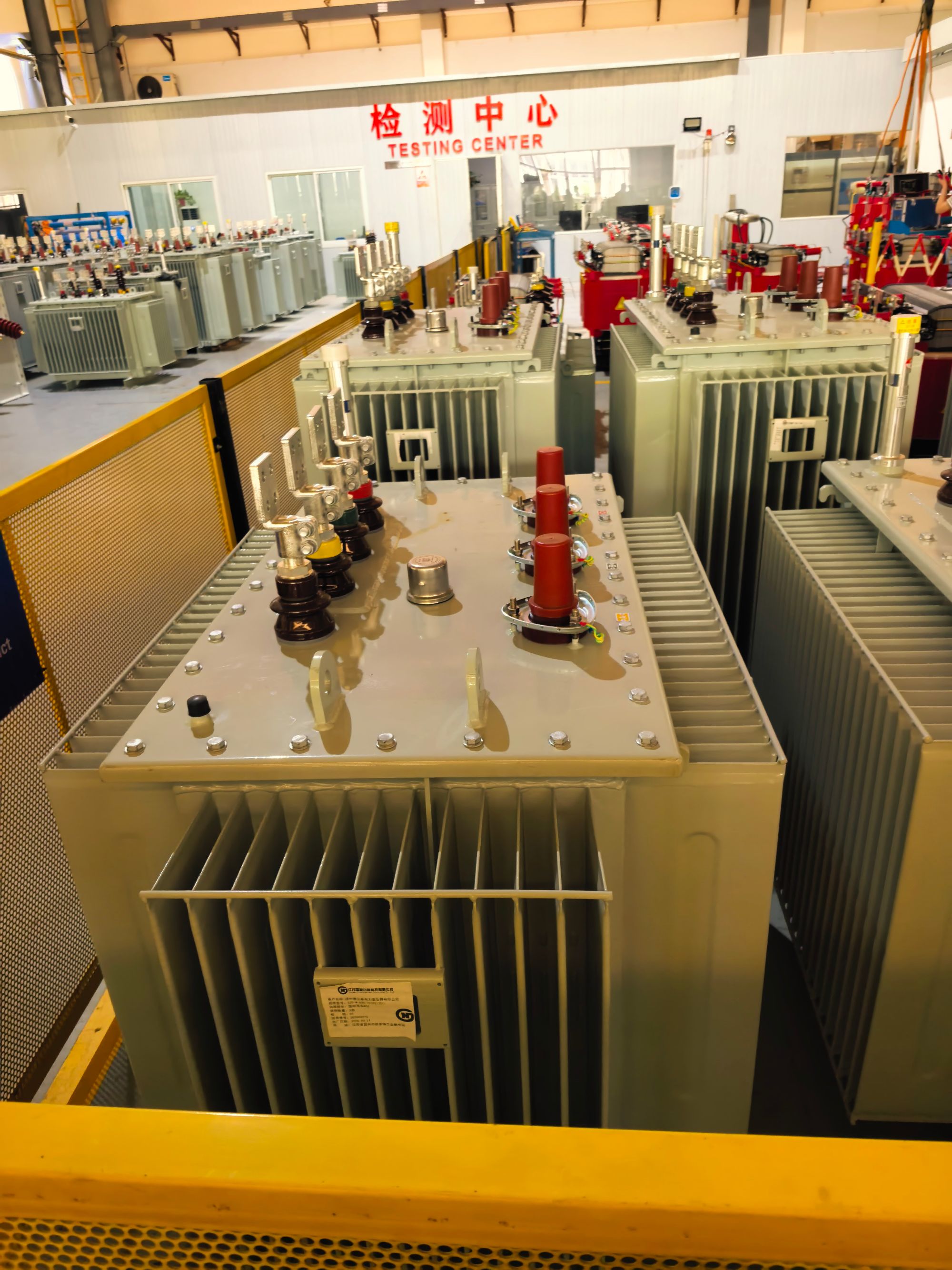
Walk through any modern substation and you'll feel a quiet shift in the air—Chinese manufacturers have turned the oil immersed transformer from a workhorse into a finely tuned instrument. The core-and-coil assembly now benefits from precision wound conductors and grain-oriented silicon steel that slashes no-load losses to levels once thought unattainable. Inside the tank, designers are rethinking fluid dynamics themselves, sculpting internal structures to direct oil flow exactly where hot spots form, keeping temperatures lower without resorting to oversized cooling systems or exotic fluids.
What truly sets these designs apart is the marriage of century-old insulation principles with digital-age intelligence. Pressboard barriers and cellulose spacers are being replaced by high-density, thermally upgraded materials that shrug off moisture and aging, while embedded fiber optic sensors thread through windings like nerves, feeding real-time stress data to condition-monitoring platforms. Instead of waiting for scheduled maintenance, utilities now watch partial discharge patterns evolve and adjust loading accordingly—a move that has quietly pushed asset life expectancy far beyond typical warranty periods.
Perhaps most striking is how engineering teams have reimagined the tank itself. Corrugated walls are no longer just for heat dissipation; they act as flexible diaphragms that breathe with oil volume changes, eliminating the need for external conservators on many designs. Advanced welding techniques and triple-sealed gasketing have slashed seepage risks so dramatically that some manufacturers now offer fully sealed, nitrogen-cushioned units that promise zero-maintenance intervals for over a decade. This isn't evolution—it's a fundamental rethinking of what a transformer can be, driven by a pragmatic blend of material science, manufacturing precision, and field experience that China's factories have honed at remarkable scale.
From Urban Sprawl to Remote Wind Farms: Diverse Applications Across China
China's energy landscape is being reshaped by renewable installations that sprout in the most unexpected places. In crowded megacities, rooftop solar panels and building-integrated photovoltaics are turning skyscrapers into vertical power plants, helping to offset the massive electricity demands of urban sprawl. Meanwhile, vast solar farms blanket deserts in the northwest, where once-barren land now generates gigawatts of clean electricity, and floating solar arrays bob on reservoirs and lakes, making use of space that would otherwise go untapped.
Venture farther out, and the scale of innovation grows even more striking. On the grasslands of Inner Mongolia and the ridges of Yunnan, wind turbines tower over grazing sheep and ancient tea terraces, their blades turning steadily in the mountain breezes. Offshore, in the choppy waters of the East China Sea, colossal wind farms are taking shape, their foundations drilled deep into the seabed to capture the relentless ocean winds. These projects are not just about generating power—they often bring roads, jobs, and connectivity to remote communities, stitching together a new kind of rural development.
This diversity of application is a testament to China's adaptive approach to clean energy. Rather than relying on a single blueprint, engineers and planners tailor each installation to local geography, climate, and community needs. From the rooftops of Shanghai to the windswept Gobi Desert, these varied deployments are building a decentralized and resilient grid, one that can withstand the pressures of a changing climate while fueling the country's ambitious carbon-neutral goals.
Navigating Efficiency Standards: China's Push for Low-Loss Oil Immersed Transformers
China's transformer industry is undergoing a quiet but significant evolution. With energy conservation now a national priority, manufacturers are rethinking every component of the traditional oil immersed transformer. The latest efficiency standards are not just bureaucratic benchmarks—they represent a fundamental shift in how we approach electrical infrastructure. Engineers talk about core materials and winding configurations less as technical footnotes and more as the keys to unlocking real-world energy savings.
The push for low-loss designs is driven as much by economics as by environmental targets. A transformer that wastes even a fraction less energy over its decades-long service life can translate into substantial cost reductions for grid operators. That's why China's updated standards focus on parameters like no-load loss and load loss, pushing the industry toward amorphous metal cores and optimized conductor geometries. The message is clear: efficiency is no longer a premium feature—it's the new baseline.
What makes this transition interesting is the balance between innovation and reliability. Oil immersed transformers have been around for over a century, and any change to their proven design must be justified by rigorous testing. Chinese manufacturers are now blending advanced simulation tools with practical field data to create units that meet the demanding GB standards without sacrificing the ruggedness that utilities depend on. The result is a new generation of transformers that run cooler, last longer, and quietly redefine what we expect from a century-old technology.
Overcoming Obstacles: Material Costs, Maintenance, and Environmental Pressures in the Chinese Market
Grappling with rising raw material prices is a daily reality for companies operating in China. From metals to specialty chemicals, cost fluctuations can erode margins overnight, forcing businesses to constantly renegotiate supplier contracts or seek alternative sources. Many are turning to localized supply chains and long-term agreements with domestic producers to buffer against global volatility, though this demands meticulous planning and a willingness to invest in relationships rather than just transactions.
Maintenance, often overlooked, becomes a silent drain when equipment must withstand high utilization rates and sometimes less-than-ideal operating conditions. The key lies in shifting from reactive fixes to predictive upkeep, using IoT sensors and data analytics to anticipate failures before they halt production. This approach not only extends asset life but also aligns with the Chinese market's fast-paced demands, where downtime can mean lost customers within hours.
Environmental pressures add another layer of complexity, as regulations tighten around emissions, waste, and energy use. Rather than viewing compliance as a burden, forward-thinking players are leveraging it to gain an edge—adopting circular economy principles and cleaner technologies that often qualify for government incentives. By treating sustainability as a catalyst for process innovation, they cut long-term costs while meeting both regulatory requirements and the expectations of an increasingly eco-conscious consumer base.
Looking Ahead: Smart Monitoring and Green Fluids Shaping the Next Generation of Transformers in China
China’s transformer industry is pivoting toward smarter, cleaner operations, with intelligent monitoring systems moving from pilot projects to mainstream deployment. Embedded sensors now track partial discharge, temperature, and moisture in real time, feeding data into cloud-based analytics that predict faults weeks before they happen. This shift slashes downtime and extends asset life, a crucial advantage as the grid absorbs erratic renewable inputs.
At the same time, green insulating fluids are rewriting the rules of environmental compliance. Natural esters derived from vegetable oils are replacing mineral oil in new installations, offering higher flash points and full biodegradability. Retrofitting older units with these fluids not only cuts fire risk but also aligns with tightening regulations on carbon footprint and spill containment, pushing manufacturers to rethink fluid dynamics and cooling designs.
Looking ahead, the fusion of digital twins and eco-friendly materials will redefine reliability standards. Virtual replicas of transformers, updated continuously with sensor streams, allow operators to simulate stress scenarios and optimize maintenance schedules without touching the hardware. Paired with low-carbon fluids, this digital backbone positions China’s next-generation transformers as both resilient and sustainable, setting a benchmark for global grid modernization.
FAQ
Chinese oil immersed transformers typically incorporate advanced insulation structures, optimized cooling ducts, and high-grade silicon steel cores. Many models feature hermetically sealed tanks with corrugated walls or radiators to manage thermal expansion and enhance heat dissipation. Emphasis is placed on low-loss designs and the use of environmentally friendly insulating oils.
Manufacturers increasingly use high-flash-point natural ester fluids as an alternative to mineral oil, significantly reducing fire risk. Additionally, on-load tap changers with vacuum interrupters minimize arcing, while rugged tank designs and leak-proof gaskets prevent oil spillage. Many units comply with IEC 60076 standards and include pressure relief devices and Buchholz relays for early fault detection.
Projects like the West-East Power Transmission and ultra-high voltage (UHV) grid expansion have driven rapid advancements. They necessitated transformers with higher capacity, lower losses, and superior reliability under extreme conditions. This led to breakthroughs in insulation coordination, cooling efficiency, and the development of prototype 1000 kV oil immersed units now widely deployed across China's backbone network.
China has a mature domestic supply chain for key materials such as grain-oriented electrical steel, high-purity copper conductors, and multilayer pressboard insulation. Leading material science institutes collaborate with manufacturers to refine amorphous metal cores and nanocrystalline alloys, reducing reliance on imports and enabling cost-effective production of world-class transformers.
Routine tests include winding resistance measurement, insulation resistance and dielectric absorption ratio, dielectric withstand and induced overvoltage tests, as well as rigorous dissolved gas analysis (DGA) of insulating oil. Type tests and special tests such as temperature rise, short-circuit withstand, and noise level measurement are common, ensuring compliance with both GB and IEC standards.
Distribution oil immersed transformers, often pole-mounted or pad-mounted, prioritize compactness, low no-load losses, and tamper-proof designs for residential or light industrial use. Power transformers, typically in substations, emphasize on-load voltage regulation, high short-circuit strength, and advanced cooling systems to handle transmission voltages up to 1100 kV. Both segments increasingly integrate smart sensors for online monitoring.
Operators perform periodic oil filtration and regeneration to maintain dielectric strength, especially in humid regions. Thermographic inspections identify hotspots, while online DGA monitors track incipient faults. In cold northern areas, anti-condensation heaters and low-temperature oil are used; in the south, emphasis is on corrosion-resistant coatings and adequate ventilation to handle high humidity and typhoon risks.
Conclusion
From the dense urban grids of Shanghai and Beijing to the vast renewable energy projects stretching across the Gobi Desert, oil-immersed transformers remain the silent workhorses of China's electricity infrastructure. Their reliability under high loads and proven thermal performance keep them firmly at the core of transmission and distribution networks. Chinese manufacturers are redefining these established designs by integrating directed-flow cooling, high-grade grain-oriented silicon steel, and compact tank structures that maximize performance in limited footprints. This evolution has broadened their deployment—today, they reliably serve towering commercial centers, sprawling residential complexes, heavy industrial plants, and remote wind or solar farms where maintenance access is scarce and environmental conditions are extreme.
China's push for carbon neutrality is driving stringent efficiency standards, accelerating a nationwide shift to low-loss and ultra-low-loss transformers. These mandates encourage the use of amorphous metal cores and refined winding techniques that drastically cut no-load consumption. Yet the industry faces persistent challenges: fluctuating prices of copper and electrical steel inflate production costs, while end-users wrestle with oil sampling, purification, and leak prevention over decades of service. Heightened environmental scrutiny is also prompting a move away from mineral oil toward natural ester fluids, which offer superior biodegradability and fire safety. Digitalization is emerging as a game-changer: embedded sensors and IoT platforms now provide real-time thermal and dissolved gas analysis, enabling predictive maintenance and reducing unplanned outages. This blend of smarter monitoring and environmentally conscious fluids is shaping a new generation of transformers that are not only more efficient but also more adaptive to the dynamic demands of a modern, green power system.
Contact Us
Contact Person: Julion
Email: [email protected]
Tel/WhatsApp: 8617351370631
Website: https://www.deyunelectric.com