OEM Trekking Socks Factory Delivers Custom Outdoor Performance Socks for Global Brands
2026-09-18
When global outdoor brands need trekking socks that survive punishing trails and still feel like a second skin, they rarely settle for off-the-shelf. Fuli Socks has quietly become the OEM partner behind some of the toughest performance socks on the market. But what does it actually take to turn a custom design into a sock that lasts season after season? This deep dive walks you through the factory floor, the materials, and the overlooked details that separate forgettable socks from the ones hikers refuse to replace.
What Goes Into Every Pair of Custom Trekking Socks We Ship
Each pair starts with a merino wool and nylon blend that gets adjusted by zone rather than mixed uniformly. The heel and toe areas are knitted denser to handle abrasion, while the instep and calf use a more open stitch so heat can escape. A thin elastic band is worked through the arch, and the toe seam is pressed flat before the sock ever leaves the line.
Before any pair goes into a box, it is washed twice to settle the fibers and then checked on a wooden foot form. We look for uneven tension, misaligned stripes, or any thread that could catch a toenail. Socks that do not pull back into shape after a stretch test are unraveled and reknitted, so the ones we ship are the ones we would take on a week-long route ourselves.
The Testing Protocol Behind Our Outdoor Performance Socks
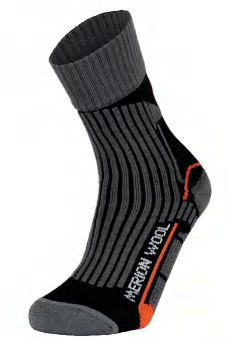
Every pair of our outdoor performance socks goes through a week-long simulated trek before it ever touches a trail. We strap them onto a mechanical foot that walks, climbs, and flexes inside a climate-controlled chamber, cycling between 40°F dawn starts and 95°F midday sun. Blisters don't lie, so we measure friction hotspots with pressure-mapped insoles and log exactly when and where the yarn starts to pill or thin.
Beyond the lab, we send pre-production batches to a rotating crew of trail runners, thru-hikers, and mountaineers who keep detailed wear logs. They don't just report holes or sagging—they rate how the sock feels at mile 3 versus mile 18, whether the toe seam disappears by day two, and how fast the fabric dries after a creek crossing. That feedback loops directly into knit density changes, sometimes altering just two rows of stitching around the arch.
The final gate is a wash-and-stretch torture test: 50 cycles of hot water, aggressive detergent, and a mechanical wringer that mimics years of abuse. If the heel pocket loses more than 8% of its shape or the compression band slips by half an inch, the design gets scrapped. It's slow and a little obsessive, but that's why our socks stay up, dry fast, and refuse to quit mid-adventure.
Merino, Nylon, or Both? Matching Yarn to Trail Conditions
On a wet ridgeline above treeline, pure merino can feel like a liability—once saturated, it hangs heavy and takes forever to dry. That’s where nylon enters the equation. A 70/30 merino-nylon blend shrugs off abrasion from pack straps and granite scrambles while still moving sweat away from your skin. The trade-off? Slightly less softness and a faint synthetic sheen, but for rocky, brushy trails the durability wins every time.
For dry, high-desert routes or fast-and-light day hikes, 100% merino still earns its place. It regulates temperature across cold mornings and hot afternoons, resists odor for days, and packs down small. But if your route involves creek crossings, persistent drizzle, or off-trail bushwhacking, a higher nylon content—up to 40%—keeps the fabric from tearing and speeds drying. Some hikers swear by all-nylon socks for wet canyons, pairing them with a merino base layer on top.
The real answer is rarely one fiber. Match the yarn to the abuse your clothing will take: merino-dominant blends for cool, dry trails where comfort and stink resistance matter most; nylon-forward blends for alpine scrambles, muddy approaches, and multi-day trips with no chance to dry gear. Check the knit density too—loosely spun merino pills faster under friction, while a tight gauge with nylon reinforcement lasts seasons longer.
How Global Brands Put Their Stamp on Our OEM Sock Line
When a global fashion label decides to include socks in a seasonal drop, they rarely start from scratch. Instead, they lean on established OEM partners like us to handle the knitting, dyeing, and finishing—then layer their own identity on top. This collaboration often begins with a brand sending over a mood board or a single reference pair, and our team works backwards to match fiber blends, gauge, and even the subtle tension in the ribbing. The result is a base sock that feels familiar in hand but carries no visible logo yet.
From there, the branding stage takes over. Some labels go for a discreet woven tab at the toe seam, others opt for a jacquard pattern that repeats their monogram down the ankle, and a few ask for a custom colorway that only exists in their seasonal palette. We've also handled requests for scented packaging inserts and printed size dots that match a brand's retail system. The key is that every touchpoint—from the way the sock folds into its band to the thread used for the contrast heel—is dictated by the brand's style guide, not our own house defaults.
What often surprises new partners is how much influence a brand's stamp has on the factory floor itself. A single order might include three different packaging formats for different sales regions, or require a fourth inspection station just to check logo alignment under UV light. Over time, these preferences become part of our standard operating knowledge, so when a brand returns for a second run, we can match their signature details without a lengthy onboarding call. That accumulated familiarity is what turns a generic OEM sock into a recognizable piece of a global lineup.
Small Batch to Container Load: Scaling OEM Sock Production Without Losing Grip
Moving from a few hundred pairs to a full container doesn't just mean more knitting machines running longer. The real friction shows up in places that small runs hide: dye lot drift across yarn batches, subtle changes in stitch tension when machines are pushed to higher output, and packaging inconsistencies that only become obvious once you're staring at 40,000 pairs. Keeping a firm grip on quality at this scale means treating your pilot run as a calibration exercise, not a one-off sample. Record every setting — needle timing, yarn feed rate, wash temperature — so the container load mirrors what your first buyer approved.
A practical route is to scale in deliberate steps rather than jumping straight to full capacity. Run a mid-size batch of 2,000 to 5,000 pairs after the initial sample approval, pull pairs from the beginning, middle, and end of each production day, and compare them against your golden reference. This catches drift before it gets baked into a month of output. It also helps to hold a weekly buffer stock of raw yarn from the same dye lot for reorders, since a fabric that looks identical on a swatch card can shift noticeably under factory lighting.
The goal isn't to eliminate variability — that's a fantasy in OEM work — but to make it boring. When your QC team can predict a failed seam rate within a percentage point and your packing line runs the same carton dimensions for every order, you've scaled without losing the grip that won the small-batch accounts in the first place.
From First Sketch to Final Stitch: A Factory Tour in Six Steps
The journey starts in a corner room where the designer’s pencil scratches across paper, turning a vague idea into a technical sketch with seam lines and notches. From there, the sketch is handed to the pattern maker, who transfers those curves onto stiff card, adding seam allowances and grainlines. The pattern pieces get laid out on long cutting tables, where layers of fabric are spread flat and pinned down. Watching the electric knife glide along the chalked outlines feels oddly satisfying—each cut is precise, but there’s still a sense that the fabric could shift at any moment.
Once the pieces are cut and labeled, they move to the sewing floor. Here the air hums with the rhythm of industrial machines, but each operator works with a quiet focus. Sleeves are set into armholes, collars are attached, and pockets are topstitched. What stands out is how many small decisions happen at this stage: a slight adjustment in tension, a rethreading of the needle, a quick press of a seam before it’s sewn shut. None of it is rushed, but it all adds up fast.
The final steps are less visible but just as crucial. Garments are turned inside out, checked for loose threads, measured against the original spec sheet, and then steamed or pressed until they look crisp. Only after that do they get folded, tagged, and boxed for shipment. By the time a finished piece leaves the factory, it has passed through at least half a dozen pairs of hands—and each one has left a small mark that a machine alone could never replicate.
FAQ
We make a broad range covering lightweight hiking, mid-weight trekking, and heavy mountaineering socks, with options for different cushioning zones and heights from ankle to knee.
Yes, we work with merino wool blends, Coolmax, nylon, and elastane. The exact yarn mix is adjusted based on the climate and wear intensity your brand targets.
Common upgrades include reinforced heel and toe, arch support bands, mesh ventilation panels, and flat toe seams. We can also add blister-resistant yarns or silver-ion anti-odor treatment.
We handle full private label production, including custom knit-in logos, woven labels, hang tags, and polybag or box packaging according to your brand guidelines.
MOQ usually starts at 300 to 500 pairs per design, but this can vary depending on yarn availability and the number of size runs. For first orders we often suggest a smaller pilot batch.
Each batch goes through inline checks for stitching, size, and moisture-wicking performance. We also keep lab test reports for abrasion resistance and colorfastness when required.
Yes, we ship regularly to North America, Europe, and Australia. Lead times are normally 30–45 days after sample approval, with express options if needed.
Our in-house team can help refine sock construction, select yarns, and create prototypes. We often suggest panel designs or cushioning maps that better match the intended trail use.
Conclusion
Every pair of trekking socks leaving our OEM factory carries a deliberate balance of material science and trail-ready construction. We start by matching yarns—merino for moisture control and odor resistance, nylon for abrasion zones—to the specific demands of alpine scree, wet forest floor, or desert switchbacks. That choice is not left to guesswork; our in-house testing protocol simulates friction, moisture wicking, and thermal retention across hundreds of wear cycles before a design is greenlit. Global brands then layer their own identity onto this foundation, from custom knit patterns and reinforced heel tabs to branded colorways that survive repeated washing without fading. It’s a partnership where technical performance stays non-negotiable.
Scaling from a first sketch to a container load doesn’t mean loosening tolerances. Each order—whether a small batch for a boutique label or a full production run for a multinational—moves through the same six-step journey: sampling, yarn lab testing, prototyping, field wear trials, final stitch audit, and packaging. Our floor keeps machine tension and needle counts consistent across shifts, so the sock a brand approves in round one is the sock that arrives in round three. That repeatability is why outdoor brands come back, season after season, confident that the grip, cushion, and fit their customers expect won't shift when volumes do.
Contact Us
Contact Person: Ryan Li
Email: [email protected]
Tel/WhatsApp: +86 13757342500
Website: https://www.fulisocks.com/