Leading Glass Bottle Filling Machine Manufacturer for Reliable Packaging Solutions
2026-11-03
What if the real bottleneck in your glass bottle line isn’t speed, but the small inconsistencies that force rework and slow changeovers? Wanying Machinery approaches filling not as a standalone task, but as the core of a reliable packaging solution—where precision and uptime are designed in from the start. Here’s what that difference looks like on the plant floor.
Why Precision Engineering Matters More Than You Think in Glass Bottle Filling
Most people assume filling a glass bottle is just opening a valve and waiting. But at production speeds exceeding 600 bottles per minute, the margin between a perfect fill and a costly defect shrinks to fractions of a millimeter. Precision engineering controls the exact shape of the filling nozzle, the pressure pulse that starts and stops liquid flow, and the timing of the shut-off. Without that level of control, foam jumps, bottles splash, and the line operator spends more time adjusting than running.
Glass itself adds another layer of unpredictability. No two molded bottles are identical: neck diameters vary, wall thickness shifts, and tiny internal stresses change how liquid clings or drips. Precision filling systems account for these variations by reading back-pressure or weight in real time and adjusting the fill volume on the fly. That’s the difference between a consistent headspace and a pallet of sticky, leaking bottles at the end of a shift.
The financial impact is easy to overlook until you run the numbers. A mere 1% overfill on a line producing two million bottles a week doesn’t sound like much—until it becomes twenty thousand bottles’ worth of lost product every week. Precision engineering turns that loss into profit, extends equipment life by reducing stress on seals and valves, and keeps fill weight within the narrow band that regulators and customers actually check.
The Hidden Costs of Choosing a Generic Filling Machine
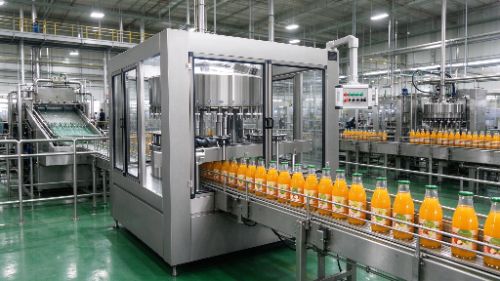
Most buyers compare sticker prices and assume machines with similar fill volumes are interchangeable. A generic filling machine, though, often carries expenses that never appear on the quote. Frames get built lighter, seals wear faster, and controls lack the precision to handle foam, particulates, or temperature shifts. That leads to inconsistent fills, rejected batches, and extra rework—costs you absorb quietly on the production floor.
The real drain is downtime. When a generic machine goes down, replacement parts may be weeks away because the manufacturer doesn't stock proprietary components locally. Changeovers between container sizes can require manual adjustments and trial-and-error, eating hours every week. If the filler can't communicate with upstream cappers or labelers, you end up paying for custom brackets, sensors, or PLC work—none of it included in the original price.
Another overlooked burden is product loss and compliance. Slight dripping, splashing, or inaccurate fill levels can waste several liters per shift, and in food, beverage, or pharmaceutical settings, inconsistent fills can trigger line audits or regulatory issues. A cheap machine may also lack sanitary welds, quick-release parts, or washdown ratings, forcing longer cleaning cycles and higher labor costs. Over a few years, these hidden costs often exceed the price difference of a more tailored system.
Designing Fill Accuracy Around Unusual Bottle Geometries
Bottles with offset necks, asymmetrical shoulders, or deep side contours rarely behave like standard cylinders on a filling line. A centered nozzle may look acceptable in a CAD drawing, but the actual fill path can drift when the finish is off-axis or the body flexes under clamping pressure. Short-stroke diving nozzles with a slight lateral float are often more reliable than rigid center guides, allowing the tip to settle into the neck without forcing the bottle into a false position.
Geometry also changes how liquid enters and air escapes. A concave waist or an inward-curved shoulder can trap air and send product back up the fill tube, creating foam or short fills even when the timer is correct. Staging the fill speed helps: run the first 20–30% of the volume slowly until the irregular section is covered, then ramp to full flow. In some cases, a low-turbulence nozzle or a vacuum-assisted return path is the only way to keep the meniscus stable across a non-round cross-section.
Verification needs to look beyond a single fill-height point. On bottles with slanted or sculpted bases, the liquid level is not horizontal at the end of the fill, so a camera or laser check at one side can pass while the opposite side is underfilled. Weighing each cavity and comparing against a target range for that specific mold is more dependable, and it catches the gradual drift that happens as neck guides wear or the bottle preform distribution shifts from one cavity to the next.
Cutting Waste and Downtime Starts on the Factory Floor
The most reliable way to reduce waste and downtime isn't found in a quarterly report or a management meeting—it's discovered in the daily rhythms of the production line. Operators who run the machines every shift notice the small inefficiencies that never make it into formal audits: a sensor that misfires once an hour, a conveyor that jams under specific humidity, a tool change that takes twenty seconds longer than it should. When frontline workers are given the authority to flag these issues and the tools to fix them immediately, the cumulative savings often dwarf what any top-down initiative can achieve.
Real improvement happens when managers stop treating the factory floor as a place to enforce rules and start treating it as a source of intelligence. Instead of waiting for a breakdown to trigger a maintenance ticket, teams can use simple visual boards or shift handover notes to track recurring micro-stoppages. A five-minute pause in one area might seem trivial, but multiply that across three shifts and a month, and you've lost hundreds of production hours. The key is to capture that loss not as an abstract KPI but as a concrete, fixable problem owned by the people closest to it.
Downtime often hides in plain sight, disguised as 'normal' setup time or 'acceptable' scrap rates. By walking the floor with a stopwatch and a notebook—not a clipboard and a checklist—supervisors can uncover patterns that software dashboards miss. One plant found that a quarter of its unplanned stoppages came from a poorly positioned raw-material rack that forced operators to stretch and wait. Moving the rack cost less than a hundred dollars and eliminated the bottleneck entirely. Waste reduction, at its core, is about trusting the people who touch the process every day and giving them the space to act on what they already know.
Scaling From Pilot Batches to Full Production Without New Headaches
Moving from pilot batches to full production often uncovers problems that never showed up in the smaller runs. Mixing times change, heat transfer behaves differently, and minor variations in raw materials suddenly matter. Instead of assuming the process will scale linearly, treat the first full-scale batch as a new experiment. Document every adjustment you make—not just what worked, but what almost went wrong—so the next transfer is less of a surprise.
One of the biggest headaches is equipment mismatch. A mixer that handles 50 liters perfectly may leave dead zones at 5,000 liters. Before committing to a full run, walk the line with operators and ask where material could pool, where temperature probes might read misleading values, and which valves are hard to clean. Fixing these small physical issues early prevents batch failures that are expensive to trace later.
Finally, don't let pressure to hit deadlines override the need for a controlled ramp-up. Run at 70–80% of rated capacity for the first few batches, check critical quality attributes after each stage, and only then push toward full speed. This approach adds a few days to the timeline but spares you from the much longer downtime that comes from rushing a process that wasn't truly ready.
The Support Network That Keeps Your Line Running After Installation
Once the installation crew packs up and leaves, the real test begins. A production line isn't a static machine you can just switch on and forget. It shifts, wears, and occasionally throws a tantrum no manual predicted. That's why the support network matters more than the initial setup. We keep a dedicated team of engineers who know your specific configuration, not just a generic hotline. They have access to live diagnostics from your line, so when something drifts out of tolerance, you get a call before you even notice the scrap rate climbing.
Beyond the phone support, there's a physical layer to this. Regional parts hubs mean a replacement servo or sensor isn't waiting on a transatlantic flight. Most critical components arrive within a day, and for lines running 24/7, we stage a small on-site inventory tailored to what breaks first in your environment. The software side is just as proactive: monthly health reports show wear trends, and remote recalibration sessions happen while your operators are on break, not during peak hours.
What often gets overlooked is the people factor. Your maintenance crew inherits a complex system, and our training doesn't stop after the handover walkthrough. We run quarterly troubleshooting drills using your actual fault history, so when the line hiccups at 3 a.m., someone on your floor already knows the fix. That combination of spare parts, remote eyes, and trained hands is what truly keeps the line running long after the installation photos are taken.
FAQ
We build gravity, pressure, and vacuum fillers, plus special designs for thick sauces or frothy liquids. Each one is configured around the product's viscosity, carbonation level, and filling temperature.
Instead of forcing one machine to do everything, we use quick-change star wheels, guide rails, and servo-driven fill heads. A medium-size line can switch from 200ml juice bottles to 750ml wine bottles in under 15 minutes with no tools.
Beyond the usual beverage plants, our fillers run in distilleries, hot sauce factories, pharmaceutical syrup lines, and cosmetic toner production. The same basic frame gets adapted with different seals and contact materials.
Yes. We use counter-pressure filling for beer, sparkling wine, and sodas. The bowl maintains a steady CO2 blanket, and the vent tube design pulls foam back before capping, cutting product loss to under 0.5%.
We design around wear points rather than adding sensors everywhere. Fill nozzles use ceramic plungers, drives are direct-coupled to avoid belt slip, and every machine runs a 72-hour continuous dry cycle before shipping.
We can supply just the filler if you already have a capper and labeler, but most customers choose our integrated monoblock system: rinser, filler, capper in one frame. It saves floor space and removes conveyor timing issues.
Our service engineers use a remote diagnostic portal, but we also keep spare parts hubs in Rotterdam, Dubai, and Singapore. If a board fails, we don't ask you to ship it back first—we send a replacement with a prepaid return label.
Fill accuracy comes from magnetic flow meters on each fill head, not a single master meter. Each nozzle adjusts its own cut-off time every 50 milliseconds based on the previous bottle. That keeps standard deviation below ±0.3% even at 12,000 bottles per hour.
Conclusion
A filling line is only as dependable as the engineering behind it. When you work with glass bottles—especially unusual shapes, narrow necks, or heavy bases—small misalignments in fill heads or nozzle timing quickly turn into broken containers, inconsistent levels, and wasted product. That is where precision design separates a true manufacturer from a supplier selling generic equipment. Instead of forcing your bottle to fit a machine, the right partner builds the filling sequence around your container's profile, adjusting valve response, indexing speed, and drip control to hold tight tolerances run after run. The hidden costs of a one-size-fits-all filler do not show up on the invoice; they appear later as micro-cracks, spillage during transfer, or a line that cannot handle a simple geometry change without expensive retrofits.
On the production floor, reliability means more than uptime charts. It starts with reducing scrap and avoiding the small stops that erode a shift. A manufacturer focused on reliable packaging solutions designs cleaning, changeover, and maintenance into the operator's workflow, not as afterthoughts. Scaling from a pilot batch to multi-shift production should not require re-engineering the line—the same fill accuracy and speed control should transfer without adding new headaches. After installation, the difference shows in how quickly issues are resolved: direct access to engineers who know your specific bottle and product, remotely guided diagnostics, and spare parts that arrive before a minor fault becomes a day of downtime. That support network is what keeps your line running long after the commissioning paperwork is signed.
Contact Us
Contact Person: Tyson
Email: [email protected]
Tel/WhatsApp: +8613396971296
Website: https://www.wanyingmachinery.com