
Industrial Parts Factory Crafting Durable Components for Advanced Manufacturing Needs
2026-10-30
Behind every high-performance assembly line is a quieter kind of workhorse: the industrial parts factory turning raw metal into components that outlast the machines they serve. At Zhaoyuqi, we don’t just machine parts—we engineer resilience into every casting, forging, and finish. From heavy-duty ductile iron brackets to tolerance-critical housings, our floor bridges the gap between ambitious design specs and real-world manufacturing demands. In this post, we’ll walk through how that happens, and why advanced manufacturers keep coming back when downtime simply isn’t an option.
Where Tight Tolerances Translate to Longer Service Life
When mating components are machined to unusually tight tolerances, the contact surfaces fit together with far less room for uneven load distribution. That matters because even a few microns of misalignment can concentrate stress at edges or points, accelerating pitting, fretting, or fatigue cracking. Tight control over dimensional variation keeps the load path predictable, so no single area of a bearing, gear, or shaft shoulder ends up doing all the work.
Another overlooked benefit is how precisely matched clearances affect lubrication and contamination. A gap that is too wide allows lubricant to squeeze out under pressure, while a gap that is too narrow starves the interface. Tight tolerances help maintain the intended film thickness across a wider range of operating temperatures and speeds. At the same time, closely matched sealing surfaces reduce the paths available for dust, moisture, or abrasive particles to enter critical contact zones.
This is why high-precision assemblies often outlast nominally identical parts with looser dimensional specs. The upfront cost of holding tighter tolerances gets paid back through fewer adjustments, less unplanned downtime, and a longer interval between overhauls. Instead of relying on thicker coatings or heavier components to absorb wear, the geometry itself works to delay the onset of damage.
Material Choices That Stand Up to Heat and Friction
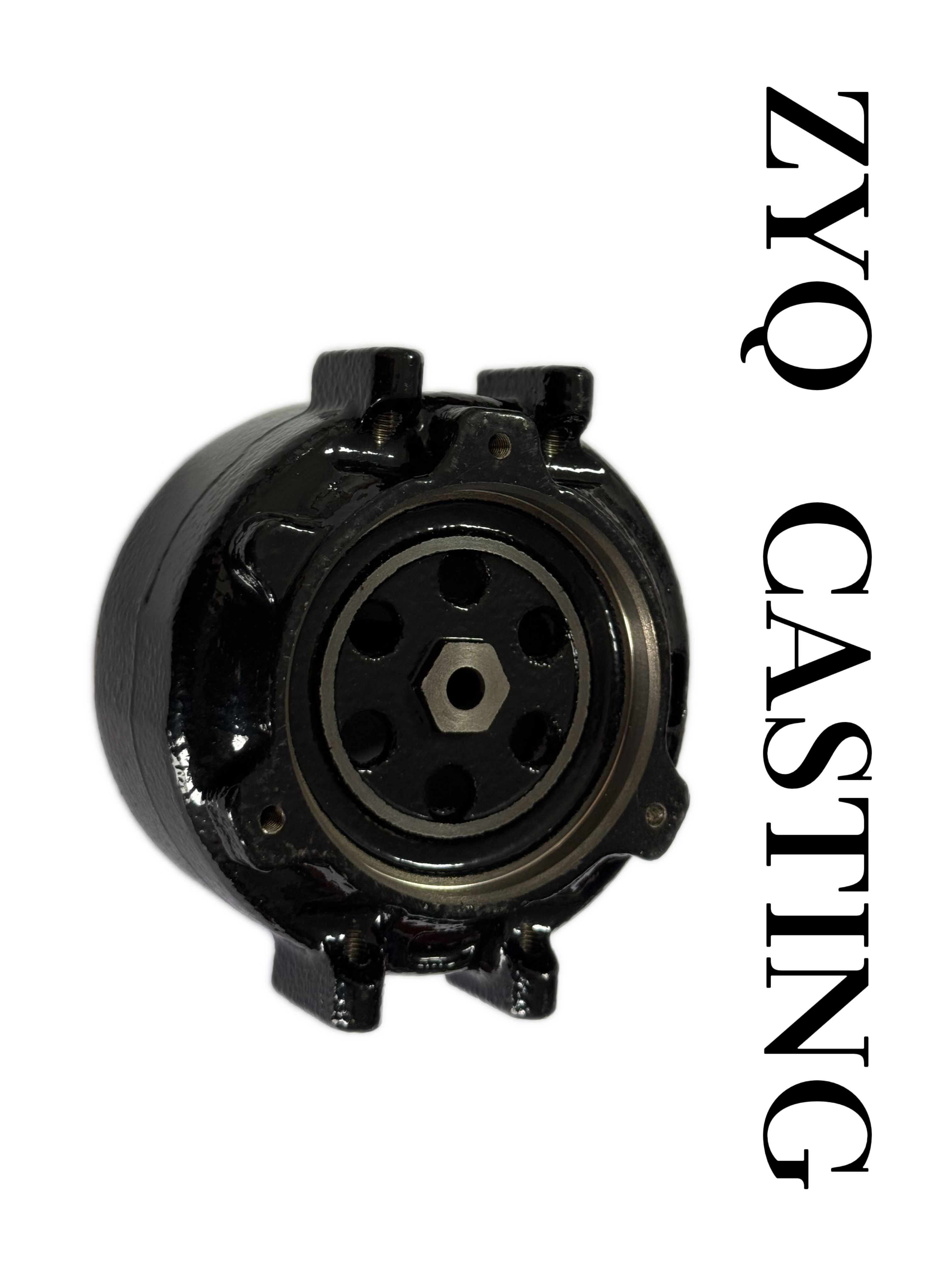
When parts scrape against each other or sit in furnace-level heat, common plastics and mild steels give out fast. The materials that actually hold up are engineered ceramics, carbon-carbon composites, and high-nickel alloys. Each has its own trade-offs: ceramics handle extreme temperatures but shatter under sudden impact, while nickel-based alloys keep their strength above 1000°F yet demand precision casting. The first step is matching the exact heat cycle and abrasion load to the material's weak points.
In braking systems, carbon-ceramic rotors survive repeated glowing stops because they shed heat quickly and barely expand. For industrial bearings and seals, silicon carbide or tungsten carbide coatings stop surfaces from fusing under high pressure. Newer iron-based superalloys have started replacing cobalt blends, cutting cost without giving up hardness. The practical approach is often a tough core with a hard surface layer, balancing heat tolerance against the flexibility needed to avoid cracking.
Low-Volume Runs That Don't Compromise on Consistency
Small-batch runs don't have to mean looser tolerances. Our setup locks tooling offsets and feed rates to a master recipe, so a run of forty parts follows the same control limits as a run of four thousand. Measurements happen at fixed intervals during the cycle, not just at the end, which catches drift before it reaches a reject bin.
Changeovers are where inconsistency usually sneaks in. We handle that by using fixtures with locating pins and preset torque values, so the operator isn't making judgment calls at midnight. If a dimension starts trending toward a limit, the line stops and the root cause is corrected before the next piece. The result is that low volume still means repeatable output from first piece to last.
Documentation follows every order, regardless of size. You'll get recorded inspection data for each batch, including actual measured values, not just pass/fail stamps. That makes it possible to compare two orders placed six months apart and see the same narrow spread—because the process doesn't change just because the quantity did.
Every Batch Inspected Beyond the Blueprint
A blueprint tells you what should be, but only by physically walking each batch through its paces do you discover what actually is. We don't just check dimensions against a drawing; we test how materials behave under stress, how finishes hold up to real handling, and how components fit together when nobody's watching. That extra layer of scrutiny catches the quiet flaws that specs alone would never flag.
Every run gets the same unglamorous treatment: samples pulled from the middle of production, not the cherry-picked start, then pushed past their intended limits. If a weld is supposed to hold 500 pounds, we take it to 650. If a coating is rated for five years of UV exposure, we simulate seven. It's not about distrusting the process; it's about respecting the gap between theory and reality.
The result is a batch you don't have to second-guess. Because while most inspections stop at what the blueprint demands, ours begin there and keep going until we'd sign our own names to every single piece. That's not overkill. That's just how you build something worth shipping.
Design Feedback Before the First Cut
Before anyone touches a timeline, the right kind of feedback can save a project from going down the wrong path. Instead of waiting to react to a rough cut, talk through the script beats, reference clips, and even the internal rhythm of the story. If a director or client can point to where the energy should rise or fall, the editor can shape that into the first assembly rather than guessing and rebuilding later. This stage isn't about nitpicking individual shots; it's about agreeing on what the edit should feel like.
One common mistake is treating the first cut as the starting point for all conversations. By then, many creative decisions have already been made and undoing them feels expensive. A better approach is to give feedback on a paper edit or an annotated storyboard. Ask questions like 'Does the opening idea still hold if we cut the first two seconds?' or 'Can we try a version where the interview audio leads before the b-roll?' These kinds of comments are cheap to test and keep the edit room focused on options rather than fixes.
Practical feedback before the first cut also means clearing up logistical constraints early. If the final video needs to be under two minutes, say so before the editor trims the interviews. If the brand voice leans casual, share a couple of sample scripts or past edits that got it right. When everyone treats the pre-edit conversation as part of the creative work, the first cut arrives with fewer surprises and more room for refinement.
Parts That Keep Automated Lines Moving
Every automated line relies on a set of physical components that work together without pause. Conveyor belts, for instance, do more than just carry items from one station to the next—they set the rhythm for the entire process. If a belt slips or wears unevenly, downstream machines wait, cycle times stretch, and small inefficiencies multiply across the shift. Regular inspection of tension, tracking, and surface condition keeps these moving parts from becoming the line's weakest link.
Beyond the belts, drive rollers, pneumatic actuators, and rotary indexers translate control signals into actual motion. A roller with a failing bearing might still spin, but the added friction changes how products are positioned, leading to misfeeds or jams at critical transfer points. Similarly, sensors that monitor part presence or position must stay clean and aligned; a dusty photoeye or a misaligned proximity switch can cause the line to halt for no visible mechanical reason. Technicians who treat these components as a coordinated system—not isolated parts—spend less time troubleshooting and more time improving throughput.
What often gets overlooked are the small mechanical interfaces: guide rails, transfer plates, and timing screws. These pieces quietly shape product flow, and even a millimeter of drift can turn a smooth handoff into a recurring bottleneck. By standardizing adjustment procedures and keeping spare wear items on hand, maintenance teams can restore smooth operation in minutes instead of waiting for a full rebuild. The goal isn't just to prevent breakdowns, but to keep every moving element in its intended envelope of speed, alignment, and force.
FAQ
We handle a broad range from hardened steels and aluminum alloys to engineering plastics and composites. The choice depends on the load, temperature, and chemical exposure the part will face, and our engineers can recommend a mix that balances performance with cost.
Every batch goes through stress testing that simulates real operating conditions—vibration, thermal cycling, and load fatigue. We also track material certifications and keep detailed process records so any part can be traced back to its production run.
Yes, we regularly take on custom work. You can send drawings, samples, or even a rough sketch, and our team will reverse-engineer or refine the design for manufacturability while keeping tolerances tight.
Depending on the part geometry and material, we can hold tolerances down to ±0.005 mm on critical features. We use CNC machining, grinding, and EDM where needed to maintain consistency across large production runs.
Absolutely. We encourage a pilot batch for new designs. It lets you validate fit and function without committing to large inventory, and we can adjust tooling or processes quickly based on your feedback.
Our parts go into automation systems, robotics, packaging equipment, and precision instruments. Many clients are in automotive, aerospace, medical device manufacturing, and heavy machinery.
Lead times vary with complexity and quantity, but a standard machined part often ships within two to three weeks after drawings are approved. For urgent jobs, we can expedite with overtime shifts and express material sourcing.
We operate under ISO 9001:2015 and have additional process certifications for aerospace and medical components. Incoming raw materials and outgoing finished parts are inspected with CMM and optical measurement systems.
Conclusion
At the heart of this industrial parts factory is a simple belief: a component should outlast the machine it serves. That starts well before the first cut, with design feedback that catches potential failure points while changes are still cheap. Once production begins, tolerances are held so tight that mating parts wear evenly, extending service life in demanding automated environments. Material selection isn't an afterthought either—we lean toward alloys and treatments that resist heat, friction, and the slow creep of fatigue, because swapping out a failed part costs far more than building it right the first time.
It's one thing to make a perfect prototype; it's another to repeat that quality across low-volume runs without drift. Our batch inspection goes beyond blueprint dimensions—we look at surface finish, hardness, and micro-structure to catch issues that drawings don't specify. The result is a steady supply of parts that keep automated lines moving, not lurching. For advanced manufacturing, that consistency is the difference between planned maintenance and unplanned downtime. We don't just ship components; we ship the confidence that your line won't stop because of something we could have caught.
Contact Us
Contact Person: Nico Yin
Email: [email protected]
Tel/WhatsApp: 8618561567088
Website: https://www.ductileironparts.com/