Industrial High Tenacity Nylon 6 Filament Yarn: Essential Guide to Performance and Applications
2026-11-04
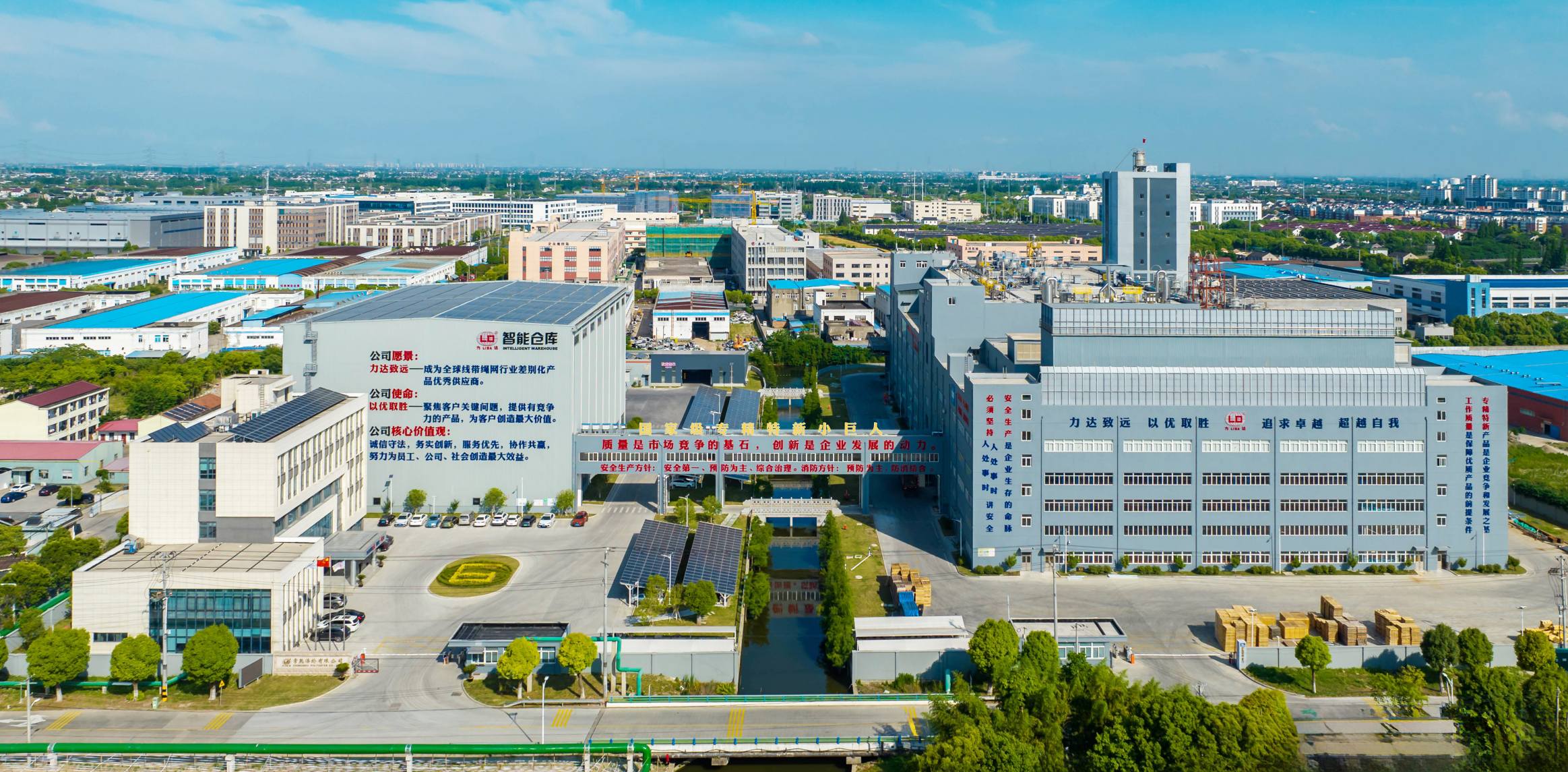
Every ton of force travels through a single yarn. If that yarn fails, the entire system fails. Industrial high tenacity nylon 6 filament yarn earns its place in slings, ropes, tire cord, and geotextiles by combining high tensile strength with outstanding fatigue and abrasion resistance. Yet many buyers still struggle to compare specs or match the right yarn to the job. This essential guide breaks down the real performance drivers, shows where these yarns are used, and helps you avoid costly selection mistakes. For consistent, traceable supply, Changshu Polyester offers industrial high tenacity nylon 6 filament yarn backed by technical expertise.
The Real Difference Behind High Tenacity Nylon 6 Filament Yarn
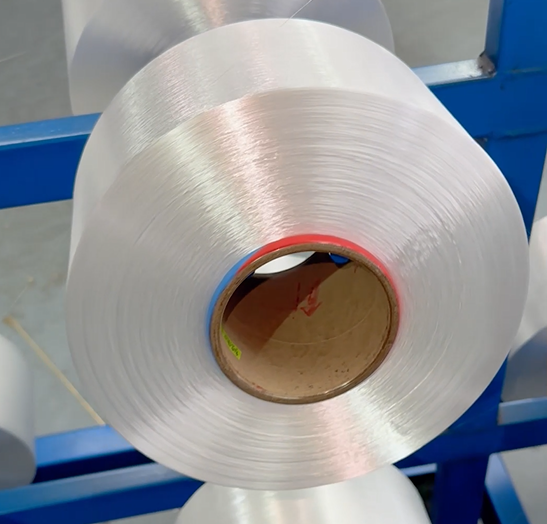
Most people assume high tenacity nylon 6 filament yarn is simply regular nylon 6 stretched further. The real distinction runs deeper: it comes from how the polymer chains are aligned and locked during melt spinning and hot drawing. Standard nylon 6 retains a fair amount of amorphous region and random coil orientation, which gives it flexibility but limits load-bearing capacity. High tenacity grades use optimized molecular weight distribution and multi-stage drawing to force chains into parallel, tightly packed crystalline zones. This reduces weak points where stress can concentrate, so the yarn can handle much higher tensile loads before breaking.
Another overlooked factor is the filament's internal flaw distribution. High tenacity nylon 6 isn't just stronger in a lab tensile test; it performs differently under repeated loading and abrasion. By reducing microvoids and controlling cooling rates, producers create a more uniform cross-section with fewer hidden defects. That translates into lower elongation, better knot strength retention, and a harsher feel that works well in ropes, webbing, and industrial sewing threads. The difference is not one single property—it's a combination of orientation, crystallinity, and defect control that separates it from ordinary nylon 6 yarn.
Strength, Stretch, and the Metrics That Define Performance
Most training conversations treat strength and stretch as separate boxes—lift heavy in one corner, touch your toes in another. But real performance doesn’t work that way. When you push a sled or hold a deep squat, your muscles are negotiating tension across a joint angle. If the range is restricted, force bleeds out before it reaches the ground or the bar. That’s why the first number worth tracking isn’t just your one-rep max; it’s the quality of output at the edges of your movement.
The metrics that actually define progress are often the ones nobody posts online. Bar speed at 80% of max tells you how fresh your nervous system is. A seated pike stretch measured with a tape line reveals asymmetries that will eventually show up as knee or lower-back complaints. Even resting heart rate variability after a heavy week gives a clearer picture than raw soreness alone. These data points connect strength and stretch because they reflect the same underlying property: how well your body manages load without giving up position.
If you want a durable kind of performance, stop chasing separate records for max lift and max flexibility. Instead, pick two or three metrics that matter for your sport or daily life—say, velocity in a trap-bar deadlift, ankle dorsiflexion in a half-kneeling test, and grip endurance after a long carry. Track them weekly, but only change your program when one of them stalls for three consecutive sessions. That restraint matters more than any single workout. Over time, the gap between strong and stiff closes, and you’re left with something harder to fake: usable range that produces force.
Heavy-Duty Applications Where This Yarn Takes the Load
When a lifting sling cradles a multi-ton steel beam or a cargo net secures pallets on a rolling deck, the yarn inside isn't just present—it's the reason the system holds. Heavy-duty applications like ship mooring, crane rigging, and fall-protection lanyards demand a fiber that can take repeated shock loads without creeping or snapping.
The real test comes from cycles of tension, not a single pull. This yarn resists abrasion from rough edges, shrugs off saltwater and UV exposure, and keeps its length stable under sustained stress. That low-stretch character matters where a sudden jerk could otherwise turn a minor overload into a catastrophic failure.
That's why you'll find it in vehicle recovery ropes, industrial safety nets, and load-securing straps for flatbed transport. In those settings, there's no second chance—so the yarn's predictable strength retention and resistance to cuts, chemicals, and fatigue make it the quiet backbone of rigging gear that works shift after shift.
Nylon 6 vs. Nylon 66: A Practical Comparison for Engineers
When selecting between nylon 6 and nylon 66, engineers quickly notice that the numbers refer not to performance tiers but to the molecular structure. Nylon 6 is made from a single monomer, caprolactam, which opens and links into a repeating chain of six carbon atoms. Nylon 66, on the other hand, is created from two monomers—hexamethylene diamine and adipic acid—each contributing six carbons, hence the double six. This subtle difference in chemistry leads to real-world shifts in melting point, moisture absorption, and processing behavior, making the choice far from trivial in demanding applications.
Nylon 66 typically offers a higher melting temperature (around 260°C versus 220°C for nylon 6) and slightly better stiffness and wear resistance at elevated temperatures. That makes it a common pick for under-hood automotive parts, high-load gears, and electrical connectors that see thermal cycling. Nylon 6, while lower in heat deflection, often processes more easily and has better impact toughness at room temperature, along with superior surface finish for aesthetic parts. Its lower viscosity during molding can also mean faster cycle times and less wear on tools, a practical advantage when production volume matters.
Cost and availability often tip the scale. Nylon 6 tends to be less expensive and more readily available in many regions, especially where caprolactam supply is strong. Nylon 66 has faced periodic shortages due to raw material constraints, prompting engineers to reconsider designs. The real comparison, then, isn't about which nylon is universally better—it's about matching the specific load, temperature, moisture, and budget constraints of the application. A thoughtful material selection process will weigh these factors rather than defaulting to a familiar grade.
Avoiding Breakage and Denier Drift During Processing
Breakage during fiber drawing rarely comes from a single cause. It builds up quietly—microscopic flaws in the polymer melt, slight tension mismatches between godet rolls, or a hot plate that runs a few degrees cooler at the edges. Once the filament weakens, it snaps unpredictably, and the operator spends the next hour cleaning guides and rethreading. Denier drift is subtler: a gradual shift in final yarn thickness caused by pump wear or ambient humidity changes, often unnoticed until the fabric inspection stage flags an off-spec batch.
To keep both problems in check, focus on the transition zones where tension and temperature change rapidly. Use ceramic guides with a polished, low-friction surface rather than stock metal ones—they reduce snagging without adding weight. Adjust the draw ratio in small increments while monitoring a continuous denier gauge, not just spot samples. Let the quench air settle for at least 20 minutes after a startup cycle before judging stability, since early readings can deceive even experienced technicians. Small changes here prevent most runaway drift and sudden breaks without overhauling the whole line.
Quality Checks That Separate Reliable Yarn from the Rest
A quick glance at a skein rarely tells the whole story. Reliable yarn is inspected under even lighting for thickness consistency, twist regularity, and a clean surface without excessive halo or stray fibers. The ends are checked for weak spots, and a short section is pulled firmly to see if it snaps unexpectedly or stretches evenly. Any sign of slubs that aren't intentional or a rough, sandpaper-like hand feel is a red flag.
Beyond appearance, the yarn has to survive a proper tension test. A single strand is pulled until it breaks, and the force required is compared against a known standard for that fiber and weight. Good yarn breaks gradually, with a bit of stretch and a few fibers giving way before the final snap. If it breaks cleanly with almost no elongation, it is often dry-rotted or spun too tightly. The same check is repeated at several points along the skein, not just one spot.
Finally, dye lots and shrinkage get real attention. A swatch is knitted, washed, dried flat, and measured against its pre-wash size. The results should match what the label claims. Reliable mills also keep a reference card for each dye lot so that future batches can be matched closely. If a brand skips these steps, color shifting or unexpected felting will only show up after you've already invested time in a project.
FAQ
The industrial version is engineered for load-bearing and abrasion-heavy environments. It offers significantly higher tensile strength, better fatigue resistance, and improved dimensional stability under sustained stress, whereas standard nylon 6 is aimed at apparel and light-duty textiles where those properties are less critical.
You will find it in tire cords, conveyor belts, heavy-duty ropes, cargo slings, safety nets, geotextiles, and coated fabrics. Any application that needs a combination of high strength, impact absorption, and resistance to repeated flexing tends to favor this material.
Higher tenacity means the yarn can absorb more energy before breaking, so it resists tearing and puncturing better. In abrasive settings, the tougher surface and stronger molecular orientation reduce the rate of fiber loss, extending the service life of the finished product.
Base nylon 6 is vulnerable to UV degradation, but outdoor grades are usually compounded with UV stabilizers and anti-oxidants. For prolonged exposure, it is also common to apply a protective coating or use a darker pigmentation, as carbon black greatly improves weather resistance.
Nylon 66 typically has a higher melting point and slightly better dimensional stability at elevated temperatures. Nylon 6, on the other hand, offers easier dyeability, lower processing temperatures, and better resistance to hydrolysis in some chemical environments. Cost and availability often become the deciding factors when both meet the mechanical requirements.
The choice balances strength, flexibility, and surface texture. Coarser deniers give higher breaking force but reduce bending flexibility, while a higher filament count in the same denier produces a softer, more pliable yarn. Manufacturers often start with the load requirement, then adjust filament count based on how the yarn will be twisted, woven, or coated.
Twist locks the filaments together, improving cohesion and abrasion resistance, but excessive twist can reduce tensile strength by misaligning the molecular chains along the yarn axis. The optimal twist is a compromise between structural integrity during processing and the ultimate strength needed in the finished product.
Yes, it should be kept in a dry, cool area away from direct sunlight and strong chemicals. Nylon 6 absorbs moisture from the air, which can temporarily lower its strength and affect downstream processing, so conditioned storage at a stable relative humidity is recommended. Avoid stacking heavy loads directly on the yarn packages to prevent flattening or distortion.
Conclusion
High tenacity nylon 6 filament yarn earns its place in demanding industrial settings not through a single spec but through the way it balances toughness with processability. The real difference shows up in metrics like tenacity, elongation at break, and how consistently the denier holds from batch to batch. When these numbers drift, you get more than just weak spots—you get sudden breaks during weaving, coating, or twisting. Engineers who work with this yarn learn to watch for that drift early, because a stable, well-controlled filament runs cleaner and lasts longer under load than one that merely posts a high peak strength on a test report.
In heavy-duty applications such as lifting slings, cargo nets, geotextiles, and coated industrial fabrics, nylon 6 filament yarn often competes directly with nylon 66. The practical choice comes down to what the process can tolerate: nylon 6 generally offers better fatigue resistance and easier dyeing, while nylon 66 brings slightly higher stiffness and thermal stability. Neither is universally superior, and the decision usually hinges on the specific load cycle and chemical exposure. Reliable suppliers separate themselves through rigorous quality checks—measuring elongation consistency, inspecting package build, and testing knot and loop strength. Without those checks, even a high-tenacity label means little on the production floor.
Contact Us
Contact Person: CONNIE
Email: [email protected]
Tel/WhatsApp: 86-0512-53671634
Website: https://www.lida-yarn.com/