
Galvanized Tangent Tower from China Leading Manufacturers for Reliable Power Transmission
2026-09-26
Power grids rarely make headlines until something goes wrong. The towers that keep transmission lines steady deserve more credit—especially when they're galvanized tangent towers built to shrug off corrosion and heavy loads. Sourcing them from China's leading manufacturers isn't just about cost; it's about getting consistent, field-proven quality. Anbang is one name that keeps coming up in project specs, and this post digs into why.
The Unseen Engineering Behind Every Reliable Tangent Tower
Most transmission line failures that make the news involve dramatic angle towers or river crossings. Tangent towers, by contrast, spend decades doing the same quiet job: holding conductor bundles in a straight line across rolling terrain. The unseen engineering is in the small details that prevent slow, cumulative damage. Aeolian vibration, thermal expansion cycles, and occasional ice loads don't cause immediate collapse, but they can fatigue bolts, loosen nuts, and wear suspension clamps long before any visual inspection flags a problem. A reliable tangent tower is designed for the boring, repetitive stresses, not just the once-in-a-century storm.
Below ground, the differences are even less obvious. Tangent tower foundations often look undersized next to heavy angle structures, but their job is to resist uplift and overturning through soil interaction rather than raw mass. The real risk usually shows up years later—after backfill settles, a few millimeters of tilt can tighten conductor clearances or shift load paths enough to change how the tower sways. That's why geotechnical assumptions, drainage details, and buried steel corrosion allowances matter just as much as the lattice geometry above ground.
Then there are the choices no one sees from the road: zinc coating thickness on bolts, whether joints are welded or friction-grip bolted, how many vibration dampers are used, and what wind speed return period was actually applied to this specific route segment. Reliability doesn't come from overdesigning every member. It comes from knowing which failure mode is most likely at each connection and giving it just enough margin without turning the tower into an expensive monument to caution.
Galvanization: Not Just a Coating, but a 30-Year Promise
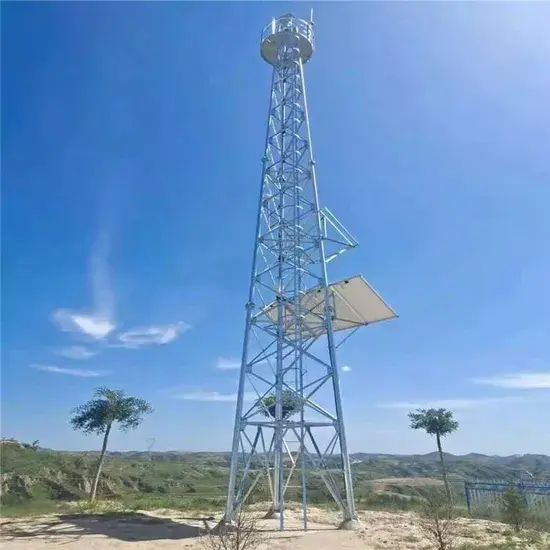
When most people think of galvanization, they picture a shiny layer of zinc slapped onto steel to keep rust at bay. That image isn't wrong, but it misses the deeper story. Hot-dip galvanizing isn't a quick fix or a cosmetic upgrade—it's a metallurgical bond that fuses zinc and steel into a single, self-sustaining system. The zinc doesn't just sit on the surface; it becomes part of the material itself, offering cathodic protection that actively sacrifices itself to shield the steel beneath. This isn't a passive barrier that fails the moment it gets scratched. Even a gash down to bare steel stays protected, because the surrounding zinc keeps working like a loyal watchman.
That promise of longevity is why engineers and architects lean on galvanized steel for infrastructure meant to outlive trends. Bridges, transmission towers, guardrails, and even residential framing often carry a 30-year performance expectation—not as a marketing slogan, but as a practical baseline. In most atmospheric conditions, a properly galvanized coating can last three decades or more without major maintenance. Compare that to paint, which chips, fades, and demands recoating every few years. Galvanization shifts the economics: higher upfront cost, but near-zero upkeep for a generation. The real value isn't the coating itself; it's the decades of silent, dependable service that follow.
Of course, the 30-year promise isn't magic. It depends on coating thickness, environmental exposure, and design details that prevent moisture traps. But the principle holds: galvanization is a long-term contract between material and environment. When you choose it, you're not just buying corrosion resistance for today. You're betting on a structure that will still be standing—and still be protected—when today's quick fixes have been replaced twice over.
Why 'Good Enough' Fails in Transmission Line Towers
Transmission line towers carry electricity across hundreds of miles, yet many utilities treat them with a 'good enough' mentality inherited from decades-old design manuals. This mindset assumes that if a structure survives a past storm or meets a minimum code requirement, it will keep performing. But the physics of failure does not work that way. A tower built to just barely withstand a 50-year wind gust may have unseen fatigue cracks from daily thermal cycling, or foundation erosion from soil shifts that no one inspected. When a single component crosses its limit, the entire lattice can buckle in seconds—and unlike a distribution pole, a collapsed high-voltage tower often triggers cascading outages across an entire region. That is why 'good enough' quietly becomes a liability rather than a safety margin.
The gap between nominal compliance and real-world resilience shows up in failure records. After major wind events, investigators routinely find towers that met the letter of the code but failed because of unaccounted factors: broken insulator strings whipping into legs, unequal ice loading on one face, or conductor galloping that induced dynamic forces far beyond static design assumptions. Even in normal operation, corrosion at connection points and loosening of bolts due to vibration can reduce load capacity by double-digit percentages over a decade. Waiting for a visible sign of trouble—a leaning leg or a rusted diagonal—often means the structural integrity has already crossed the point of no return. In transmission infrastructure, repairs after the fact cost ten times more than proactive upgrades, and the outage cost dwarfs both.
A more honest engineering approach treats every tower as a system with unknown unknowns. That means going beyond the minimum span and height calculations to ask: What is the actual wind profile at this specific ridge line, not the nearest weather station? How does this tower behave under broken-wire conditions or unbalanced ice? Are the foundations still bonded to the soil after five years of freeze-thaw cycles? Utilities that move away from 'good enough' invest in drone-based LiDAR inspections, strain-gauge monitoring on critical members, and probabilistic risk models that predict failure rates rather than assuming a fixed design life. The difference is not just about avoiding collapse—it is about keeping electrons flowing when the grid is needed most, which is the only standard that ultimately matters.
How China's Top Fabricators Turn Steel into Grid Backbone
Inside the cavernous workshops of China’s leading steel fabricators, the conversion from raw plate to lattice towers unfolds through a sequence of tightly choreographed steps. High-strength Q420 and Q460 steel coils arrive by rail, are flattened and cut by fiber lasers that track to within a quarter millimeter. Robotic arms then bevel the edges for full-penetration welds, while a separate line punches bolt holes at angles that match the final tower geometry. What separates these plants from smaller competitors isn’t any single machine, but the refusal to let a plate leave the floor without passing a coordinate measuring check against the digital twin.
Further down the line, hot-dip galvanizing baths run at 450°C, and technicians pull sample coupons every shift to measure coating thickness with a handheld X-ray fluorescence gun. For extra-long transmission members, fabricators use submerged arc welding rigs mounted on rails, allowing a 24-meter main chord to be welded without repositioning. The payoff shows up in the field: tower sections arrive pre-assembled, bolt holes aligned well enough that erection crews can top out a 100-meter suspension tower in under three days, even in high winds. This kind of precision has made Chinese fabricators the default choice for ultra-high-voltage corridors from the Gobi Desert to coastal load centers.
Precision Tolerances That Keep Towers Standing in 150 km/h Winds
When wind speeds reach 150 km/h, the forces acting on a tower are not just strong—they are uneven, gusty, and relentless. Every bolted connection, every flange face, every welded seam must work together as a single unit. Precision tolerances ensure that these joints do not become weak points. A deviation of even half a millimeter in the alignment of a bolt hole can create a stress riser, leading to micro-cracks that grow with each gust. By holding manufacturing tolerances to within a few hundredths of a millimeter, engineers eliminate the tiny gaps and misalignments that would otherwise amplify fatigue under dynamic wind loading.
The real challenge lies in the cumulative effect of many small errors. A tower assembled from dozens of segments, each with a slight angular offset, will bend and twist in unexpected ways when the wind hits it from different directions. In 150 km/h winds, this can trigger resonance or local buckling. Precision tolerances act like a form of structural insurance: they keep the tower's natural frequency within a safe band and ensure that load paths remain predictable. For example, the flatness of a flange connection is often specified to within 0.05 mm across its diameter—so tight that even a human hair would create a measurable deviation. This prevents uneven bolt tension and keeps the joint from opening under lateral loads.
Achieving such precision is not just about better machine tools; it is also about measurement and process control. Laser trackers, coordinate measuring machines, and in-process scanning are used to verify every critical dimension before a tower section leaves the factory. In the field, torque-controlled hydraulic wrenches and shim systems bring the assembled structure back to the same reference plane. Because the aerodynamic forces at 150 km/h can double for every small increase in surface roughness or misalignment, the discipline of tight tolerances is what separates towers that merely survive a storm from those that barely notice it.
Ordering from China Without the Guesswork: What Buyers Should Demand
Most buyers learn the hard way that a good sample means almost nothing once production starts. Instead of relying on a sales rep's promises, demand a full specification sheet before you pay a deposit. This should cover exact materials, thicknesses, tolerances, color codes, and any testing standards the item must meet. If a supplier can't put those details in writing or pushes back with vague language, walk away—it's cheaper than fixing a container of rejects later.
You also need to lock down quality control before the first unit rolls off the line. Ask for a pre-production sample that you approve in writing, then require an inline inspection at 30% completion and a final random inspection before shipment. Don't settle for the factory's own QC report; hire an independent inspector or at least demand video proof of tests like pull strength, drop resistance, or waterproofing. Packaging matters too—specify carton dimensions, inner box weight limits, and labeling requirements so your goods arrive intact and ready for Amazon or your warehouse.
Finally, protect your design and your cash. Get a written agreement covering mold ownership, non-disclosure, and non-circumvention before sharing files. Split payments so the balance is only released after inspection passes, and refuse full upfront payment unless you've worked with the factory for years. Smart buyers also request a small batch order first, even if unit cost is higher, because it reveals how the supplier handles communication, deadlines, and problems when the pressure is on.
FAQ
A galvanized tangent tower supports conductors on straight-line sections of a transmission route. The hot-dip galvanized coating forms a metallurgical bond with the steel, protecting it from corrosion for decades. This reduces maintenance and ensures consistent mechanical strength even in coastal or industrial areas with high humidity and pollutants.
Chinese manufacturers have invested heavily in automated welding, CNC punching, and hot-dip galvanizing lines. They combine high production capacity with strict adherence to international standards such as ASTM, IEC, and ISO. Many also offer third-party inspection reports and have long export track records to markets across Asia, Africa, and the Americas.
Yes. Leading factories adjust tower height, cross-arm length, and steel thickness based on voltage (from 11 kV to 1,000 kV), wind zone, ice load, and soil conditions. Detailed structural drawings are usually provided before production, and prototypes can be tested for load capacity.
It starts with design detailing and material procurement. Steel plates and angles are cut, punched, and welded into segments, then moved to the galvanizing bath. After galvanizing, the parts are passivated, inspected for coating thickness, and bundled. Shipping is usually by container or break bulk, with delivery times ranging from 30 to 60 days depending on order size.
Hot-dip galvanizing applies a thick zinc layer (typically over 85 microns) that resists corrosion from rain, snow, UV exposure, and salt spray. In cyclic wet-dry environments, the zinc corrodes sacrificially to protect the base steel. This makes the towers dependable in deserts, high mountains, and offshore wind farm areas.
Reputable manufacturers perform raw material traceability checks, dimensional accuracy tests, weld inspections (often ultrasonic or X-ray), and galvanizing thickness measurements. They also provide mill certificates, load test reports, and can arrange pre-shipment inspection by SGS, BV, or other agencies.
Minimal. The galvanized coating is self-healing at scratches because zinc corrodes preferentially. Periodic visual checks for physical damage, loose bolts, or vegetation contact are usually sufficient. In very aggressive environments, a touch-up zinc-rich paint can be applied after several decades if needed.
Conclusion
A tangent tower might look like a simple lattice of angle steel, but every member is the result of calculations most buyers never see. Wind loads at 150 km/h, ice accretion, conductor tension, and fatigue from thermal cycling all feed into the design before a single hole is punched. China's leading fabricators have spent years refining this process, moving from basic cutting and welding to CNC plasma profiling, robotic welding, and stress-relief treatments. The difference between a tower that stands for thirty years and one that fails in a storm often comes down to a tolerance of two millimeters on a bolt hole. That is why reputable suppliers reject "good enough" as a standard. They build fixtures for each tower type, run first-article inspections, and measure every critical dimension against the approved drawings, not against a habit of approximation.
Galvanization is the other half of the equation. Hot-dip galvanizing to ASTM A123 or ISO 1461 creates a zinc-iron alloy layer that sacrifices itself to protect the steel, effectively writing a 30-year corrosion warranty into the metal. But thickness alone is not the whole story. Surface prep, bath chemistry, and cooling rate all affect coating adhesion and uniformity. Buyers ordering from China should insist on mill certificates, third-party inspection during galvanizing, and batch traceability. Ask for a trial assembly of at least one full tower section before shipping. Demand that the fabricator show exactly how they will maintain bolt-hole alignment after galvanizing, because zinc buildup is a common silent killer of field fit-up. The towers that carry power across a grid are not commodities; they are load-bearing promises. And the factories that treat them that way are the ones worth trusting.
Contact Us
Contact Person: antor khan
Email: [email protected]
Tel/WhatsApp: 8613863903569
Website: https://www.qdabtower.com/