Formwork Systems Supplier: Key Considerations for Reliable Concrete Construction
2026-11-16
When a concrete pour goes wrong, the blame rarely falls on the formwork—until it does. Poorly designed or mismatched systems cause blowouts, delays, and budget overruns that no contractor can afford. Before you sign off on your next project, consider the real criteria behind a dependable formwork supplier: safety, dimensional accuracy, on-site support, and long-term reusability. That’s where GETO comes in—not as just another vendor, but as a partner who understands that reliable concrete construction starts long before the first truck arrives. Here are the key considerations to keep in mind, drawn from field experience and honest lessons.
The First Question That Reveals a Formwork Supplier's True Capability
Ask about their most difficult pour, not their best-selling panel. A supplier worth your time will describe the time they reworked a corner detail three days before a pour because the site tolerances had drifted. That story tells you more about their engineering depth than a load table ever will.
The real test is how they handle the unexpected. If the answer starts with a product code or a discount, you're talking to a stockist, not a formwork partner. Capability shows up in the follow-up questions they ask about your concrete mix, pour rate, and crew experience.
Listen for the word we instead of you when things go wrong. That shift in language separates suppliers who stand behind a pour from those who just ship steel.
Engineering Support: Where Concrete Projects Win or Lose Precision
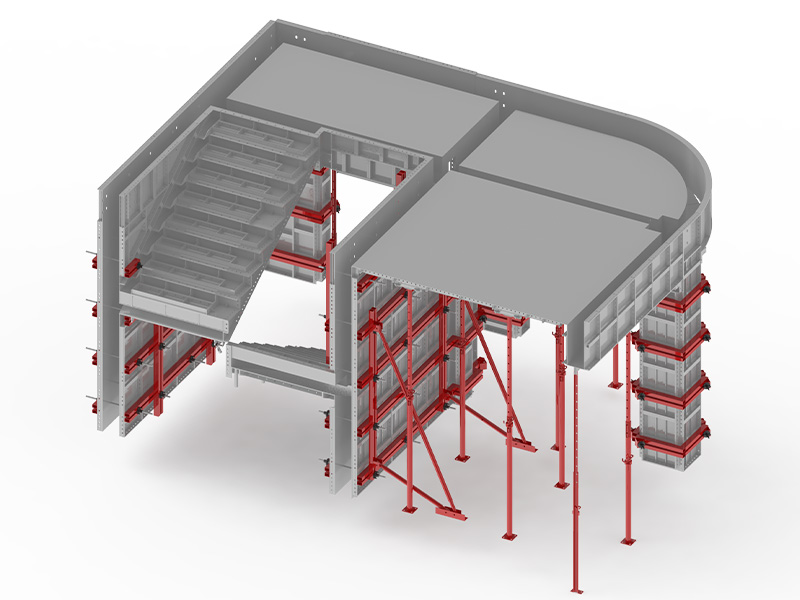
Concrete projects live or die by the accuracy of their engineering support. When tolerances are off by a fraction of an inch, the ripple effects can undermine structural integrity, inflate costs, and delay timelines. Support teams that prioritize field verification over paper-based assumptions catch these errors before they become liabilities.
Yet many teams still rely on outdated coordination methods, treating engineering support as a back-office function rather than a frontline defense. The difference becomes stark on complex pours where rebar congestion, formwork deflection, and thermal expansion collide. Here, proactive support means modeling pour sequences, validating mix designs against ambient conditions, and walking the formwork with the crew before concrete arrives.
Winning precision demands that engineering support act as a continuous feedback loop, not a one-time review. Daily huddles, digital as-builts, and clear escalation paths keep deviations from compounding. Projects that embed this discipline see fewer change orders, less rework, and a concrete placement that matches the design intent within millimeters—where it matters most.
Material Flaws That Hide in Plain Sight—and How to Catch Them
Most material defects don't announce themselves with a crack or a snap. They sit quietly in the grain, under a coating, or inside a weld, waiting for stress to turn them into failures. A tiny inclusion in rolled steel, a shallow pit on a bearing surface, or a subtle color shift near a heat-affected zone can all look harmless in ordinary light. The trick is to stop trusting a quick visual scan and start using low-angle lighting, dye penetrant, or a simple magnifying lens when something seems off. Often the flaw is not where you expect it, but where the process changed slightly—a different batch, a dull tool, or a rushed cooling cycle.
One practical habit is to examine parts after a known process change or a short production break, because that is when hidden defects tend to appear. For example, a slight change in humidity can leave porosity in castings, while a poorly adjusted feed rate can create micro-tears in machined edges. Instead of relying on a single check, build a small routine: inspect the same location on several parts, compare against a known good sample, and mark any subtle variation for later review. Catching these flaws early is rarely about high-tech equipment—it is about knowing where to look and refusing to ignore the quiet signs.
Another useful approach is to create a simple defect map for your most common materials. Note where flaws typically hide: for forgings, look near flash lines and deep recesses; for sheet metal, check edges and areas of tight bending; for polymers, watch for sink marks and weld lines. Then train your eye to spot the faint shadows, the slightly rough texture, or the dull spot that does not reflect light the same way. When you find one, record the lighting angle and the inspection tool that revealed it. Over time, this small practice turns hidden flaws from surprises into predictable patterns you can catch before they leave the shop.
Why Delivery Windows Make or Break Your Pour Schedule
Ask anyone who's run a pour in the middle of summer: a delivery window isn't a convenience, it's the whole game. Concrete doesn't care about traffic or plant breakdowns. Once water hits the mix, the clock starts ticking, and every minute spent waiting for the next truck narrows your options.
A missed window doesn't just leave you standing around. It forces you to pour against a mix that's already changing. You'll see finishers rushing to close surfaces before the paste turns, or worse, adding water on site just to keep the mud moving. That's not a recipe for a slab you'd sign off on.
Crews that hit their pour schedule treat delivery windows as a hard deadline, not a rough guess. They confirm plant capacity, map the route, and build buffer time for the things that always go wrong. Without that discipline, even a small delay becomes a cold joint you'll be explaining for years.
Cost Quotes That Look Cheap but Cost You More Later
A rock-bottom quote rarely reflects the full price you'll pay. That suspiciously low number often comes from cutting corners on materials, labor, or both. Instead of a finished job, you get a starting point for unexpected add-ons: disposal fees, fuel surcharges, or "unforeseen complications" that appear only after the contract is signed. The cheap quote wasn't a bargain; it was bait.
Then there's the cost of doing it twice. When someone quotes far below market rate, they're either desperate for work or planning to make up the difference elsewhere. Maybe the paint is thin, the wiring barely passes code, or the subfloor isn't leveled properly. You won't notice until the cracks appear six months later, and by then the original contractor is long gone. Hiring someone competent to fix the mess usually costs more than doing it right the first time.
Your time is the silent expense nobody puts on the invoice. Endless callbacks, renegotiations, and supervising a crew that doesn't respect the work drag on for weeks longer than promised. Every hour you spend chasing the cheap quote is an hour you aren't earning money, relaxing, or moving forward. When you add up the delays, the repairs, and the stress, that "affordable" option turned out to be the most expensive one on the table.
Safety Compliance Checks Every Reliable Formwork Partner Must Pass
A formwork supplier can hand you a thick manual and a set of load tables, but that tells you little about how the gear actually behaves on site. The first real check is documentation: proof-load test reports, weld certifications, and stamped drawings that match the exact batch you are renting or buying. If those records stop at the factory gate, they are not much use.
Beyond paperwork, the equipment itself has to show the right physical safeguards. Look for lockable adjustable jacks, intact guardrail posts, safe ladder access points, and tie systems that have been pulled to failure in controlled conditions. Frames that arrive with bent tubes, cracked welds, or missing pins should fail the check immediately. A reliable partner will expect you to reject that gear and will replace it without making the schedule your problem.
A partner worth keeping also tracks inspection and maintenance histories on every major component, not just the easy-to-see ones. Ask for serial-number-level repair logs for hydraulic jacks and beam clamps. If a supplier cannot produce those within a day, they probably are not running the checks they claim.
FAQ
Look for a supplier who asks about pour schedules, crane reach, and finishing tolerances before quoting. If their first response is a stock drawing with no questions about access or sequence, that's a warning sign.
Dependable systems have fewer loose parts that can be lost or misaligned, clear assembly markings, and connection details that don't require guesswork. The real test is how the panels behave after repeated pours - cheap systems often warp or leak after a few cycles.
A supplier who has handled high-rise cores, water treatment tanks, or bridge piers knows the typical tie spacing, pressure loads, and stripping sequences. That practical knowledge means fewer field modifications and fewer surprises when concrete pressure peaks.
Good suppliers pre-plan the panel layout and delivery sequence so crews aren't sorting through stacks on site. Some also provide a pour sequence drawing that aligns with crane time and rebar installation, which avoids bottlenecks without needing more labor.
Watch for undersized walers, missing bracing instructions, and tie rods that seem too thin for the pour height. Also, if the supplier cannot provide a concrete pressure calculation, the design probably hasn't been properly checked.
Ask how many uses the panels have had, whether they've been re-faced, and how they handle repairs between projects. Honest suppliers will show you inspection records and not just a fresh coat of paint.
Yes, when joints are tight and panels are true, you get less grout loss and fewer patch jobs. Some systems are designed with reusable corner details that minimize cut timber, which cuts both waste and labor time.
Don't compare just the rental or purchase price. Ask for the total weight per square meter, expected labor hours for assembly and stripping, and the number of reuses you'll get. A cheaper system that takes twice as long to set up often costs more by the end.
Conclusion
Ask a prospective formwork supplier how they handle a pour that goes wrong at 2 a.m., and you’ll quickly separate order-takers from actual partners. The ones worth keeping can walk you through load calculations, tie spacing, and reshoring sequences without flipping through a catalog. That engineering depth becomes the difference between a slab that matches the drawings and one that drifts by half an inch across a 40-foot span. Frames and panels often look identical from the outside, yet hidden rust inside box beams, worn wedge clamps, or plywood faces with hairline cracks will surface mid-pour. Reputable suppliers don't just hand over certification documents—they encourage you to inspect a sample from the batch, measure deflection under simulated loads, and check weld consistency before anything ships.
Delivery timing is where schedules quietly collapse. A truck that arrives four hours after the crew is ready means cold joints, wasted admixture, and overtime labor. Reliable suppliers tie their delivery commitments to your pour calendar, not their warehouse convenience. Beware the quote that undercuts everyone else—cheaper steel grades, thinner plywood faces, or missing safety rails get buried in the line items. What looks like a 12% saving upfront often turns into blowouts, rework, and rental extensions. Finally, run through the safety checklist yourself: guardrails, ladder brackets, working platforms, and load rating plates. A partner that treats regulatory compliance as a starting point, not a negotiation, is the one you want on the next pour.
Contact Us
Contact Person: Quanhui Nian
Email: [email protected]
Tel/WhatsApp: 8618070545691
Website: https://www.getoglobal.com/