
Energy-Taking Current Transformer Supplier: How to Identify a Reliable Partner
2026-09-18
Selecting the right energy-taking current transformer supplier can make or break your power monitoring project. With so many manufacturers claiming reliability, how do you cut through the noise? It’s not just about specs—it’s about consistency, responsiveness, and real-world performance under load. That’s why we’ve laid out the key signals of a dependable partner, from design flexibility to field-proven failure rates. Along the way, you’ll see how Xiasen measures up and what separates a transactional vendor from a true long-term ally. Whether you’re scaling up or replacing a legacy source, this guide gives you a clear framework.
The Spec Sheet Won't Tell You How the Energy-Taking CT Behaves in the Field
A bench test gives you a clean sine wave, but a real feeder is far from that. The CT sits next to other phases, cable bends, and busbar joints, each skewing the magnetic field around it. Once the primary current drops below what the datasheet calls the minimum excitation level, the core may not fully energize. Instead of a proportional secondary output, you get a distorted, lower-amplitude signal that still looks plausible on a meter but can starve the harvesting circuit.
Energy-taking CTs face an extra burden that ordinary measurement CTs don't: they are the power source. When the load current swings from a few amps to several hundred, the core temperature rises unevenly, and the remnant flux from a fault can shift the saturation point for the next cycle. That means a CT rated for "0.5 class accuracy" on paper might clip the waveform under a motor start or a cold load pickup, leaving the powered device to run from brownouts or reset repeatedly.
Installation details matter more than the spec sheet admits. A slightly off-center conductor, a missing insulating bushing, or a cable tie pulled too tight changes the effective air gap and leakage inductance. In a hot, humid enclosure, the core's permeability drifts enough to alter the minimum pickup current. Field technicians learn to verify the CT's behavior under actual load profiles rather than trusting a single line in a datasheet.
Field Proven References Separate Genuine Energy-Taking CT Suppliers from Catalog Resellers
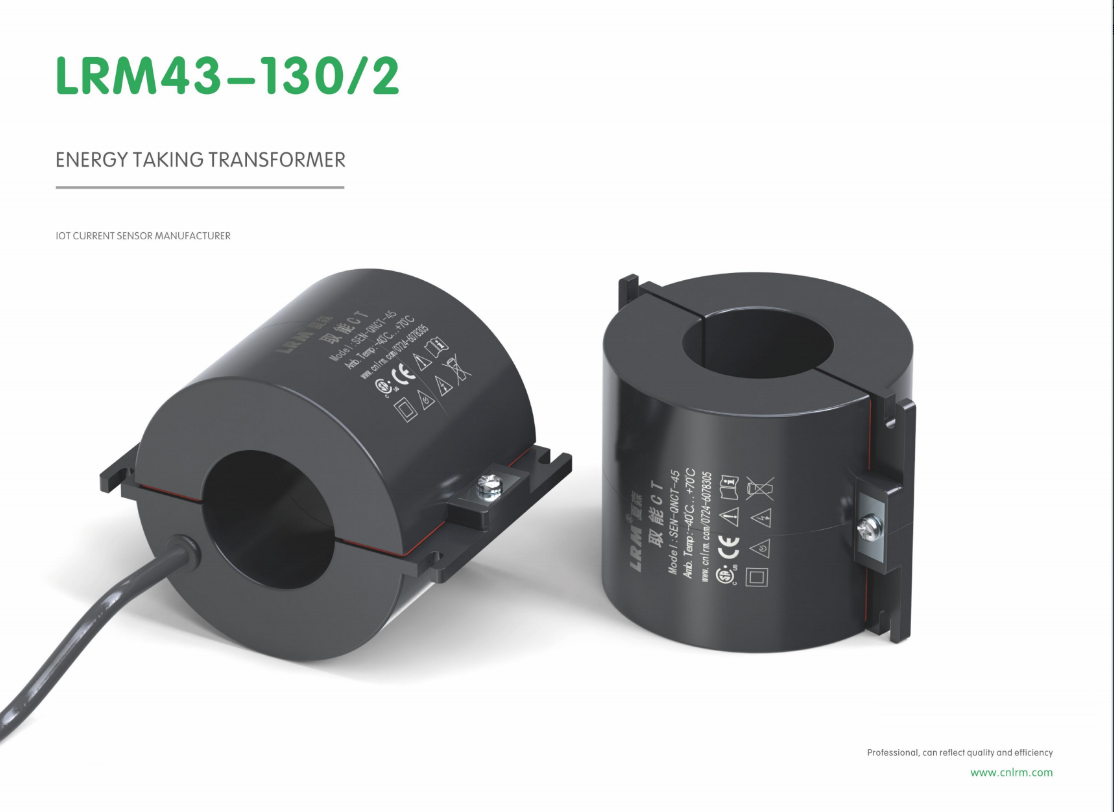
Field-proven references are the quickest way to separate a supplier that has actually installed energy-taking CTs on live circuits from one that just moves boxes. A genuine supplier can show you specific substations, industrial plants, or distribution sites where their units have been running for years, and they'll share operational data like measured accuracy drift, temperature swings, and response during nearby faults. Catalog resellers rarely go beyond repeating datasheet numbers because they don't have access to that kind of installation history.
When you ask for references, expect more than a project name. A supplier with real field experience will tell you what kind of load the CT was harvesting from, how it was mounted, and which protection relay or monitoring device it fed. They can often connect you with the utility engineer or plant manager who dealt with the commissioning and any early issues. That specificity comes from being on site, adjusting designs, and learning from failures—not from stocking generic hardware.
The difference also shows up in post-installation support. A genuine supplier can recommend tap settings, burden values, or shielding changes based on similar past projects, and they'll know which failure modes are common in your operating environment. A catalog reseller might replace a defective unit under warranty but can't explain why it saturated or how to prevent recurrence. Over the life of a metering or protection system, that reference-backed expertise avoids repeat outages and expensive troubleshooting.
Manufacturing Shortcuts in Energy-Taking CTs That Fail Once the Grid Loads Shift
The failure mode starts quietly in the winding room. To save copper and time, some manufacturers reduce the secondary turn count just enough to pass factory calibration at a fixed, narrow burden. That works while the grid behaves as expected. But when load shifts—say, a sudden migration from industrial motors to inverter-driven HVAC or a solar-heavy feeder reversing flow—the current transformer no longer sees the same magnetic stress. Saturation creeps in earlier than rated, and the secondary current waveform flattens at the peaks. Protection relays, fed a distorted signal, misinterpret the dip as a fault or, worse, miss a genuine one.
Another shortcut hides in the core material. Substituting low-grade silicon steel or recycling old laminations without proper annealing lowers cost, but the hysteresis loop widens under partial load. A CT that reads accurately at 100% rated current can drift by several percent at 20% load—exactly the operating point many grids now hit during off-peak solar hours. The error isn't linear, so field technicians can't simply recalibrate. Once the grid load shifts permanently, these CTs become silent liabilities: metering errors accumulate, billing disputes rise, and differential protection zones lose their sensitivity.
The most damaging shortcut is skipping the thermal cycling test after potting. Manufacturers rush to ship, assuming the epoxy cures evenly. But in the field, night-and-day load swings cause the potting compound to microcrack around the secondary terminals. Moisture seeps in, and turn-to-turn leakage current appears. At first, it's intermittent—a nuisance that vanishes during high-load heat. Then a cold morning with a sudden load step triggers a flashover inside the CT housing. By the time anyone opens the junction box, the burned secondary winding points back to a manufacturing decision made months earlier.
A Supplier's Customization Talk About Energy-Taking CTs Reveals More Than Their Catalog
A supplier's willingness to discuss custom energy-harvesting CTs often begins with a simple question about minimum pickup current. That's where the catalog stops being useful. One manufacturer we spoke with described how they re-cut the core gap to boost output at 8 A primary without pushing the saturation point too far, a change that never shows up in a PDF because it depends entirely on the burden the customer's power management chip presents.
Mechanical tweaks tell a similar story. Standard split-core housings are listed with a fixed inner diameter, but the same supplier can open that window a few millimeters, change the hinge material for hot-stick installation, or swap the potting compound to handle repeated condensation cycles. None of this is exotic; it's just not worth printing for a catalog that has to cover a dozen different use cases.
Then there are the numbers you only hear over a call: how the ratio error drifts when the secondary load is non-linear, what the actual temperature rise is at 600 A continuous, or which lamination grade they quietly moved to after a field failure in a coastal substation. That kind of detail doesn't fit into a comparison table, but it's precisely what determines whether a harvester wakes up reliably or stays asleep on a lightly loaded feeder.
Prototype to Volume Consistency for Energy-Taking CTs Where Many Suppliers Fall Short
A prototype energy-taking CT often performs beautifully on the bench. The turns are hand-adjusted, the core is selected from a single batch, and the burden resistor is tuned until the output curve looks ideal. But once the same design moves to volume production, many suppliers struggle to hold that performance. The result is a stream of units with noticeably different excitation characteristics, causing field devices to harvest too little energy at low primary currents or overheat protection circuits at high currents.
The root cause is rarely the design itself. It is the cumulative effect of small, uncontrolled variables: core material permeability drift between supplier lots, inconsistent winding tension that changes leakage inductance, imprecise air gap shimming, and subtle variations in impregnation or curing. These factors interact nonlinearly in energy-taking CTs, where operation spans a wide current range. A final pass/fail test at one or two current points will not catch the units that only deviate at the low end or under temperature swings.
Suppliers that truly manage prototype-to-volume consistency do things differently. They lock raw material batches before pilot builds, monitor winding tension and turns count in real time, and measure the full magnetizing curve—not just a handful of points—on every production unit. They can also provide CPK data showing the distribution of key parameters across hundreds of units. If a vendor cannot or will not share this level of process data, their prototype results are probably not a reliable predictor of volume behavior.
After Sales Response Time for Energy-Taking CT Suppliers Exposes the True Partnership
When a supplier's after-sales response time stretches from hours to days, the real nature of the relationship becomes impossible to ignore. For energy-taking CTs—components that often sit inside live switchgear or remote monitoring enclosures—a delayed response isn't just an inconvenience. It can mean inaccurate metering data, interrupted power for auxiliary systems, or even a failed compliance audit. Sales promises about "partnership" mean little if a simple technical query takes three follow-up emails and a week to resolve.
Genuine partners treat post-installation support as part of the product itself. They keep regional technical staff, maintain spare inventory, and have clear escalation paths that don't require the customer to chase. By contrast, transaction-minded suppliers often show a sharp drop in responsiveness once the invoice is paid. The difference shows up in small things: whether a phone call gets a callback the same afternoon, whether a replacement unit ships before the faulty one is returned, whether field issues get fed back into design improvements. These aren't luxury services; they're the minimum for equipment that keeps energy systems trustworthy.
In energy projects, downtime cascades. A slow CT supplier can stall commissioning, delay grid connection, or force engineers to improvise risky workarounds. That's why experienced integrators and utilities now rank after-sales response time alongside accuracy class and insulation ratings when selecting a vendor. The metric exposes more than service quality—it reveals whether the supplier views you as a long-term collaborator or just another purchase order.
FAQ
Look beyond the datasheet specs. Ask about the core material, the precision of the secondary winding, and how they handle saturation at low primary currents. A supplier who can explain their testing methods for accuracy class and thermal stability is usually more dependable than one who only quotes a price.
Request field test reports from existing installations, especially from sites with similar load profiles. Ask for data on output power under fluctuating primary currents and temperature extremes. If they hesitate to share such evidence, treat that as a warning sign.
At minimum, look for IEC 61869 compliance and relevant safety certifications like UL or CE depending on your market. But don't stop there—check whether their manufacturing process is audited by an independent body, as that often reveals more about consistency than a paper certificate.
Premature failures usually trace back to poor potting compounds, inadequate insulation, or core degradation from repeated thermal cycling. A reliable supplier will openly discuss their aging tests and offer warranty terms that reflect confidence in long-term performance, not just a 12-month standard.
Rarely. These devices sit in hard-to-reach spots and power critical monitoring equipment. A slightly cheaper unit that causes intermittent power loss or needs replacement after two years will cost far more in downtime and labor. Evaluate total cost of ownership, not just upfront unit price.
Ask whether they can adjust the turns ratio, core air gap, and burden resistor to match your specific load range and output voltage target. The best partners will walk you through a design review rather than simply asking, 'How many do you need?'
Request batch-level test data, not just a prototype sample. A reliable partner tracks and shares statistical process control data, such as CT ratio error distribution across production runs. If they can't provide that, you risk getting a great sample and mediocre shipments.
Vague answers about core sourcing, reluctance to disclose failure rates, no clear process for handling field returns, and pressure to sign without a pilot order. Any of these suggests they are more interested in moving inventory than building a working long-term solution.
Conclusion
A spec sheet rarely shows how an energy-taking current transformer will actually behave once it is installed on a live grid. Loads shift, harmonics creep in, and thermal stress builds in ways no datasheet can capture. That makes field references essential. A genuine supplier can point to installations where their units have been running for years under real switching and load variation, while a catalog reseller offers little more than marketing language. It also pays to look closely at manufacturing shortcuts: thinner core laminations, undersized secondary windings, or cheap encapsulation that cracks when grid loads swing. These faults tend to appear only after commissioning, when replacement costs wipe out any initial savings.
Customization discussions separate engineers from order takers. Ask how the supplier would adapt core geometry, burden characteristics, or lead length for your specific energy-taking point, and their answer reveals whether they understand how the CT behaves in your network. Prototype-to-volume consistency is another area where many suppliers quietly fall short. A perfect sample is easy; repeating the same magnetic performance and insulation quality across thousands of units is not. After-sales response time is where the true partnership shows. A supplier who treats post-delivery questions as a priority, offers field troubleshooting, and keeps replacement stock ready is far more valuable than one who disappears once the invoice clears.
Contact Us
Contact Person: Liu Mengyang
Email: [email protected]
Tel/WhatsApp: 8618727589233
Website: https://www.cnlrm.com/en/