
Custom Telescopic Combined Flood Control Boards Deliver Stronger Flood Protection
2026-11-16
When standard barriers fall short and water keeps rising, custom telescopic combined flood control boards change the equation. Instead of forcing a one-size-fits-all defense, these systems extend and lock into place to match the exact contours of vulnerable openings. Jianghe Flood Prevention has been refining that approach, turning what used to be a frantic sandbag operation into a faster, stronger line of defense. Here’s why tailored telescopic boards are quickly becoming the first choice for sites that cannot afford a weak link.
The Gap Problem Most Flood Barriers Ignore
Most flood barriers are judged by their height, their material, or how quickly they deploy. The failure point, though, is rarely the panel itself. It is the gap where the barrier meets the ground, the wall, or the neighbouring section. A few millimetres of uneven concrete, a slight slope, or a worn seal is enough to let water through long before the barrier overtops.
That gap is easy to miss during a dry inspection. Water does not need an opening you can see. It moves through capillary action and pressure, turning a hairline crack into a steady seep. Once water gets underneath or behind the barrier, it lifts, shifts, and erodes the very surface the barrier depends on.
A reliable flood barrier has to do more than stand tall. It needs to conform to imperfect ground, seal at the joins, and keep working as water pressure changes. Until that contact surface receives the same attention as the panel, the gap remains the weakest point in the system.
How the Telescopic Locking Mechanism Seals Under Load
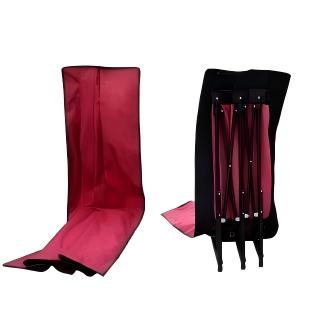
The telescopic locking mechanism relies on a simple but unforgiving principle: as axial load increases, the tapered locking segments are driven outward against the outer tube wall. This wedging action converts longitudinal force into radial expansion, so any attempt to pull the inner and outer sections apart only tightens the grip. Because the taper angle is shallower than the friction angle between the segment and the tube, the assembly becomes self-locking under load, meaning it cannot back off until the load is removed and the segments are manually released.
What makes this behaviour reliable under heavy load is the way surface contact develops across the full circumference of the locking ring. Small irregularities in the tube bore or the segment face are gradually flattened as the force rises, creating a near-uniform pressure band that spreads the stress over a larger area. This prevents point loading and localised yielding, which is why a properly machined telescopic lock can hold several times its own rated service load without measurable slip.
Sealing under load, however, depends on more than mechanical wedging. The same radial expansion that locks the tubes also energises the sealing element, typically an elastomer or filled PTFE ring seated in a groove behind the locking segment. As the segment pushes outward, the seal is compressed against the inner bore, filling micro-gaps and preventing leakage even when the assembly flexes under bending or vibration. In practice, the seal is often arranged so that pressure from the working fluid adds to the preload, meaning the joint actually gets tighter and leak resistance improves as internal pressure climbs.
Custom Lengths for Odd-Sized Openings and Uneven Surfaces
Odd-sized openings rarely match the numbers printed on a package. Instead of forcing a standard strip into a space that is slightly too tall or too narrow, custom lengths let you cut once and fit the actual gap in front of you. The goal is less about precision on paper and more about matching the quirks of the frame, threshold, or wall you are working with.
Uneven surfaces add another layer of trouble. A floor that slopes, a brick edge that dips, or a door that settles over time can leave visible gaps even when the overall measurement seems right. Longer material gives you room to trim, scribe, or notch around those irregularities so the seal sits flush rather than floating above the low spots.
Working this way also reduces waste from repeated trips for slightly different sizes. Keeping extra length on hand means you can handle a worn threshold and a slightly shifted jamb in the same afternoon without waiting on a special order.
The Combined Panel Advantage in Fast-Rising Water
When water rises faster than expected, individual barriers often start to shift before anyone notices the first seep. Combined panels change that equation because each section locks into the next, distributing pressure along the entire line instead of concentrating it at a few weak joints. The result is less tilting, fewer gaps, and a barrier that behaves more like a continuous wall than a row of separate pieces.
Installation speed matters just as much as strength in fast-rising conditions. A combined panel system typically uses pre-fitted connectors and uniform edge profiles, so crews can slot sections together without stopping to align bolts or wrestle with heavy seals. That quick assembly can make the difference between closing a gap while the water is still ankle-deep and chasing it after it has already spilled into low-lying areas.
There is also a quieter advantage: maintenance and inspection become less guesswork and more routine. Because the panels share load and seal interfaces, a visual check along the joint line reveals early wear before it turns into a breach. For sites where flash flooding or tidal surge arrives with little warning, that kind of predictable, interlocked performance is often worth more than any single heavy-duty component.
Setup That Takes Minutes, Not a Full Crew
Most people expect a multi-person job when they see the frame and hardware laid out. That assumption falls apart within the first few minutes. A single person can walk through the whole process—unfold the base, lock the uprights, and drop the crossbars into place—without ever reaching for a second pair of hands. The components only fit one way, so there is no guessing, no re-reading instructions, and no moment where you wish a crew had shown up.
The time savings come from how the pieces are prepped before they leave the box. Brackets stay attached, cables are already routed through the channels, and the height pins are color-matched to their slots. What used to be a half-day with three people becomes a quick solo task. You finish with the gear ready and your schedule intact, not with a pile of loose parts and a call for backup.
What Real Flood Conditions Demand From a Defense Board
Real floodwater rarely behaves the way design documents assume. It arrives with debris, mud, and fuel or chemical residue, and it can rise faster than drainage models predict. A defense board has to hold against not just hydrostatic pressure but the continuous abrasion of waterborne objects, which means seals, joints, and backup power connections need more frequent inspection than a routine maintenance calendar suggests.
The hardest calls come when conditions shift across multiple fronts at once. Closing one barrier may protect a low-lying district while pushing water toward another intake or overflow channel. A defense board that works only as a fixed physical wall becomes a liability; it needs clear thresholds for partial closure, reliable sensor feeds, and people who can make irreversible decisions without waiting for approval from someone far from the scene.
Equipment that looks sound during dry months often fails because small defects go unnoticed until they are submerged. Spare seals, portable pumps, and tested communication backups matter more than having a single heavy gate. Flood conditions reward boards that are practiced in degraded operations, and they punish any system that depends on perfect weather, full staffing, and immediate outside help.
FAQ
The telescopic design lets a single panel adjust across a wider span, so you don't need a pile of fixed-size boards or extra connectors to cover odd openings. Custom sizing means each unit is cut to fit the actual doorway, driveway, or entry point rather than forcing a building to adapt to the product.
In most cases, yes. Sandbags depend on stacking technique and often leak through gaps. These boards create a continuous face against the opening, with the telescopic ends pressing into the side frames or walls. Once sealed, water pressure actually helps keep the panel tight against its track.
You can specify length, height, material thickness, seal type, and even the color or reflective markings. Some customers ask for notches to fit around pipes or uneven thresholds, while others want handles positioned for their crew or locking points for padlocks.
After the side channels or tracks are installed once, most panels drop into place in a few minutes. Because the telescopic section expands to close the gap, you aren't wrestling with shims or foam filler to seal the edges.
Keep the seals clean and check for cuts or flattening. Rinse off mud and debris after use, let the panels dry fully, and store them out of direct sunlight. A light silicone lubricant on the telescopic slides keeps movement smooth.
They work for both. Homeowners often use shorter panels for basement doors and garage entries, while commercial sites use taller and wider units for loading docks, underground parking ramps, and utility rooms.
Custom fabrication usually includes a bottom seal or adjustable base that follows the slope. For bigger irregularities, a stainless or aluminum threshold can be added so the panel has a solid sealing line.
Conclusion
Most flood defenses fail before water even arrives because they leave gaps at the base or edges where pressure finds a way through. The telescopic combined boards address this directly: the locking channels extend under load, pressing the seals tighter against uneven concrete, brick, or pavement instead of relying on a flat, rigid contact line. Because each board is cut to the actual opening rather than forcing standard panels into odd-sized doorways or sloped driveways, the barrier forms a continuous face without weak splice points. In fast-rising water, the combined panel layout spreads stress across the whole span, so the system stays upright and dry instead of bowing at the center.
Installation is deliberately simple enough for one or two people to manage in minutes, not a full crew with specialized tools. The boards slot and lock in sequence, requiring no heavy lifting or time-consuming bolting, which matters when a storm moves faster than the forecast suggests. Real flood conditions demand more than height: they demand edge stability, resistance to debris impact, and repeatable sealing after repeated use. Telescopic combined flood control boards earn their place by fitting the site, tightening under pressure, and staying manageable when time is short.
Contact Us
Contact Person: Kristin Zhang
Email: [email protected]
Tel/WhatsApp: +8615366239752
Website: https://www.jianghecn.com/