
Custom Recloser Solutions for Reliable Power Distribution
2026-09-02
Power distribution networks face relentless pressure from aging infrastructure, extreme weather, and growing demand. When outages strike, every second counts—and not all reclosers are built to handle the challenge. Deepwill takes a different path: custom-engineered recloser solutions that match your grid's exact fault patterns, coordination needs, and environmental conditions. In this post, we explore how tailored recloser design turns a standard protective device into a strategic asset for reliable, resilient power delivery.
Matching Recloser Settings to Feeder Behavior, Not Assumptions
Feeder behavior on a distribution circuit rarely follows the clean curves found in coordination studies. Load changes, seasonal swings, and evolving fault current levels all push actual conditions away from the static assumptions made at the time of setting. When recloser curves are tuned to a hypothetical model instead of measured line response, the result is often unnecessary lockouts or, worse, sympathetic trips that take out customers far from the actual fault.
A better approach starts with pulling event reports and disturbance records from the recloser itself. Look at fault magnitude, duration, and the number of operations before a successful reclose or final trip. These records expose repeated patterns: the same lateral fault clearing on the instantaneous curve when it should ride through on a time-delayed curve, or a temporary fault that gets treated as permanent because the dead time is too short. Matching settings to feeder behavior means adjusting those curves to fit what the field data already shows, not what the original design predicted.
Protection engineers also need to account for feeder reconfiguration and distributed generation. A circuit that backfeeds from another substation during switching will have different fault current contributions at the recloser. Settings that worked for a radial feed can misoperate when the source impedance changes. Using actual recorded fault events—along with updated short-circuit models after any system change—keeps recloser timing aligned with real feeder behavior, reducing both nuisance trips and missed operations.
Why Standard Reclosers Fall Short on Mixed Load Profiles
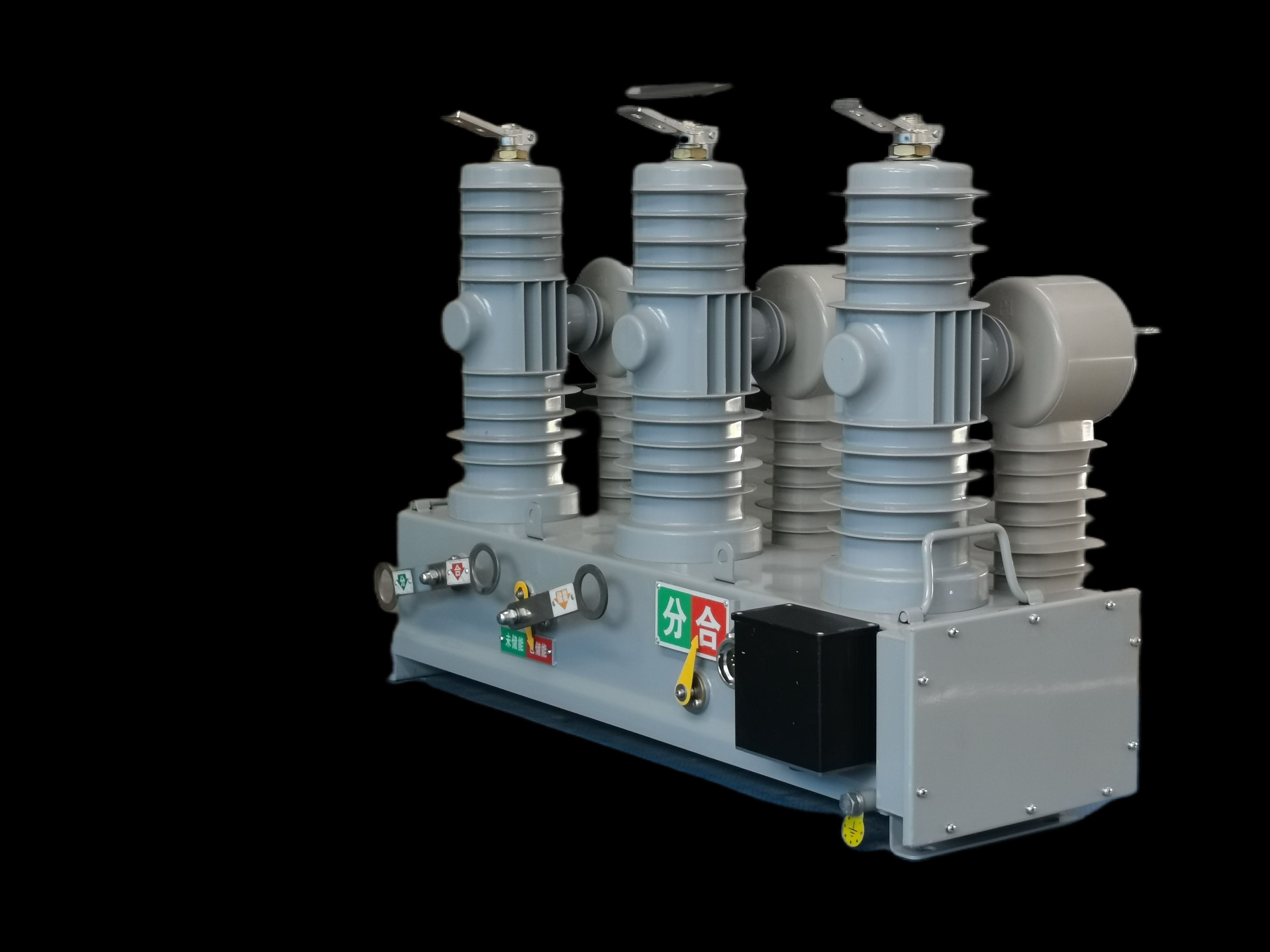
A standard recloser is tuned around a narrow set of assumptions: load current rises and falls gradually, fault current spikes abruptly, and the direction of power flow is always downstream. Mixed load profiles break every one of those assumptions. A commercial feeder that combines large HVAC compressors, LED lighting with active front-end drivers, and fast-charging EV stations produces overlapping inrush events, harmonic distortion, and intermittent bidirectional transients. The recloser sees these as fault-like signatures and either trips unnecessarily or delays a real trip long enough for damage to occur.
The problem gets worse with non-linear loads. Standard recloser algorithms typically rely on fundamental-frequency RMS or peak detection, which works fine when the load is mostly resistive. But a mixed profile with VFDs, UPS systems, and EV chargers injects substantial harmonic content. Those harmonics can shift zero-crossings, distort current waveforms, and fool phase-angle-based fault direction logic. As a result, the recloser may misclassify a downstream fault as load variation or vice versa, leading to nuisance outages or missed isolation.
Bidirectional power flow is another blind spot. Most standard reclosers were designed for radial distribution with one-way current. On a mixed load profile that includes rooftop solar, battery storage, or regenerative braking from nearby industrial equipment, current can reverse direction during a fault. Directional elements that assume a fixed forward direction will fail, causing the recloser to trip on reverse load current or fail to trip on a genuine downstream fault. This not only extends outage duration but also puts line crews and equipment at risk.
Building Redundancy Into the Reclosing Sequence
Redundancy in reclosing isn't about simply doubling relays or adding a second trip coil. The real value lies in designing the sequence so that a single point of failure cannot leave the breaker stuck open after a transient fault. Start by examining the closing circuit: if one close coil burns out during a long series of operations, the entire reclosing attempt fails. Parallel close coils with independent control paths, each powered from a separate DC bus, eliminate that single point. The same principle extends to the position feedback—relying on a single auxiliary contact to confirm the breaker has closed leaves you blind if that contact welds or misaligns.
A more resilient approach uses two different sensing methods for breaker position. For instance, combine a digital auxiliary switch reading with an analog current transformer measurement on the closing coil. When both signals agree that the breaker is closed, you proceed to the next step in the sequence. If they disagree, the logic can default to a safe state and raise an alarm instead of commanding another close. This cross-checking adds negligible cost but removes a whole class of nuisance lockouts.
Finally, build redundancy into the timing itself. Instead of a single fixed dead time, program the reclosing relay to accept a range of acceptable closing windows based on real-time system voltage and frequency. If the breaker misses the first window due to a sluggish mechanism, the relay can wait for the next viable moment rather than aborting the entire sequence. This dynamic dead time, combined with independent close coil drivers, gives the breaker multiple chances to restore service without sacrificing safety or coordination with neighboring protection schemes.
Communications That Survive Grid Stress
When the grid buckles under extreme weather, cyberattacks, or equipment failures, most communication channels go dark right along with it. The key is building layers that don't depend on a single point of failure. Satellite uplinks, mesh radio networks, and low‑power wide‑area protocols each bring something different to the table, and the combination is what keeps field crews talking when the towers are down.
Redundancy alone isn't enough if the gear can't handle rough conditions. Radios rated for wide temperature swings, batteries that hold charge through days without sun, and enclosures that shrug off dust and water all play a part. More important is the training and habit of switching to alternate paths before the primary one collapses, so the team never has to guess who's still reachable.
Some utilities now practice "dark start" communication drills, simulating a total blackout and forcing operators to rely only on hardened mobile units and high‑frequency voice links. These drills expose weak spots that look fine on paper, like a repeater that loses sync after twelve hours or a satellite service that throttles data during regional emergencies. Fixing those details is what separates a network that survives grid stress from one that only promises to.
Testing Custom Logic Before It Reaches the Field
A bench setup that mirrors the real operating environment catches most of the problems you’d otherwise chase on-site. Feed the logic the same input sequences it will see in production, including the oddball edge cases that only happen once a month. If the behavior doesn’t match what the spec implies, fix it now while the reset button is still within arm’s reach.
Timing mismatches and race conditions rarely show up at first glance. Loop the logic through repeated cycles, vary the power-up order, and inject noisy or delayed signals. A small script that randomizes input timing often reveals assumptions that looked safe in simulation but fall apart under real electrical or mechanical stress.
Have someone who didn’t write the code operate the test rig. They’ll press buttons in the wrong order, ignore warning labels, and set parameters to values you never considered. That’s exactly the kind of handling the field will deliver, so treat every unexpected response as a finding rather than user error.
Maintenance Windows Shaped by Real Operating Data
Rather than relying on generic calendar-based schedules, modern maintenance windows are now defined by the actual operating conditions of equipment. Sensors and control systems continuously record variables such as load cycles, temperature fluctuations, vibration signatures, and runtime hours. By analyzing this real data, facility teams can identify patterns that signal when a machine is approaching its practical limits, allowing them to schedule maintenance only when it is truly needed.
This data-driven approach shifts the focus from fixed intervals to condition-based triggers. For example, a pump that runs intermittently in a low-demand setting may require service far less frequently than an identical unit operating under constant strain. Using real operating data, the maintenance window adapts to each asset's unique usage profile, reducing unnecessary downtime and preventing premature parts replacement. It also helps avoid surprises by flagging subtle deviations that traditional time-based plans would miss.
In practice, maintenance teams can overlay this live operational data with historical failure records to refine window predictions. The result is a maintenance schedule that feels less like a rigid checklist and more like a responsive plan, shaped by the machinery's own performance story. This leads to better resource allocation, longer asset life, and fewer emergency repairs, all driven by what the equipment is actually telling us through its operating data.
FAQ
Rural feeders tend to be long with few customers per mile and high exposure to vegetation, so custom units often emphasize wider current ranges, higher interrupting ratings, and aggressive autoreclose curves to restore service quickly. Urban feeders, by contrast, face space constraints and higher fault currents, so designs shift toward compact footprints, faster clearing times, and coordination with underground cable protection.
A true custom solution starts with the feeder's load profile, fault level, protection coordination study, and environmental conditions. It can include modified CT ratios, specific TCC curves, different dielectric media, alternative bushings, custom control logic, or integration with SCADA protocols. The goal is to match the device's behavior to how the utility actually operates, not simply swap accessories.
The initial purchase price is only one part of the cost. Custom units can reduce truck rolls, shorten outage duration, avoid nuisance tripping, and extend asset life by operating within tighter thermal margins. Over a 20-year life, a recloser that fits the protection scheme can pay for itself many times over through SAIDI and SAIFI improvements.
By tailoring time-current characteristics and sequencing to the actual system, engineers can prevent unnecessary lockouts and isolate only the faulted section. For example, a custom fast curve may clear a lateral fault before the substation breaker trips, while a delayed curve still allows a downstream fuse to blow for permanent faults. This preserves selectivity and avoids widespread outages.
Coastal salt spray, extreme cold, high altitude, seismic zones, or heavily polluted industrial areas can demand different housing materials, insulation levels, bushing designs, or control heater specifications. A unit built for a mild climate may fail early in a coastal environment if creepage distance and corrosion resistance are not addressed at the design stage.
Yes. Many custom designs incorporate advanced controllers that accept logic changes for bidirectional fault current, voltage measurements on both sides, and communication protocols such as DNP3, IEC 61850, or Modbus. This allows the recloser to participate in FLISR schemes, automatic sectionalizing, and microgrid islanding without requiring an external retrofit.
They should have a one-line diagram, load and fault studies, protection philosophy, communication interface requirements, control power availability, and any specific utility standards. Clear documentation of existing equipment ratings and known nuisance trip history helps the manufacturer propose a solution that is not just custom on paper but effective on the feeder.
Conclusion
Standard recloser configurations often rely on generic assumptions about fault current and load behavior, but actual feeders rarely behave that way. Mixed residential, commercial, and light industrial loads create fault signatures that drift with seasonal demand and distributed generation. When settings are copied from one feeder to another, nuisance trips and missed faults become routine. A custom solution starts by matching recloser curves and sequence timing to measured feeder behavior—captured during normal switching events and staged fault tests—not to a one-size-fits-all model. That means adjusting pickup thresholds, time-current curves, and dead times so the recloser clears temporary faults without dropping healthy load. It also means building redundancy into the reclosing sequence itself: if a first reclose attempt is blocked by a transient communication loss or a cold-load inrush, the logic can fall back to a conservative second or third attempt without sacrificing coordination.
Grid stress exposes another gap in off-the-shelf reclosers. Communications links that work fine during blue-sky days often fail during storms or heavy fault activity, leaving protection blind exactly when it matters most. Custom recloser packages include layered communication paths—peer-to-peer radio, fiber, and cellular fallback—so the reclosing decision never depends on a single fragile channel. Before any custom logic is deployed, it is tested against recorded fault records and real-time hardware-in-the-loop simulations to catch unintended interactions with fuses, breakers, and downstream reclosers. Finally, maintenance intervals shift from fixed calendar dates to condition-based windows derived from real operating data: contact wear, interrupting duty, and battery health drive the schedule. The result is a recloser scheme that holds coordination under pressure, reduces outage minutes, and keeps field crews working on evidence rather than guesswork.
Contact Us
Contact Person: Julion
Email: [email protected]
Tel/WhatsApp: 8617351370631
Website: https://www.deyunelectric.com