
Custom Flexible Flashing Tape OEM: Unlocking Advanced Weatherproofing for Modern Construction
2026-05-22
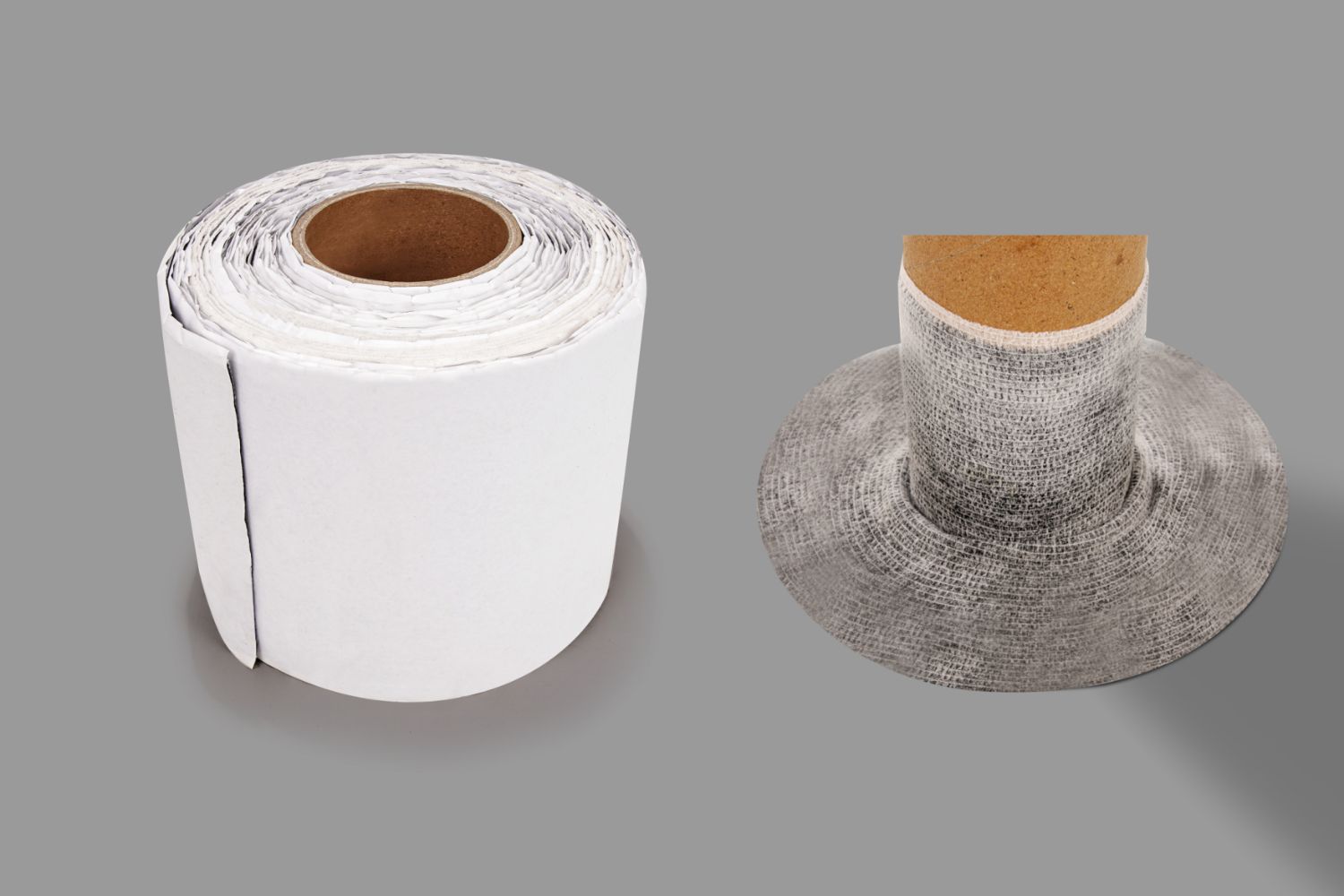
In the fast-evolving world of modern construction, achieving seamless weatherproofing is more critical than ever. But off-the-shelf solutions often fall short when facing unique design challenges. Enter Jinbo‘s custom flexible flashing tape OEM services — a game-changer that merges bespoke engineering with high-performance materials. Whether you’re tackling complex geometries or demanding environmental conditions, this is the key to unlocking a new era of durable, leak-free buildings. Dive in to discover how tailored flashing solutions can revolutionize your next project.
The Science Behind Flexible Flashing Performance
Flexible flashing materials owe their reliability to a combination of polymer chemistry and mechanical design. At the molecular level, these products are engineered with elastomeric chains that maintain suppleness across a wide temperature range. This ensures the material can expand, contract, and bend without cracking, even when exposed to freeze-thaw cycles or structural settling. The incorporation of UV inhibitors further prevents degradation from sunlight, preserving the flashing’s integrity over decades.
What truly sets high-performance flexible flashing apart is its ability to self-seal around fasteners and irregular surfaces. Unlike rigid alternatives, it utilizes a pressure-sensitive adhesive layer that activates under compression, creating a watertight bond with substrates such as OSB, concrete, and metal. This adhesive is formulated to remain tacky and cohesive, bridging microscopic gaps and resisting the capillary action that often leads to hidden leaks behind cladding systems.
Installation conditions also play a pivotal role in performance. Field studies show that flexible flashing achieves optimal adhesion when applied to clean, dry surfaces within a specified service temperature range. Once cured, the material forms a monolithic barrier that accommodates building movement without losing its seal. This combination of material science and practical application is why many builders now consider it indispensable for protecting vulnerable transitions like windows, doors, and roof-to-wall junctions.
Tailoring Waterproofing to Your Project’s DNA
Every project carries a unique set of demands, and waterproofing is far from a one-size-fits-all solution. Your building’s location, climate exposure, structural design, and intended use all influence the type of protection it needs. A coastal high-rise battered by salt spray requires a vastly different approach than a subterranean parking garage dealing with hydrostatic pressure. Ignoring these specifics often leads to premature failure, no matter how reputable the product you choose.
The key lies in understanding how moisture interacts with your project at every level. For instance, a green roof demands root-resistant barriers and drainage layers, while a terraced plaza over occupied space needs robust reinforcement to handle constant foot traffic and thermal movement. We assess your project’s “DNA”—its material composition, expansion joints, and even microclimates—to specify systems that move with the structure, not against it. This tailored strategy prevents the common trap of over-engineering, which drives up costs, or under-specifying, which invites leaks.
Ultimately, the most effective waterproofing aligns with your project’s lifecycle, not just its blueprint. A hospital with strict hygiene protocols demands seamless, chemical-resistant surfaces, whereas a historic renovation might call for breathable, lime-based treatments that preserve original masonry. By weaving the waterproofing design into the building’s core identity from day one, you create a defense that ages gracefully with the structure itself.
Why Standard Tapes Fall Short in Complex Builds
Most standard tapes are engineered for straightforward, uniform surfaces—think flat cardboard boxes or smooth plastic seals. But when a project involves irregular shapes, dense material layers, or exposure to fluctuating temperatures and moisture, that one-size-fits-all adhesive becomes a liability. The bond may hold initially, yet gradual stress from expansion, contraction, or vibration can cause peeling, bubbling, or complete detachment. In complex builds, you’re not just sticking two things together; you’re managing a dynamic interface where the gap between materials shifts constantly. Standard tapes simply aren’t designed to absorb those micromovements without losing integrity.
Another critical shortfall shows up in chemical and environmental resistance. A typical acrylic or rubber-based adhesive might excel indoors at room temperature, but subject it to solvents, UV exposure, or high humidity, and the polymers begin to break down. In automotive assemblies, for instance, tapes must survive underhood heat and occasional fuel contact. In electronics, they need to withstand cleaning agents without degrading. Standard formulations often plasticize or become brittle, leaving gaps that compromise not just adhesion but the entire structure’s performance. There’s no room for “good enough” when a failure could mean a safety risk or costly rework.
The application process itself often exposes how standard tapes aren’t cut out for precision work. Thinner or less conformable backings can’t navigate tight corners or deep recesses without creasing, while overly aggressive initial tack makes repositioning impossible—once it grabs, you’re committed, even if alignment is slightly off. In contrast, purpose-built tapes for complex builds offer controlled tack, thicker elastomeric cores, and liners engineered for clean die-cutting. They turn an unforgiving, error-prone step into a reliable part of the manufacturing workflow, which is exactly what demanding projects require. Standard tapes simply lack the finesse and resilience needed behind the scenes.
Long-Term Durability Starts at the Seam
The true test of any structure lies in its most vulnerable points—and joints often bear the brunt of stress, weathering, and shifting over time. When seams are treated as an afterthought, you invite moisture intrusion, thermal movement damage, and eventual material breakdown. Investing in seam integrity from the very first stage transforms a potential weak link into the cornerstone of extended service life.
Modern engineering shows us that a seam is never just a connection; it’s a carefully choreographed interface where materials, adhesives, and mechanical fasteners must work in unison. The right preparation, precise application, and rigorous testing at these critical junctions mean the difference between reactive patchwork and proactive resilience. Every degree of expansion, every freeze-thaw cycle, every load transfer depends on how well that line holds.
Choosing durable materials without matching the joining technique is like building a fortress with unguarded gates. Long-term performance hinges on a shift in thinking: instead of hiding seams beneath surface finishes, they become the focus of design foresight. The result is a system that ages gracefully, resists fatigue, and keeps maintenance costs predictable—all because the proof of endurance is written right where things come together.
Integrating Tape into Modern Architectural Designs
Architects are rediscovering tape not just as a temporary fix but as a deliberate design element. High-performance adhesive films now serve as structural connectors, light-diffusing surfaces, and even weather-resistant cladding. In projects where transparency and minimalism matter, specialized polyurethane tapes bond glass panels without visible frames, creating seamless facades that feel lighter and more open.
The material’s flexibility allows it to respond to dynamic forces—expanding and contracting with temperature shifts—making it ideal for structures in seismic zones or extreme climates. Designers are also exploring conductive tapes for integrating LED systems directly into surfaces, turning walls into interactive displays without bulky fixtures. This blend of utility and subtlety challenges conventional notions of permanence in architecture.
Beyond functionality, tape introduces a raw, almost provisional aesthetic that contrasts with polished steel and concrete. Exposed tape joints in plywood interiors or aluminum mesh overlays celebrate imperfection, while woven fabric tapes create tactile patterns in acoustic panels. It’s a quiet rebellion against the overly finished, inviting occupants to question where construction ends and art begins.
From Manufacturer to Site: The OEM Advantage
When you cut out the middleman, the entire supply chain becomes leaner and more reliable. Our OEM approach means the same team that engineers the components also handles the logistics, quality checks, and final delivery. There’s no finger-pointing between separate vendors if something goes wrong—just one accountable partner from blueprint to installation.
This direct line from factory floor to your project site eliminates the markup and delays that typically come with layers of distributors. We’re not just shipping parts; we’re delivering built-to-spec solutions with installation-ready precision. Every shipment is documented, traceable, and backed by the people who actually made it.
The result is a smoother build cycle, fewer surprises on-site, and a final product that performs exactly as intended. Because we control the process end to end, we can adapt quickly to changes—whether it’s a design tweak or an accelerated timeline—without sacrificing quality or cost efficiency.
FAQ
It's designed to conform to irregular surfaces and complex geometries, creating a seamless barrier against moisture ingress. The tailored adhesion and elongation properties ensure it bonds reliably even under thermal movement, preventing leaks where traditional rigid materials often fail.
OEM production enables precise formulation adjustments—like adhesive strength, backing material, and width—to match unique project demands. This means you can specify UV resistance for exposed applications, low-temperature tack for cold climates, or fire-rated compositions without compromising on delivery speed.
Absolutely. It's compatible with EPDM, TPO, PVC membranes, as well as metal cladding and wood sheathing. By tailoring the adhesive chemistry, it achieves chemical compatibility that prevents delamination and maintains long-term adhesion across different substrates.
Its pliable nature allows for wrinkle-free application around windows, doors, and curved architectural features. Installers appreciate the forgiving workability, which reduces callbacks from improper laps, and the split-release liner aids quick, precise placement even at heights or awkward angles.
By eliminating air and moisture leaks, it enhances the continuity of the thermal envelope, reducing HVAC loads. In customized formats, it can be engineered with low-VOC adhesives and integral vapor control layers, aligning with green building standards like LEED or BREEAM.
Reputable manufacturers employ rheological testing for adhesive flow, peel adhesion trials on multiple substrates, and accelerated aging tests mimicking 20+ years of UV and thermal cycling. Batch-level traceability and real-time thickness monitoring ensure every roll meets the specified profile.
For Arctic conditions, tape can be formulated with pressure-sensitive adhesives that activate at -20°C. In hurricane-prone areas, a high-tensile backing resists tearing under dynamic pressure. Custom widths up to 600mm also minimize lap joints on large panels, enhancing overall system resilience.
It consolidates sourcing with just-in-time delivery of factory-made rolls cut to exact lengths, eliminating field trimming waste. Custom packaging with QR-coded installation guides reduces on-site confusion, and volume orders gain consistent lead times, keeping complex projects on schedule.
Conclusion
Custom flexible flashing tape OEM transforms modern construction weatherproofing by merging material science with project-specific engineering. Unlike off-the-shelf tapes that fail under thermal movement or irregular substrates, these tailored solutions leverage advanced polymer chemistries and precision adhesive formulations to create a dynamic seal. The right butyl or acrylic hybrid, paired with a carefully selected backing, can elongate, recover, and bond aggressively to concrete, metal, wood, or masonry — even when surfaces are damp or rough. By working directly with manufacturers, architects and builders move beyond generic compromises, specifying everything from thickness gradients to UV-stable facestock that matches the building’s lifespan. Laboratory-validated resistance to water columns, temperature cycling, and UV aging ensures the tape performs not just at installation but for decades, fundamentally reducing the risk envelope around windows, doors, and cladding transitions.
The OEM model unlocks advantages far beyond the product itself. When standard tapes fail at complex junctions — think curved curtain walls, stepped foundations, or ventilated facades — a co-developed solution integrates seamlessly with adjacent materials, preserving both technical performance and design intent. Instead of patching failures later, teams embed weatherproofing from the earliest detailing phase, turning vulnerable seams into enduring barriers. This partnership streamlines supply chains, cuts on-site improvisation, and yields consistent quality that generic distributors cannot match. As architectural geometry grows bolder and climate demands intensify, OEM flexible flashing becomes a strategic tool: a high-performance layer disguised as a simple tape, protecting structures from bulk water and moisture vapor while maintaining clean sightlines. The result is quiet confidence in the building envelope — no callbacks, no concealed damage, just long-term durability stitched into every seam.
Contact Us
Contact Person: Miranda
Email: [email protected]
Tel/WhatsApp: +8615231299719
Website: https://www.ihousewrap.com/