
Custom Bolts Solutions That Solve Your Fastening Challenges
2026-09-24
Fastening challenges are rarely as simple as picking a bolt off the shelf. Whether you're fighting vibration loosening on heavy equipment, corrosion in marine environments, or awkward joint geometries, standard fasteners often fall short. That's where Peak Fasten steps in—with custom bolt solutions engineered around your exact load, material, and installation requirements. Instead of forcing your design to fit a catalog, we start with your problem and build the fastener that solves it. In this post, we'll walk through how tailored threads, coatings, and head configurations eliminate common failure points, and why off-the-shelf thinking costs more in the long run.
Threads That Match Your Existing Parts Perfectly
Finding the right thread should never turn into a guessing game. Our replacement threads are cut to the exact pitch, diameter, and depth of your original components, so they thread in smoothly without cross-threading, hesitation, or that annoying loose wobble that comes from “close enough” sizing.
Every piece is checked against real-world sample parts, not just paper specs. That means you can swap out a worn thread and get the same solid, predictable engagement you had on day one—whether you're repairing a single unit or restocking your entire bench.
Materials That Outlast the Job Site
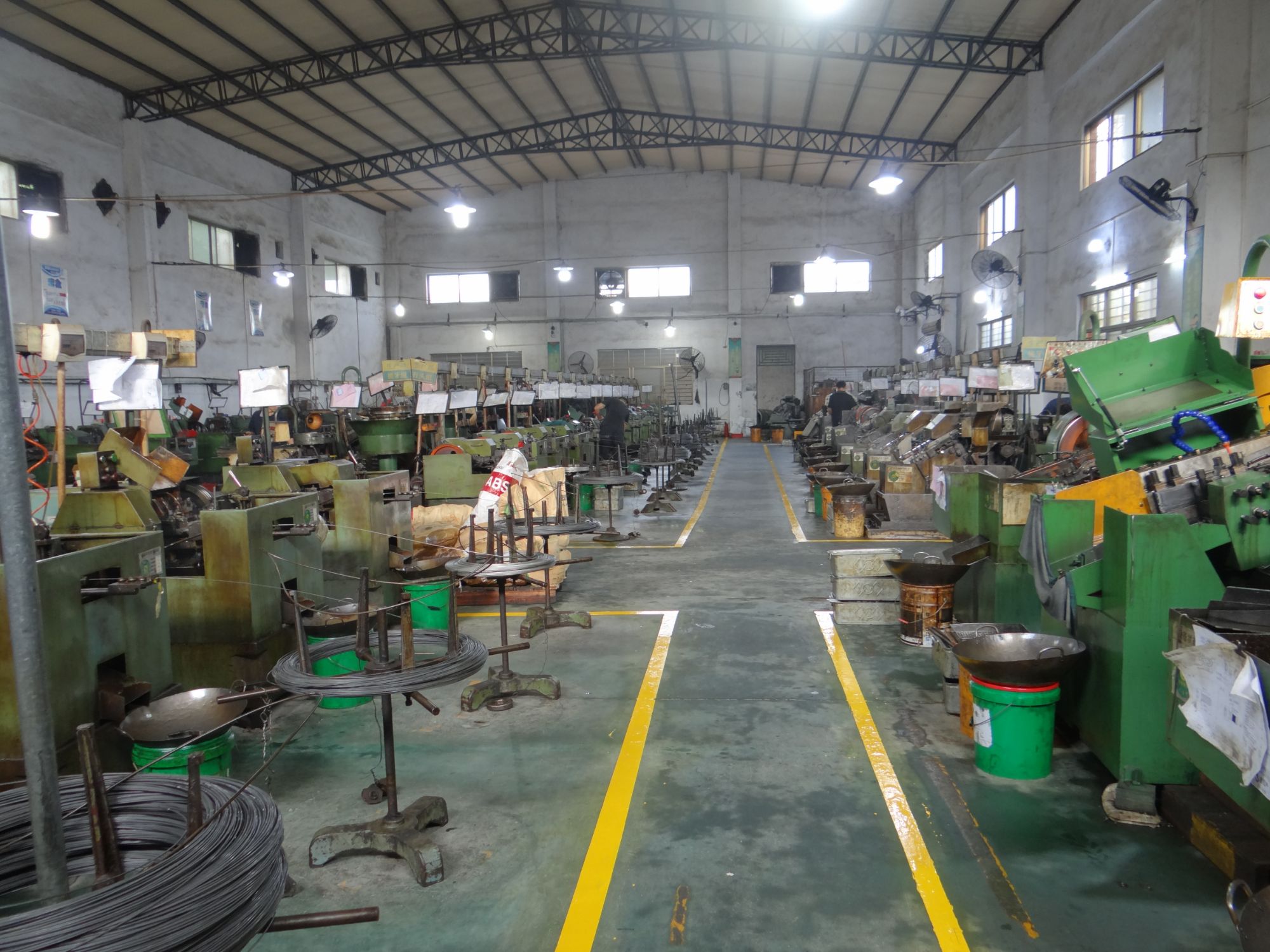
Some jobs are over in a season, but the materials chosen for them shouldn't be. Weather, wear, and constant movement can break down lesser options long before the project is even finished. The smart move is to pick materials built for repeated exposure, like marine-grade plywood, powder-coated steel, or high-density polyethylene. These aren't just tougher on paper—they hold up under real abuse, from rain-soaked mornings to sun-baked afternoons, without warping, rusting, or splitting at the edges.
It's not just about surviving the initial build either. Think about what happens after the crew packs up and leaves. A material that outlasts the job site becomes its own kind of quiet asset—no callbacks for rot, no emergency replacements, and no scrambling to match a discontinued product. Whether it's composite decking that ignores moisture or UV-stabilized fasteners that don't bleed rust streaks, the payoff happens months or years later, when everything still looks and functions like day one.
The difference usually comes down to manufacturing details. Look for solid cores instead of veneers, welded joints over glued ones, and protective coatings baked on rather than sprayed as an afterthought. These choices don't scream for attention. They simply mean the material won't quit halfway through the job or long after the last invoice is sent.
Heads Designed Around Your Tool Access
Most tool heads force you to work around their shape, but these are built the other way. The slim profile slides behind pipes, under cabinets, and into stud bays without forcing you to remove nearby fixtures. You can reach a drain nut tucked behind a dishwasher or a screw behind a furnace vent without clearing the whole area first.
The neck has a gentle flex point that holds its angle once you set it, so the head stays put while you turn the tool. That means no more dropping a socket into a wall cavity because the extension flopped over. It also lets you apply torque from a position your wrist can actually handle, not just where the fastener happens to be.
Access isn’t just about tight spots. The head geometry keeps the fastener engaged even when you’re working blind, with a slight taper that centers itself on the nut or bolt head. You spend less time fishing for alignment and more time getting the job done, especially in places where you can’t see what you’re doing.
No Minimum Order Quantities Holding You Back
Most suppliers lock you into bulk orders before you've even proven demand. Here, that pressure disappears entirely.
Order exactly what you need, whether it's a handful of samples or a modest first run. You get room to test, tweak, and grow at your own pace without tying up cash in surplus stock.
That kind of flexibility changes how you plan. Run smaller production batches, respond to seasonal shifts, or trial a new design without the usual financial leap. When there's no minimum threshold, every decision stays in your hands.
From Torn-Down Sample to Exact Replica
Reverse engineering begins with a single worn-out part in hand. We strip it down layer by layer, measuring every curve, thread, and tolerance with instruments that capture details the naked eye misses. The original sample is often decades old, scarred by use, or missing critical sections—so we rely on metallurgical analysis and dimensional cross-checks to fill in what time has erased.
From those data points, we build a digital twin and refine it against the physical specimen until deviations vanish into the micron range. The first machined copy rarely matches; instead of forcing it, we adjust tool paths, heat treatment, and surface finishing based on how the metal behaves under each pass. What emerges is not a look-alike but a true dimensional clone—same mass, same balance, same wear pattern when installed.
The final proof comes when the replica is mounted alongside the original and run through identical load cycles. Torque curves, vibration signatures, and failure points line up so closely that even seasoned engineers can't tell which part came off the old machine. That moment—where a torn-down sample becomes an exact, functional twin—is the entire point of the work.
Faster Turnaround Than Your Current Supplier
Slow suppliers rarely fail at the machine—they fail at the handoff. We shorten the gaps between confirmation, sampling, and production by giving your order a single accountable lead instead of a rotating support inbox. Most quotes go out within hours, not days, and pre-production samples are prioritized over batch orders so you aren't stuck waiting in a queue.
Our scheduling is built around your launch date, not our convenience. If a material is in stock, we begin prep before the deposit clears; if it isn't, we tell you the real lead time instead of padding it. That means no surprise "plus two weeks" after you've already committed.
Turnaround speed also lives in how fast problems get solved. When a spec is unclear or a print file needs adjusting, you'll hear from a production technician who can make the call immediately—not a sales rep who has to "check with the factory." That direct line is what actually removes days from the process.
FAQ
Custom bolts can be engineered to match non-standard thread pitches, head profiles, or load ratings, so you are not forced to redesign around off-the-shelf limitations.
We evaluate exposure conditions—salt spray, chemicals, temperature swings—then select alloys or coatings such as 316 stainless, duplex steel, or proprietary plating systems that keep the joint reliable over time.
Yes, features like captive washers, pilot points, or hexalobular drive recesses can be integrated into the bolt design to speed up alignment and torque transfer, cutting seconds per fastening cycle.
Share the intended application, load requirements, dimensions or a sample part, material preference, and any surface finish or plating specs—that gives us enough to propose a manufacturable design.
Many designs can be produced through CNC machining or cold forming with flexible tooling, so you avoid the high minimums usually tied to standard fastener inventory.
We can add locking features such as nylon patches, distorted threads, or serrated bearing surfaces, and we validate the design with joint testing or torque-retention studies.
That's common. You can send a sketch, a worn sample, or even a photo with basic measurements, and we'll reverse-engineer the dimensions and tolerances into a production-ready spec.
Conclusion
When a standard bolt won't do the job, the real difference shows up in the details. Our custom fasteners start with threads that drop straight into the parts you already have—no re-tapping, no chasing, no forcing. We match pitch, diameter, and class of fit so assembly feels the same as the original, only better. Material selection goes past the generic alloy list: we pick from stainless grades, hardened carbon steels, or exotic alloys based on what actually survives your environment—salt spray, heat cycling, vibration, chemicals. And because tool access can make or break a maintenance schedule, we shape the head around your wrench, socket, or low-profile clearance rather than asking you to buy new tooling. Send us a torn-down bolt, even one that's snapped or corroded, and we'll reverse-engineer the exact geometry—thread runout, under-head radius, shoulder length, marking—so what comes back is an indistinguishable working replica, not just a "close enough" replacement.
What usually stalls custom orders is the small-batch problem. We removed that barrier entirely: you can order a handful of bolts for a prototype or a few hundred for a production line, and the price per part won't punish you for not buying ten thousand. Turnaround is built around keeping your downtime short. Where many suppliers quote six to eight weeks, we routinely ship custom bolts in days—not by cutting corners, but by keeping raw stock on hand and programming our lathes and thread rollers in-house. That means a project that used to wait on fasteners can proceed on your schedule. You get the exact thread, material, head style, and finish you asked for, without padding the order or waiting on someone else's production calendar.
Contact Us
Contact Person: Mason Lv
Email: [email protected]
Tel/WhatsApp: +86 13027998452
Website: https://www.peakfastentech.com