
Custom Active Valve Innovations for Smarter Flow Management
2026-10-30
Most flow control systems are built around off-the-shelf valves, forcing engineers to design around limitations rather than needs. AVM flips that script with custom active valve innovations—valves that adapt their behavior in real time to match specific process demands. Smarter flow management isn't just about tighter tolerances; it's about removing the gap between what your system requires and what your hardware actually delivers.
Matching Valve Response to Real-Time Flow Demands
Getting a valve to track real-time flow demands is rarely just a matter of sending a larger signal. The actuator's stroke time, the positioner's internal tuning, and even the friction in the packing all introduce a lag between the requested position and the actual opening. If the flow setpoint moves faster than the valve can physically travel, the loop will always chase the demand instead of meeting it.
Valve gain adds another layer that often gets overlooked. An equal-percentage trim can amplify small movements near the seat, which makes low-flow control jumpy when the demand changes quickly, while a linear trim may feel sluggish at high flows. Matching response means checking the installed characteristic against the expected flow range, not just relying on the datasheet curve.
A practical way to spot mismatch is to watch the positioner's travel deviation and settling time during normal load swings. If the valve consistently needs two or three extra seconds to stabilize after each demand change, the problem usually sits in undersized air supply, excessive actuator volume, or positioner gain set too conservatively. Fixing those details often does more than increasing the controller's output.
Why Standard Valves Fall Short in Variable Systems
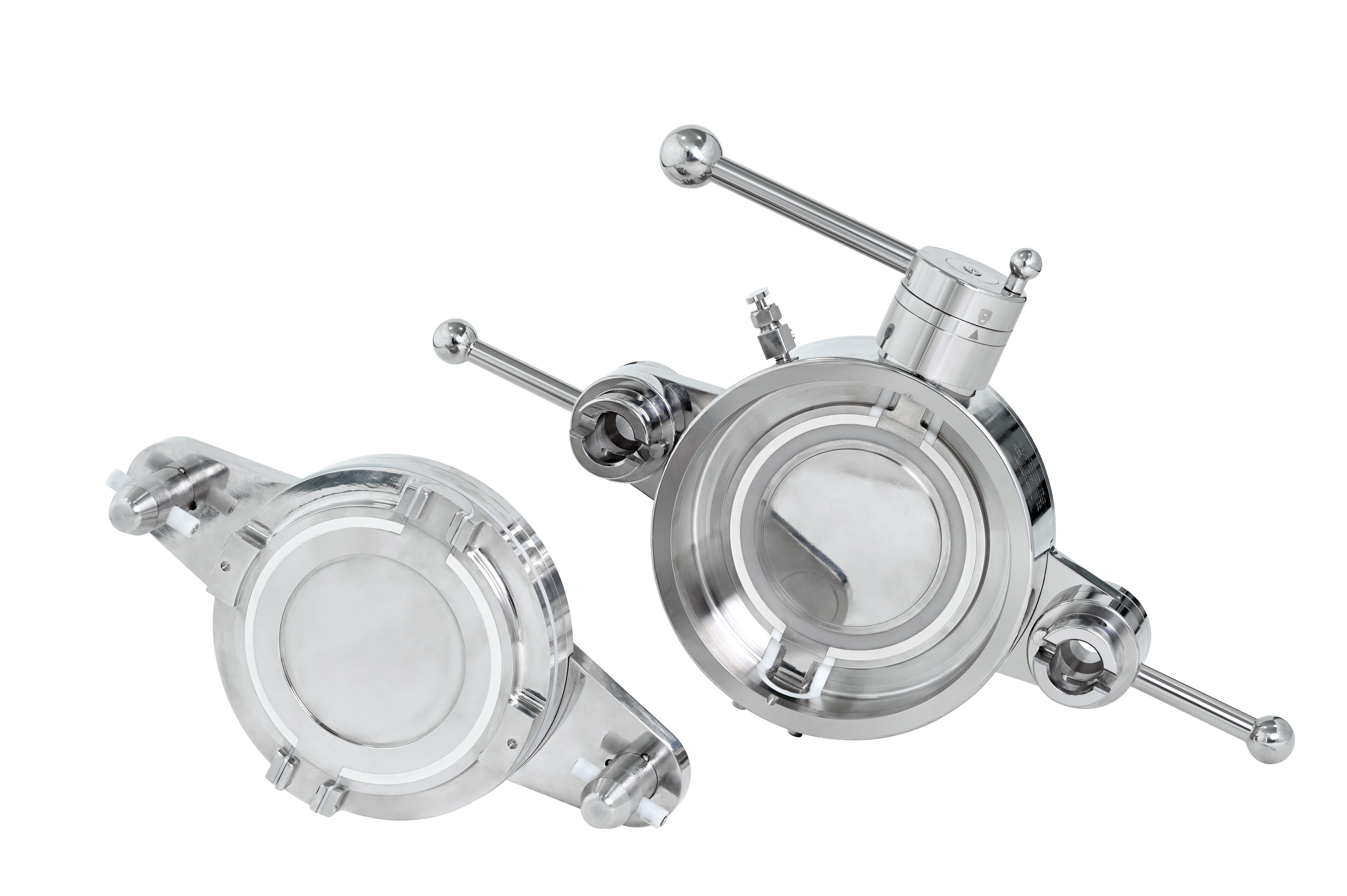
Standard valves are typically designed around fixed operating points—specific pressure drops, flow rates, and temperature ranges. In variable systems, where demand shifts constantly, these valves struggle to maintain stable control. The internal geometry, seat materials, and actuator sizing are optimized for a narrow band of conditions, so any significant deviation leads to hunting, cavitation, or premature wear. Operators often try to compensate by oversizing or adding bypass loops, but this only masks the underlying mismatch.
Another shortcoming is the lack of real-time adaptability. A conventional valve with a linear or equal-percentage trim assumes a predictable relationship between stem position and flow. When system resistance curves change—due to seasonal load variations, equipment staging, or piping reconfigurations—the installed characteristic shifts, making precise modulation nearly impossible. Without continuous feedback or re-characterization, the valve cannot correct for these dynamic changes, leaving the system either starved or over-supplied.
Maintenance also becomes a recurring headache. Variable duty cycles expose standard valves to frequent throttling at low openings, accelerating erosion and seat leakage. The constant cycling stresses stems, packing, and diaphragms far sooner than in steady-state service. As a result, facilities face unplanned downtime and higher lifecycle costs, even though the initial purchase price of a standard valve is lower.
Designing for Pressure Swings Without Losing Stability
Pressure swings in process systems often creep in unannounced—caused by pump startups, valve cycling, or sudden load changes. The first line of defense isn't a complex control algorithm but a clear understanding of where the pressure differentials originate. Map the system's normal operating envelope and identify the points that experience the highest transient forces. This baseline lets you design for the worst credible upset without overbuilding every component.
Stability under fluctuating pressure rarely comes from a single oversized surge vessel. It emerges from a combination of deliberate damping, strategic volume placement, and piping that allows gas or liquid to rebalance without hammering. For example, adding a small accumulator close to the fastest-acting valve can absorb local spikes before they propagate. Similarly, keeping control loops tuned for a realistic range of pressure variation prevents the system from overcorrecting and inducing its own oscillations.
The real test of a robust design is how it behaves during the transition, not just at steady state. Run through a few what-if scenarios: what happens when two pumps swap over, or when a downstream block valve closes faster than expected? If the pressure trace shows sharp reversals or long settling times, you need more distributed capacitance or a softer response from the control elements. Small changes in line sizing or valve trim can dramatically reduce the energy stored in pressure waves, letting the system ride through swings without losing its footing.
Material Choices That Extend Service Life in Harsh Lines
In aggressive environments where abrasion, chemical attack, and extreme temperatures constantly threaten pipeline integrity, the selection of liner and coating materials often determines whether a system survives a few seasons or serves for decades. Rather than defaulting to generic stainless steel or commodity polymers, field engineers increasingly turn to engineered alloys with higher molybdenum content, ceramic-filled epoxies, and ultra-high-molecular-weight polyethylene. These materials resist the micro-tearing and stress cracking that quietly degrade conventional options, and they maintain dimensional stability under thermal cycling.
One overlooked factor is the synergy between material hardness and surface finish. A pipe that feels smooth to the touch may still create turbulence at the microscopic level, accelerating erosion in slurry or particulate-laden flows. By selecting materials with a low coefficient of friction and a naturally passivating oxide layer, such as duplex stainless steels or silicon carbide–reinforced coatings, operators can reduce drag and prevent the formation of localized corrosion cells. This approach not only extends service intervals but also cuts energy costs, as the line requires less pumping pressure to move the same volume.
Finally, material choice must account for installation realities. Even the most chemically resistant alloy will fail prematurely if it cannot tolerate the mechanical stresses of welding, bending, or thermal expansion. Modern polymer liners with high elongation at break and self-healing properties offer a practical alternative to rigid metallic systems, especially in retrofit scenarios where field joints are difficult to inspect. Matching the material’s ductility to the line’s movement profile keeps micro-cracks from initiating at stress concentrators, ensuring that the extended service life promised by the chemistry is actually delivered in daily operation.
A Smarter Way to Handle Multi-Phase Flow
Multi-phase flow has long been a headache for engineers—slugging, phase separation, and unpredictable pressure drops force conservative designs that leave efficiency on the table. The usual workaround stacks sensors, guesswork, and oversized equipment, but that only trades one set of problems for another. What actually moves the needle is shifting from reactive control to a model that reads the flow’s internal rhythm, not just its surface behavior.
Instead of treating gas, liquid, and solid phases as separate headaches, a smarter approach maps how they interact in real time. By focusing on the energy signature of the mixture rather than just volume fractions, it becomes possible to anticipate regime transitions before they destabilize the line. This cuts down on backpressure swings and lets operators run closer to the true design limit without flirting with shutdowns.
The payoff shows up fastest in systems that have been limping along with rule-of-thumb margins. Tuning the process around actual phase dynamics, not lab idealizations, removes the need for constant manual trimming and makes the whole loop more forgiving when feed conditions drift.
From Manual Tuning to Autonomous Adjustments
The shift from manual tuning to autonomous adjustments marks a quiet revolution in how we interact with complex systems. Instead of relying on human operators to tweak parameters, monitor feedback, and repeat the cycle endlessly, modern systems learn to sense their own performance and make corrections in real time. This transition removes the bottleneck of human intervention, allowing machinery to adapt to changing loads, environmental conditions, or wear without waiting for a scheduled maintenance window.
What makes autonomous adjustment genuinely different is the continuous loop of observation and refinement. A system might start with a baseline configuration, but as it encounters new data, it builds an internal model of what works and what doesn't. Rather than following a fixed rulebook, it explores the edge of its own capabilities, nudging variables in directions that improve efficiency or stability. This isn't simply automation—it's a form of self-directed learning where the system develops an intuition for its own operating envelope.
The practical impact shows up in reduced downtime, lower energy consumption, and longer component life. Engineers who once spent nights fine-tuning PID gains or retraining firmware now design the guardrails within which autonomous systems can safely experiment. There's still a role for human oversight, but it shifts from constant adjustment to periodic review of the system's learned behavior. The most telling sign of maturity is when a machine surprises its own designers by finding a configuration no one had considered—proof that the autonomy has moved beyond canned responses into genuine problem-solving.
FAQ
The core difference lies in adaptive flow modulation driven by embedded sensing. Instead of relying on fixed orifice geometries or manual adjustments, each unit tailors its response to real-time pressure and viscosity shifts. That means fewer overshoots, tighter process windows, and a valve that actually learns the quirks of your line rather than forcing you to work around a generic spec sheet.
It starts with a short audit of your existing loop: fluid type, pressure band, temperature swings, and the failure modes you have seen before. From there, we map the actuation speed, sealing materials, and feedback resolution to those conditions. You are not picking from a catalog; you are defining the valve's personality around what your process actually needs, then we prototype and iterate with your team before full deployment.
Sectors with non-linear or variable-demand flows see the biggest gains, such as chemical dosing, food and beverage batching, pharmaceutical clean-in-place cycles, and water treatment plants dealing with fluctuating inlet turbidity. Anywhere a fixed valve forces compromises between stability and responsiveness, the active approach removes that trade-off.
Yes, because the wetted materials are selected case by case. For aggressive acids we often specify PTFE or PFA linings with Hastelloy trim, while high-pressure steam lines get hardened stainless internals and graphite-loaded seals. The actuator housing is isolated from the process media, so even a seal weep will not damage the drive electronics.
Typical installations achieve flow repeatability within plus or minus 0.3 percent of setpoint after self-calibration, and response to a 10 percent load change settles in under 200 milliseconds. The valve's positioner uses a Kalman-filtered feedback loop to suppress jitter from turbulent flow, so the precision holds even when upstream pressure fluctuates.
By eliminating over-throttling and hunting, active valves cut pumping losses substantially. In one pharmaceutical batch line, replacing three fixed globe valves reduced compressed air consumption by 28 percent and lowered unscheduled maintenance events from seven per quarter to one, mainly because the adaptive seat load prevents galling and wire drawing.
Most existing flanged or tri-clamp connections can be matched with adapter spools, and the control interface speaks common protocols like 4-20 mA, Modbus, or EtherNet/IP. Retrofits usually require only a short piping modification and a commissioning visit, not a full line shutdown or re-plumbing.
Every custom valve ships with a digital twin model and remote diagnostics access. If a process deviation appears, our engineers can replay the past 72 hours of actuator data to spot the root cause, often before your maintenance team opens a single panel. We also offer on-site tuning sessions and annual health checks.
Conclusion
Active valve systems rarely get the attention they deserve until a pressure spike sends shock through a pipeline or a batch of mixed-phase fluid stalls mid-line. The move toward custom active valves changes that, matching opening and closing behavior to live flow data rather than relying on fixed spring tension. Standard catalogue valves assume steady state conditions, but variable systems rarely behave that way—flows surge, cavitate, or slow without warning. A custom design can trade rigidity for controlled flexibility, allowing the valve to ride pressure swings with enough damping to avoid chatter while still holding a stable setpoint.
Material selection becomes equally decisive when handling abrasive slurries or corrosive gas pockets. Hardened trim, ceramic internals, or specialized elastomers extend service intervals beyond what off-the-shelf stainless can manage. Then there is the shift away from manual tuning: embedded sensors and edge controllers let the valve adjust its own gains as process conditions drift, learning the difference between a routine oscillation and an early sign of wear. Multi-phase flow no longer forces operators to choose between premature seal failure and restricted throughput. Instead, the valve reads density and velocity shifts, altering its profile mid-stroke. The result is less downtime, fewer unplanned bypasses, and flow management that adapts without someone standing at the control panel.
Contact Us
Contact Person: Ananda
Email: [email protected]
Tel/WhatsApp: 8619016718200
Website: https://www.wzaomi.com