
Construction Air Compressor Selection: How to Choose the Right One for Your Job Site
2026-07-15
Every construction site has its own rhythm—jackhammers pounding, drills whirring, and the steady hum of machinery that keeps the job moving. But when your air compressor can't keep up, that rhythm breaks, costing you time and money. Whether you're running pneumatic tools on a high-rise or sandblasting a bridge deck, the right compressor isn't just a purchase—it's the backbone of your productivity. At Seize Air, we get that no two job sites are alike, and cookie-cutter solutions won't cut it. So how do you zero in on the perfect match for your specific demands? Let's walk through the key factors that separate a smart investment from a costly mistake.
Pinpoint the CFM and PSI That Match Your Tools
Getting the right CFM and PSI for your tools isn't just about picking numbers off a spec sheet—it's about understanding how your equipment actually performs under load. Many tools list an “average” CFM, but in reality, demand spikes on startup or during tough cuts can leave you short if your compressor can't keep up. Start by checking the tool's required PSI, then dig into the CFM rating at that pressure. A tool that needs 5 CFM at 90 PSI might actually demand closer to 8 CFM for continuous use, so it's wise to build in a buffer of at least 25% more than the labeled consumption.
It's also easy to overlook how hose diameter and length secretly choke your airflow. Running a high‑draw tool with a skinny 25‑foot hose might drop pressure enough to rob performance, even if your compressor is technically capable. Think about what you're actually doing: impacts guns love volume, while spray guns need steady, regulated pressure. If you juggle multiple tools, a compressor with a higher SCFM at 90 PSI and a generous tank size often bridges the gap without forcing you to wait for recovery.
Rather than just buying the biggest compressor you can afford, focus on your most demanding tool's needs and work backward. Sometimes a dual-stage unit is overkill when a well-tuned single-stage with a good air dryer would do the job more efficiently. Remember, real‑world performance hinges on matching those numbers to the way you work, not just chasing specs, so take the time to observe your tools under actual job conditions before deciding.
Decode Job Site Power: Electric, Gas, or Diesel?
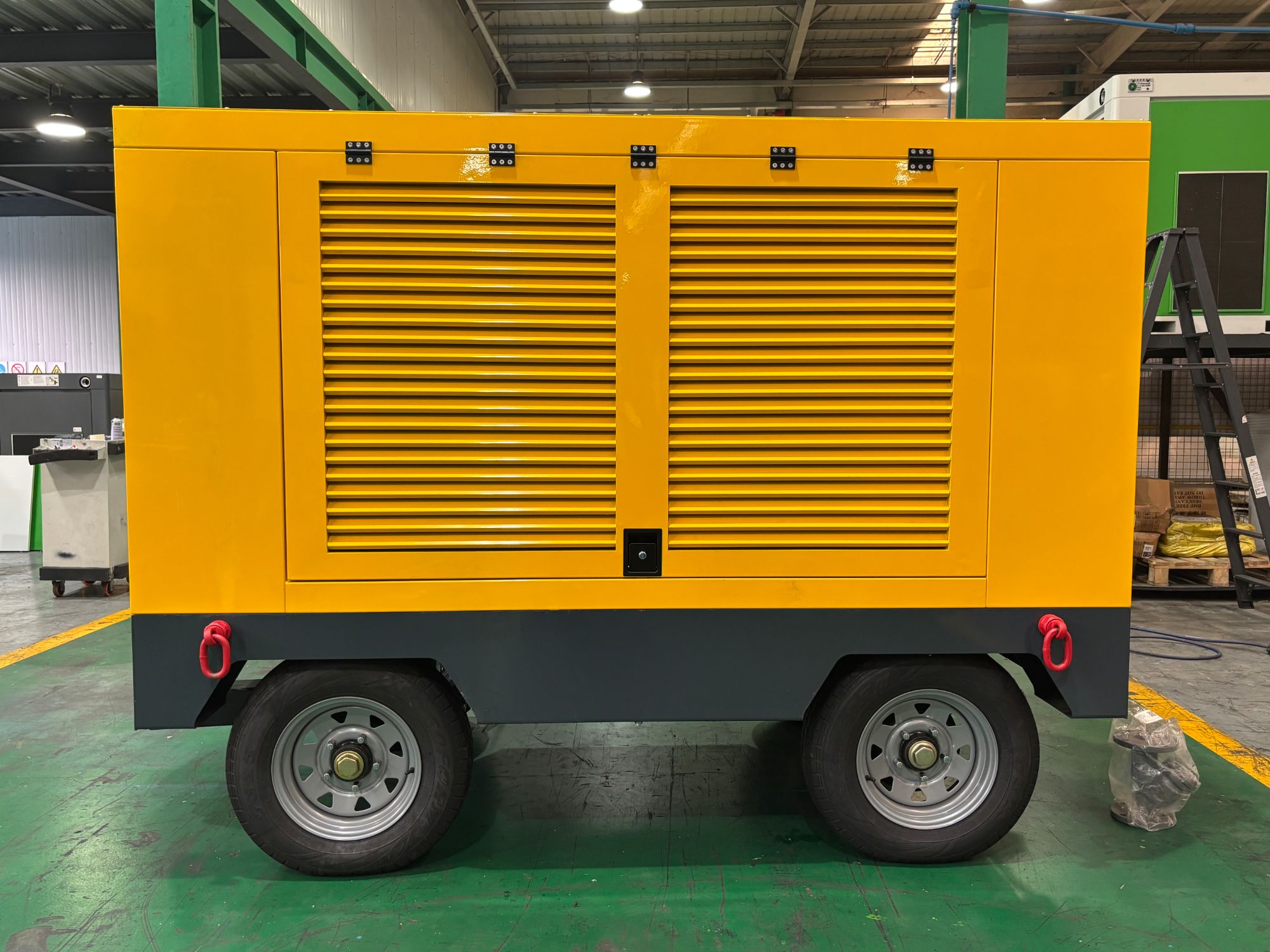
Walk onto any job site and you’ll hear the rumble of engines before you see the equipment. The choice between electric, gas, or diesel power isn’t just a spec sheet decision—it shapes how smoothly the work flows, what kind of fumes you’re breathing, and even how often the neighbors complain. Each option brings its own personality to the table, and understanding that can save you from choosing something that fights the conditions rather than fits them.
If you’re working indoors or in tight, poorly ventilated spaces, electric is a no-brainer. No exhaust, less noise, and instant torque that’s surprisingly punchy for smaller tools. But its leash is short—battery runtime and recharge cycles can stall momentum if you’re far from a power source. Gas engines step in where cordless leaves off: they’re portable, rugged, and ready for anything from a concrete saw to a pressure washer. The trade-off is noise and emissions, and they can be finicky about fuel freshness. Diesel, meanwhile, is the workhorse that doesn’t flinch at heavy loads or long hours. It’s the go-to for generators, big compressors, and earthmovers—anything that needs sustained grunt. But that bulk often means trailering it around, and the upfront cost can make you wince.
Smart crews match the power source to the task, not the other way around. Think about duty cycle, fuel access, and the local rules—some areas now push hard for electric with zero-emission mandates, while others still rely on diesel’s stamina. What matters is that the tool wakes up when you need it and doesn’t become the bottleneck. Sometimes that means running a hybrid approach: electric for the delicate work, diesel for the muscle. That’s not just practical—it’s how you keep pace without burning out your gear or your crew.
Tank Size and Its Hidden Impact on Workflow
When you think of workflow bottlenecks, tank size rarely comes to mind. Yet in many settings—from commercial cleaning to coffee shops—the capacity of a liquid or material reservoir can quietly dictate the rhythm of an entire operation. An undersized tank forces frequent refills, breaking concentration and turning minutes into wasted hours over the course of a week. Conversely, an oversized reservoir might seem like a safe bet, but it often leads to complacency around maintenance schedules and can even degrade material quality if contents sit too long.
The hidden impact goes deeper than mere inconvenience. Workflows that stall for tank refills introduce micro-interruptions that erode focus. In precision-driven tasks, these pauses disrupt the cognitive flow, leading to a higher error rate immediately after a restart. Moreover, the physical act of monitoring levels—or worse, reacting to an empty tank alarm—adds a low-grade cognitive load that accumulates. Teams often don’t notice the drag until someone reconfigures the system with a tank sized to the natural cadence of the job, not just the average consumption rate.
Designing for workflow means treating tank size as a pacing element, not just a container parameter. The ideal capacity aligns with natural task boundaries: a shift, a batch, or a logical unit of work. When that alignment is off, the workaround is usually to work around the tank—prepping extra refill stations, staging intermediate containers, or tolerating inefficient rhythms. These Band-Aids mask the real problem, so it’s worth examining whether a simple capacity adjustment could remove a friction point that nobody thinks to question.
Portability vs. Power: A Trade-off You Can’t Ignore
There’s always a moment when you’re packing your bag—sweating over whether to grab the lightweight laptop that barely lasts through a meeting or the beast that could power a small spaceship but feels like carrying a brick. That decision isn’t just about specs; it’s about how you work, where you work, and what you’re willing to sacrifice. Manufacturers keep promising the impossible: desktop-grade performance in a featherlight body. Yet the laws of physics aren’t easily fooled. More horsepower demands more cooling, more space, and more juice, which inevitably bulks things up. You can’t cheat the tape measure or the scale, no matter how clever the marketing.
Creatives who edit video on the go often learn this the hard way. An ultralight may breeze through note-taking, but fire up a rendering engine and you’re left staring at a progress bar while the fan screams like a hairdryer. Meanwhile, the workstation replacement sits heavy on the desk, glued to its charger, but chews through 4K timelines without flinching. The trade-off extends beyond raw speed into the feel of daily use. Thin-and-light designs skimp on ports, forcing a dongle life that turns a sleek device into a tentacled mess. A thicker chassis, conversely, might house every connection you need plus a keyboard that doesn’t feel like tapping on wet cardboard. It’s a tug-of-war between instant convenience and no-compromise capability.
What often gets overlooked is how battery life fits into this equation. Ultra-efficient chips let you roam free from outlets for a full workday, but that efficiency can cap performance when you need a sudden burst of speed. The power-hungry alternative, unplugged, might die before lunch. So the real question isn’t which is better—it’s what kind of compromises you can live with. Some find freedom in shedding every ounce, accepting the occasional hiccup; others prefer a sturdy machine that handles any task thrown at it, even if it means shoulder strain. Neither path is wrong, but pretending you don’t have to choose usually ends in frustration.
Cut Through the Noise: Duty Cycle Realities
Let’s face it—duty cycle numbers on a spec sheet can be seductive. You see “50% duty cycle” and instantly picture a component operating with ample breathing room. Reality check: that percentage is only half the story. It’s not just about how long something is on versus off; it’s about what’s happening during those moments. Thermal lag, spikes at the switching edges, and real-world load variations turn that tidy waveform into a stress test. Ignore these dynamics, and you’ll find that a “safe” 70% duty cycle can cook your circuit just as fast as a constant full-tilt signal.
Here’s the thing few manuals talk about: frequency changes everything. A 25% duty cycle at 100 Hz might let your motor hum along with barely a whisper, but push that same ratio to 20 kHz and suddenly you’re deep in the weeds with ringing, EMI, and a very unhappy PCB. The real art is recognizing that duty cycle is never an isolated spec—it’s tangled up with rise times, parasitic capacitance, and whatever noise your neighbor’s cheap power supply is injecting into the ground plane. Until you scope it yourself under worst-case conditions, you’re just guessing.
Weather, Altitude, and Other Silent Performance Killers
It’s easy to blame a bad race on poor training or nutrition, but environmental factors often pull the strings in ways you’d never expect. A subtle shift in humidity can turn a personal best into a struggle, while a few thousand feet of altitude can make the simplest strides feel like wading through mud. These elements don’t announce themselves with fanfare—they quietly erode stamina, spike heart rates, and mess with the finely tuned mechanics you’ve spent months perfecting.
Take altitude, for example. Above 5,000 feet, the air’s oxygen content drops enough to force your body into a survival mode you never signed up for. Your lungs work overtime, but they’re pulling in thinner fuel, and the result is a creeping fatigue that no gel or electrolyte drink can fix. Then there’s heat—not just the blazing sun, but the invisible burden of high humidity that sabotages sweat’s cooling effect. Your core temperature rises unchecked, and before you know it, your legs are signaling a false bonk while your mind scrambles to troubleshoot a problem it can’t see.
Don’t overlook the quieter saboteurs, either. A headwind you barely notice on a training jog can turn a time-trial into a grind of inefficiency, adding minutes without a trace. Even the surface beneath your shoes—whether it’s soft gravel absorbing every footfall or cambered asphalt tilting your stride—can accumulate micro-damage over miles. These performance killers don’t respond to willpower or grit; they demand pre-race homework and real-time adjustments. Learning to recognize them is half the battle, and the other half is accepting that some days, the smartest move is backing off before the body forces the issue.
FAQ
Common types include rotary screw compressors, which are ideal for continuous use and heavy-duty tasks; reciprocating piston compressors, suitable for intermittent use and smaller jobs; portable compressors mounted on trailers for easy mobility; and electric or gas-powered options depending on site power availability. Each type has its own strengths, so the choice depends on the scale and demands of the project.
Start by listing all the air tools you'll be using and check their required CFM (cubic feet per minute) and PSI (pounds per square inch). Add up the CFM requirements for tools that will run simultaneously, then choose a compressor that exceeds that total by at least 20-30% to account for pressure drop and future needs. Horsepower is also important—larger HP motors deliver more air. Don't forget to factor in the elevation and temperature of your job site, as they affect compressor performance.
Electric compressors are quieter, produce zero emissions, and require less maintenance, making them great for indoor or enclosed spaces where ventilation is limited. Gas-powered models offer higher mobility and greater power output, but they need fuel, produce exhaust fumes, and are noisier. If you're working in remote areas without electricity, gas is often the only viable option, but for urban sites with grid power, electric can be more cost-effective and environmentally friendly.
Portability can make or break efficiency on a job site. If the compressor needs to move across large areas or uneven terrain, a towable trailer-mounted unit or a compact wheelbarrow-style design is essential. For stationary work or single-location tasks, a larger stationary model may be fine. Consider the weight, handle design, and tire type. Flat-free tires and sturdy lifting points are a plus for rough conditions.
Regular maintenance includes checking and changing the oil, cleaning or replacing air filters, draining moisture from the tank to prevent rust, inspecting belts and hoses for wear, and ensuring safety valves function properly. Daily checks might involve looking for leaks and draining condensate. Proper maintenance not only extends the life of the compressor but also ensures consistent air quality and pressure for your tools.
Duty cycle refers to the amount of time a compressor can run in a given period without overheating. For continuous-use applications like sandblasting or jackhammering, you need a 100% duty cycle compressor. If your usage is intermittent—say, powering a nail gun—a lower duty cycle model might suffice. Always match the compressor's duty cycle to your planned usage to avoid breakdowns and downtime.
For painting and sandblasting, air quality is critical to avoid ruining finishes or clogging equipment. You'll need a compressor with proper filtration and drying systems—aftercoolers, refrigerated dryers, or desiccant dryers—to remove moisture and contaminants. Look for a unit with high CFM at consistent pressure and consider an air receiver tank to handle surges. Oil-free compressors can also prevent oil contamination in sensitive applications.
Yes, safety features are non-negotiable. Look for thermal overload protection to prevent motor burnout, pressure relief valves to avoid over-pressurization, and low-oil shutoff for engine-driven models. Sturdy roll cages or protective frames are important on portable units. Additionally, cool-to-the-touch exhaust and automatic drain valves can enhance both safety and ease of use. Always check that the unit meets relevant industry safety standards.
Conclusion
Selecting the right construction air compressor is far more than a simple horsepower comparison. It begins with a precise calculation of your tools’ CFM and PSI requirements—overlooking this can starve impact wrenches or sanders of the airflow they demand, leading to frustrating downtime. Power source is equally decisive: electric models offer clean, quiet operation ideal for indoor or noise-sensitive sites, while gas or diesel units deliver rugged, independent performance where grid access is absent, though at the cost of emissions and maintenance. Tank size, often underestimated, acts as a buffer that smooths out pressure drops; a larger tank reduces motor cycling and lets you work longer before waiting for the pump to catch up, directly impacting workflow rhythm. The tension between portability and power can make or break efficiency—a compact, wheeled compressor saves hauling time but may struggle with high-demand tasks, whereas a heavy-duty towable unit powers entire crews yet demands logistical planning. Realistic duty cycle assessment prevents overheating and premature wear; a 50/50 cycle means the machine rests as much as it runs, pushing it beyond that invites failure. Finally, environmental factors like altitude, humidity, and extreme temperatures silently rob performance—thin air at high elevations reduces compression efficiency, and moisture can foul tools if not properly filtered. Matching the compressor to these interlocking realities ensures it becomes an invisible asset, not a bottleneck.
Contact Us
Contact Person: Mia
Email: [email protected]
Tel/WhatsApp: +86 19821985894
Website: https://www.seize-air.com