
China Tread Plate Factory Quality Standards and Customization Options Explained
2026-10-06
When a single slip can halt production or a poorly cut plate derails an entire installation, tread plate quality stops being a spec sheet detail and becomes a bottom-line issue. Most buyers learn this the hard way—sorting through factories that promise precision but deliver warped sheets and inconsistent patterns. That’s where Sanhe Steel changes the conversation. Instead of vague reassurances, this China-based manufacturer puts its quality standards and customization limits on the table, so you know exactly what you’re getting before the first plate ships.
Inside a Chinese Tread Plate Mill's Daily Quality Checks
The morning shift opens with a materials check that most visitors never see. Raw aluminum coils are pulled from the warehouse at random, and a handheld spectrometer is pressed against the cut edge to verify alloy composition. The numbers are logged by hand in a worn notebook, then cross-checked against the mill certificate. If the magnesium or manganese content drifts more than 0.2 percent from spec, that coil is set aside before it ever reaches the casting line.
Once rolling begins, the real rhythm sets in. Every twenty minutes, a technician steps away from the control panel and takes a small sample from the embossing rollers. He checks the pattern depth with a digital gauge, comparing it to a master profile chip kept in a plastic case. The spacing between the raised diamonds or bars is measured with a simple ruler, because even a half-millimeter drift can change how the plate feels underfoot. Roller wear is noted on a whiteboard, and the dies are swapped before the pattern loses its grip.
Finished plates go through a slower, quieter inspection at the end of the line. A flatness table with a backlight reveals waves or curls that gauges might miss. Operators run a gloved hand along the edges to catch burrs, then flip a few sheets over to look for oxidation stains or trapped lubricant. Hardness and tensile tests are done on one plate per batch, but the final call is often visual: if the surface doesn't look clean under the fluorescent lights, it gets pulled for rework.
Thickness Tolerance Rules That Actually Get Enforced
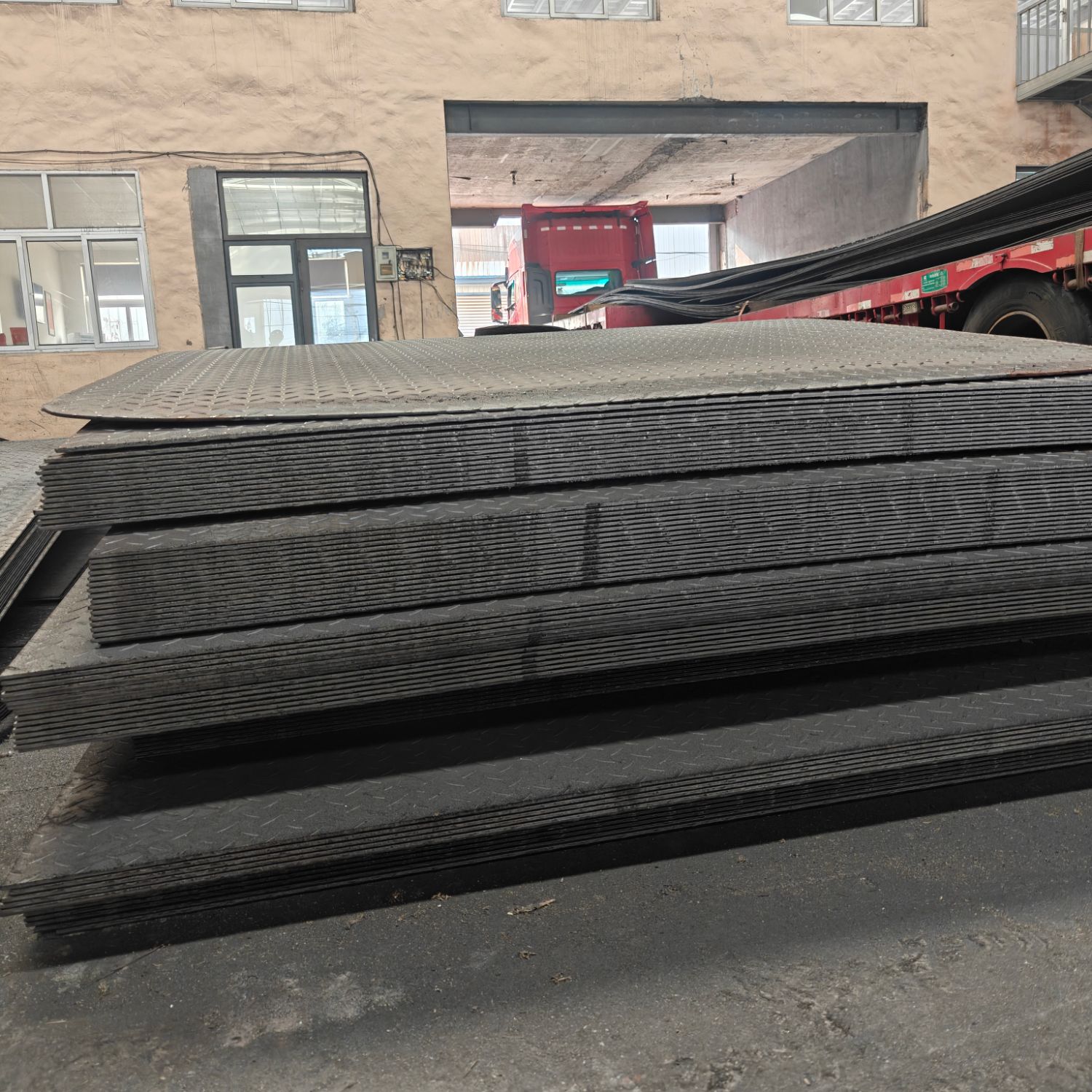
Many tolerance tables look impressive on paper, but only a few survive contact with the shop floor. The ones that get enforced share a common trait: they define exactly where and how thickness is measured. Instead of a vague ±0.005 inch across a whole sheet, an enforceable rule might specify three measurement points per square foot and require a calibrated micrometer with a flat anvil. Without that precision, inspectors end up arguing about edge burrs or surface texture rather than actual thickness.
Another reason some rules stick is that they account for material behavior. Steel and aluminum spring back differently after forming, and plastics can swell with humidity. A rule that ignores these factors will be quietly ignored. For example, a plastics supplier might quote a tolerance of ±0.002 inch for sheet stock, but if the customer measures near a gate or a weld line, the number drifts. Smart shops enforce tolerances only at agreed locations and under controlled conditions, such as 24 hours after molding.
Enforcement also depends on consequences. If a drawing says thickness to be 0.125 inch but nobody rejects parts for being 0.123 or 0.127, the rule is dead. Effective tolerance rules are tied to a clear disposition path: rework, scrap, or concession. When the cost of non-compliance is visible, operators start checking thickness with the right tools at the right time. That is the difference between a spec that exists and one that actually governs production.
Custom Pattern Choices Beyond Basic Diamond and Teardrop
When you step away from the familiar diamond and teardrop, a whole world of bespoke silhouettes opens up. Think of interlocking hexagons that lend a honeycomb rhythm to a surface, or crescent moons paired with tiny star clusters for a celestial feel. These aren't just decorative afterthoughts—they become the signature of the piece, carrying a mood that basic geometrics rarely achieve.
For those who want something truly personal, organic forms like split leaves, asymmetrical petals, or even abstract brushstroke shapes offer a softer, more handcrafted look. A single custom motif can be rotated, mirrored, or spaced irregularly to break the monotony of repeat patterns. The key is choosing a shape that resonates with the story behind the design, whether it's a nod to a favorite flower or a symbol of a shared memory.
The process itself doesn't have to be complicated. Start with a rough sketch or a reference image, then work with a designer to refine the edges and balance the negative space. Because these patterns are built from scratch, you're not limited by off-the-shelf stencils or pre-cut templates. That freedom is what turns a simple decorative element into a quiet statement of intent.
Specifying Cut Sizes Without Triggering Hidden Fees
Many suppliers quietly add charges when a requested cut falls outside their standard size brackets or requires an extra pass on the saw. To keep the quote honest, ask for the exact cut list with tolerances before you commit. A dimension stated as around 24 inches gives the shop room to round up, and that rounding can become a custom-cut fee.
It helps to separate what you need from what the vendor advertises as free. If a sheet or board comes in a standard 48 by 96 inch panel, cutting it into halves or quarters usually carries no extra cost. But asking for 23.5 by 47.75 inches may push the job into a non-standard bracket, triggering setup or remnant fees that were never mentioned upfront.
Put every dimension in writing and confirm that the listed price includes saw kerf, edge cleanup, and any minimum cut charge. Then ask one direct question: if the order matches this list exactly, will the total stay the same? Vendors who hesitate or mention adjustments later are often the ones who add hidden fees after the material is already on the table.
Packing Methods That Prevent Damage on Long Hauls
Long hauls punish weak boxes before anything else. Start with double-wall corrugated cardboard, and line the bottom with at least two inches of dense foam or crumpled kraft paper. The goal is to absorb vibration, not just fill space. A box that flexes under pressure will transfer every bump to whatever is inside, so pick one rated for at least 60 pounds even if your item weighs half that.
Items that rub together will destroy each other over a thousand miles. Wrap each piece separately in bubble wrap or foam sheeting, then use cardboard dividers or custom inserts to keep them from shifting. For electronics or glass, suspend the item in the center of the carton with foam blocks so it never touches the walls. Leave a two-inch buffer on all sides, and fill any remaining gaps with air pillows or crinkle paper until nothing moves when you gently rock the box.
Moisture seeps into trailers over hundreds of miles, so slide a poly liner or toss in a couple of desiccant packs before sealing. Tape every seam with pressure-sensitive packing tape, and run a strip along the top and bottom edges where boxes split first. Give the box a shake test—if you hear movement, add more cushioning until it stays silent. Mark the outside with a simple “fragile” note and “this side up” arrows, because handlers can’t guess what’s inside.
Smart Questions to Ask Before Finalizing a Custom Order
Most people get so caught up in choosing colors and finishes that they forget to ask where the raw materials actually come from. If the supplier can't tell you the mill name, the wood species, or the exact metal alloy, that's a red flag worth pausing over. Ask for photos of the current inventory, not a catalog shot.
Another question that rarely gets asked until it's too late: what happens if the piece arrives with a scratch, a misaligned hinge, or a stain that wasn't in the sample? A good maker will have a written repair or replacement policy, and they won't be vague about timelines. Push for specifics—will they cover return shipping? Is there a restocking fee if you simply change your mind after the deposit?
Finally, ask about the person who will actually build or finish your order. In many smaller workshops, the person you email is not the person holding the sander. Knowing that a single artisan handles each item end-to-end, versus a split production line with outsourced steps, changes what you can reasonably expect from quality and lead time. It also gives you a better sense of how to phrase follow-up questions if something stalls.
FAQ
Look for compliance with ASTM, EN, or JIS standards, mill test certificates for each batch, and consistent surface pattern depth. A good factory also runs regular tensile and bend tests, and keeps tolerance on thickness within ±0.3 mm.
Yes, many offer custom pattern options beyond standard diamond or five-bar. Provide a drawing or sample, and they can adjust the pitch, height, and spacing, though new tooling may require a minimum order quantity.
3003, 5052, and 6061 are the most common. 3003 gives good formability, 5052 offers better corrosion resistance, and 6061 is preferred when higher strength or welding is needed.
Reputable factories inspect pattern height with gauges, check for cracks or lamination using ultrasonic testing on critical orders, and may provide a coefficient of friction report upon request.
Standard sizes ship within 7–15 days. Custom patterns, special alloys, or pre-finished edges usually add 10–20 days depending on tooling and current production load.
For stock sizes, often no strict MOQ, but custom pattern or non-standard alloy typically starts at 2–5 metric tons. Some factories accept smaller trial orders at a higher per-unit cost.
Common options include mill finish, bright polished, anodized, powder coated, or anti-slip PVC film on one side. For outdoor use, anodizing or PVDF coating improves durability.
Request a pre-production sample, third-party inspection (SGS, BV, TUV), or a video of the production line. Also ask for recent export documentation and customer references from similar industries.
Conclusion
Walking through a Chinese tread plate mill during a routine shift reveals a surprisingly rigorous quality loop. Daily checks at multiple stations measure surface profile depth, alloy composition, and edge straightness against a posted standard, not just a nominal spec. Thickness tolerance rules actually get enforced here because the rolling line uses laser micrometers that flag any sheet drifting beyond agreed limits before it reaches the shear. Customization extends well past basic diamond and teardrop; many mills now offer lentil, rice-grain, and even three-bar patterns, often with matched tooling for non-slip stair treads or vehicle ramps. When specifying cut sizes, ask how the mill charges for remnant material and whether blade kerf is included. A clear cut-list with tolerance per dimension usually prevents hidden fees that appear later on the invoice.
For long-haul deliveries, packing methods matter as much as the plate itself. Mills that use edge protectors, interleaved paper, and steel banding on wooden skids significantly reduce transit abrasion and moisture staining. Before finalizing a custom order, ask about pattern roll wear limits, batch-to-batch color consistency for anodized finishes, and who covers freight claims if the wrapping fails. Request a sample panel from the same production line rather than a generic swatch. Also clarify lead time buffers for pattern changeovers and any minimum order quantity per pattern type. These smart questions push the conversation from a price quote toward an actual quality commitment, resulting in tread plate that matches the drawing, survives transport, and installs without rework.
Contact Us
Contact Person: Zoey
Email: [email protected]
Tel/WhatsApp: +86 15865577002
Website: https://www.sanhesteels.com