
China Steel Casting Solutions for High-Performance Applications
2026-11-16
When your application pushes steel to its limits, you can't rely on generic castings. China's foundry industry is vast, but high-performance components demand more than just molten metal—they require precise metallurgy, advanced simulation, and relentless quality checks. That's the gap Supreme Machinery aims to close. We specialize in steel casting solutions engineered for extreme loads, corrosion, and fatigue, proving that Chinese manufacturing can lead, not just compete. In this article, we'll break down what actually makes a casting high-performance, and why your choice of supplier determines whether your project succeeds or stalls.
Alloy Blends That Hold Up Under Extreme Stress
Most alloys fail not because the base metal is weak, but because microscopic boundaries between different crystal structures start to creep or crack under repeated loading. The blends that hold up under extreme stress typically combine a ductile matrix with hard, finely dispersed secondary phases—think nickel-based superalloys reinforced with gamma-prime precipitates, or titanium alloys with beta-phase stabilizers. These microstructures pin dislocations and blunt crack tips, so stress gets distributed instead of concentrating at a single flaw.
Temperature swings make the problem worse. A good high-stress alloy must resist both thermal fatigue and oxidation while maintaining its mechanical properties. For example, cobalt-chromium-molybdenum blends are used in turbine blades and orthopedic implants because they retain hardness at temperatures that would soften plain steel. The trick is often in the heat treatment: controlled aging creates a fine dispersion of carbides or intermetallic compounds that reinforces the solid solution without making the material brittle.
There is also the question of how the alloy responds to sudden overload rather than gradual wear. Some aerospace aluminum-lithium blends and ultra-high-strength maraging steels are deliberately processed to have a small amount of retained austenite. Under a sudden impact, that austenite transforms to martensite, absorbing energy on the spot and stopping cracks from spreading. That kind of built-in damage tolerance is what separates an alloy that merely looks strong in a tensile test from one that survives years of punishing service.
Casting Geometries Most Foundries Won't Touch
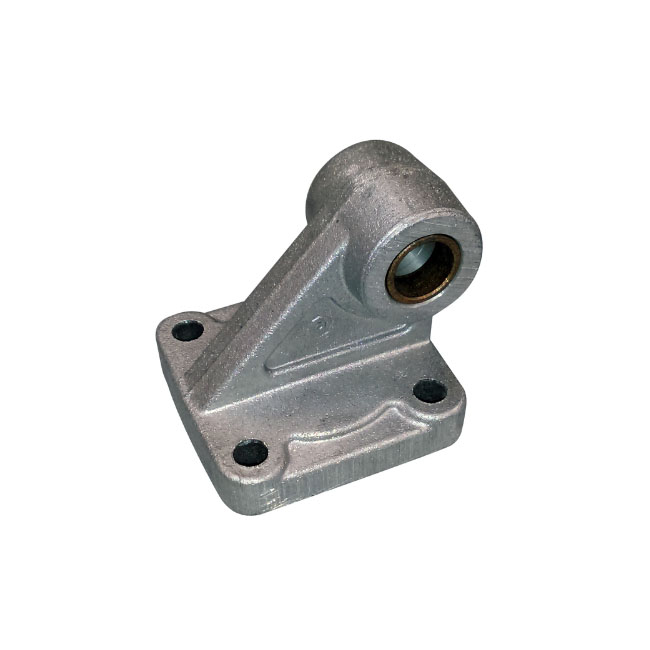
There's a reason most foundries keep a mental list of part features that make them pause. Deep blind pockets, razor-thin ribs standing next to chunky bosses, and internal passageways that demand a labyrinth of cores all fall into that awkward space where the drawing looks fine but the metal doesn't behave. These geometries create uneven cooling, trapped gases, and shrinkage defects that can't always be predicted on a screen.
Undercuts and re-entrant angles are another quick way to get a polite "no quote." If the pattern can't be pulled or the mold can't open without destroying the sand, the tooling gets complicated and the cost balloons. Sharp internal corners concentrate stress during solidification, while large flat expanses warp as they cool. Foundries have learned that some shapes simply chew up more time in grinding, welding, and scrap than the job is worth.
Even when a part is technically castable, the rejection rate can be brutal. A geometry that works in a simulation often misbehaves on the foundry floor, where alloy temperature, humidity, and operator skill shift by the hour. Rather than gamble on a drawing that fights the process, many shops will pass on the work entirely or suggest a redesign that keeps the same function without the casting headaches.
Inspection Routines That Go Beyond the Checklist
Most checklists were built for repetition, not observation. A pump’s vibration reads normal on paper, but your palm against the housing tells you the bearing is working harder than it did last Tuesday. Real inspection starts when you stop trusting the form and start comparing what you feel, hear, and smell against the machine’s own history.
Try walking a line without a clipboard once a week. Follow the noise, the faint drip, the scuff mark that shouldn’t be there. Ask the operator what changed after lunch. Often the first sign of failure is a small shift in rhythm—a valve cycling half a second late or a filter gauge drifting in a way the maintenance log never records.
The strongest routines aren’t longer checklists; they’re habits of attention. Pair each standard item with a question: “What would prove this reading wrong?” and “What does this area look like when nobody has cleaned up yet?” That small mental pivot turns an audit into an investigation—and catches the faults that tick-box thinking was designed to miss.
From Molten Metal to Machined Part Without the Usual Delays
Traditional metal part production often means waiting weeks for castings to cool, get inspected, and then move through separate machining queues. That lag disappears when molten metal is shaped and machined in one continuous workflow, cutting out the idle time between foundry and finish.
Instead of pouring, waiting, shipping, and re-fixturing, the metal is formed close to final geometry while still in a controlled thermal state. Machining starts before the part ever reaches room temperature, so heat that used to be wasted becomes part of the process advantage. This reduces handling steps and avoids the usual scheduling bottlenecks that slow down job shops.
For teams that need prototypes or short runs without sacrificing dimensional accuracy, this approach means a part that left the furnace in the morning can be on a CMM by afternoon. Fewer handoffs, less paperwork, and no multi-week foundry queue translate directly into faster development cycles and lower inventory pressure.
Surface Treatments That Add Years to Service Life
Every metal component carries a hidden countdown, and surface treatments are the hands that slow it. Anodizing aluminum doesn't just thicken the oxide layer; it creates a porous scaffold that accepts dyes and seals out moisture, effectively resetting corrosion resistance for decades. Similarly, hot-dip galvanizing bathes steel in molten zinc, forming a metallurgical bond that sacrifices itself before the substrate ever sees rust. These aren't merely protective films—they're engineered sacrifices that extend functional life well beyond original design limits.
Beyond the common coatings, phosphating and chromate conversion offer subtle but critical advantages. Phosphate crystals etched into steel create an ideal anchor for paint while also providing mild corrosion resistance on their own. Chromate treatments on aluminum or zinc act as self-healing barriers; scratches in the coating release hexavalent chromium ions that migrate to the exposed area and re-passivate the surface. For components exposed to cyclic stress, shot peening introduces compressive residual stress that delays fatigue crack initiation, often doubling service life in high-cycle applications.
The real longevity gain comes from combining multiple treatments. A pump shaft might receive electroless nickel plating for uniform hardness and corrosion resistance, followed by a polymer topcoat to seal micro-porosity and add chemical resistance. Even humble black oxide, often dismissed as cosmetic, can improve lubricity retention and reduce light reflection while providing modest rust prevention when oiled. Smart selection isn't about picking the strongest single treatment—it's about layering complementary mechanisms so that environmental attack must overcome several independent defenses before reaching the base material.
Scalable Production Runs Without Sacrificing Metallurgical Integrity
Scaling up from prototype to full production often introduces hidden trade-offs: faster cycle times, thinner walls, or relaxed thermal controls can quietly erode grain structure and mechanical performance. We take a different route. Our casting and forging sequences are tuned to preserve phase balance and inclusion cleanliness even when batch sizes grow from dozens to tens of thousands of parts. That means the same hardness profile, the same fatigue resistance, and the same ultrasonic inspection pass rate on part number one and part number fifty thousand.
The key is not tighter supervision but smarter process architecture. We use real-time thermal data from multiple furnace zones to modulate cooling curves automatically, so every pour sees the same solidification path regardless of line speed. Tooling wear is tracked against metallographic benchmarks, not just dimensional checks, so a degrading die gets flagged and corrected before it can alter as-cast microstructure. This closes the usual gap between metallurgical lab results and what actually ships out the door.
For buyers, that removes a familiar gamble. You no longer have to choose between meeting a delivery schedule and trusting that the material in the late-run parts still meets spec. Our team has scaled aluminum, ductile iron, and low-alloy steel components across automotive, hydraulic, and heavy equipment programs, and we publish the before-and-after micrographs to prove it. Production volume goes up; dendritic arm spacing, porosity ratings, and inclusion counts stay flat.
FAQ
These castings show up in heavy machinery, mining equipment, hydropower turbines, and high-pressure valve bodies. Any environment where failure isn't an option and loads are extreme tends to rely on them.
They control the melt chemistry closely and often use ladle refining plus vacuum degassing to reduce inclusions. Many shops also run tensile and impact tests on every heat to confirm the metal meets the specified grade before pouring.
Yes. Modern simulation software lets foundries predict solidification and stress patterns before cutting a pattern. Combined with precision molding and careful riser placement, they can cast intricate shapes that retain full strength in critical sections.
Most reputable suppliers hold ISO 9001, and many have PED or API certifications for pressure-related components. Non-destructive testing like ultrasonic, magnetic particle, and radiographic inspection is standard practice for high-performance orders.
Costs often run 20-40% lower than Western European or North American sources for equivalent grades and testing levels. The savings come from integrated supply chains and high-volume foundry operations rather than any reduction in material quality.
Typical lead times range from 6 to 12 weeks after pattern approval, depending on complexity and testing requirements. Rush orders can sometimes be arranged if the foundry has open furnace capacity.
Absolutely. Common options include high-manganese steel for abrasive wear, chromium-molybdenum grades for elevated temperatures, and duplex stainless for corrosive service. Heat treatment can be tuned to hit exact hardness and toughness targets.
The ecosystem matters. You have nearby raw material suppliers, heat treatment facilities, machining shops, and testing labs all within a short distance. That clustering reduces logistics delays and makes it easier to handle large or repeat orders without constant oversight.
Conclusion
Chinese steel casting specialists have moved well past commodity output. For high-performance applications, alloy recipes are tuned to the actual load path—think chromium-molybdenum blends that resist creep at sustained temperatures, or nickel-bearing grades that shrug off impact at sub-zero conditions. The real differentiator shows up in the pattern shop and mold design. Thin-walled housings with internal galleries, deep-cavity valve bodies, asymmetric brackets with near-net profiles: these are the geometries most foundries decline, yet several Chinese facilities run them routinely using cold-box cores, controlled solidification, and vacuum-assisted pouring. Inspection is where the gap narrows further. Beyond standard visual and dimensional checks, you will find automated ultrasonic scanning for sub-surface porosity, digital radiography for critical sections, and 3D blue-light comparisons against CAD models, plus metallographic pull-test coupons from each heat. That data travels with the casting, not as a certificate of convenience but as a working traceability record.
Speed and longevity matter just as much as the pour itself. The old bottleneck between foundry and machine shop disappears when in-house finish machining, heat treatment, and surface preparation sit under one roof. A casting can move from shakeout through shot blasting, rough machining, normalization, and final machining without being trucked across town. Surface treatments are selected for the operating environment: salt-spray-rated zinc-rich primers or hot-dip galvanizing for coastal infrastructure, nitriding or induction hardening for wear faces on excavator buckets and crusher rolls, and ceramic-filled epoxy liners for slurry pumps. Scaling up is not a recipe for dilution. Lot-level spectrometry, furnace charge records, and thermal profiles are retained for every run, whether it is a dozen prototypes or 40,000 production units. That is how a Chinese supplier holds metallurgical integrity while cutting lead times and extending service life.
Contact Us
Contact Person: Paul
Email: [email protected]
Tel/WhatsApp: 8615067447509
Website: https://www.spironcasting.com