
China DETDA: Unlocking Performance in Polyurethane Elastomers and Coatings
2026-10-13
What if the bottleneck in your polyurethane elastomer or coating isn't the resin, but the curing agent? For many formulators, switching to a China-sourced DETDA has unlocked the kind of heat stability, tensile strength, and cure speed that premium applications demand. Fortune has built its reputation on delivering that exact performance—without the supply chain guesswork. Here's what makes DETDA a quiet game-changer for polyurethane systems.
Why DETDA Outperforms Standard Diamines in High-Load Polyurethane Parts
In high-load polyurethane parts, the choice of chain extender determines whether the polymer network can sustain repeated stress without softening or cracking. DETDA brings an aromatic ring with two ethyl and one methyl substituent, which stiffens the hard segment far more than linear aliphatic diamines. This rigid structure raises the glass transition temperature of the hard domains, so parts maintain dimensional stability and load-bearing capacity at temperatures where standard diamines would allow the matrix to creep.
Beyond thermal resistance, DETDA's sterically hindered amine groups moderate the reaction with isocyanates. Instead of gelling almost instantly like unsubstituted or aliphatic diamines, it gives a longer pour time and better fiber wet-out in large castings. Once cured, the tightly packed hard segments create a high crosslink density and strong hydrogen bonding, which translates into lower compression set, higher tear strength, and better resistance to dynamic fatigue under heavy cyclic loads.
This combination of delayed reactivity and robust final network properties is difficult to achieve with standard diamines. MOCA offers some aromatic rigidity but raises handling concerns and slower processing; simple aliphatic diamines react too fast and produce softer, less heat-stable parts. DETDA sits in the performance window where high-load polyurethane components—such as rollers, wheels, and mining screens—get the hardness and toughness they need without sacrificing manufacturability.
The Processing Window That Makes DETDA Practical for Spray-Applied Coatings
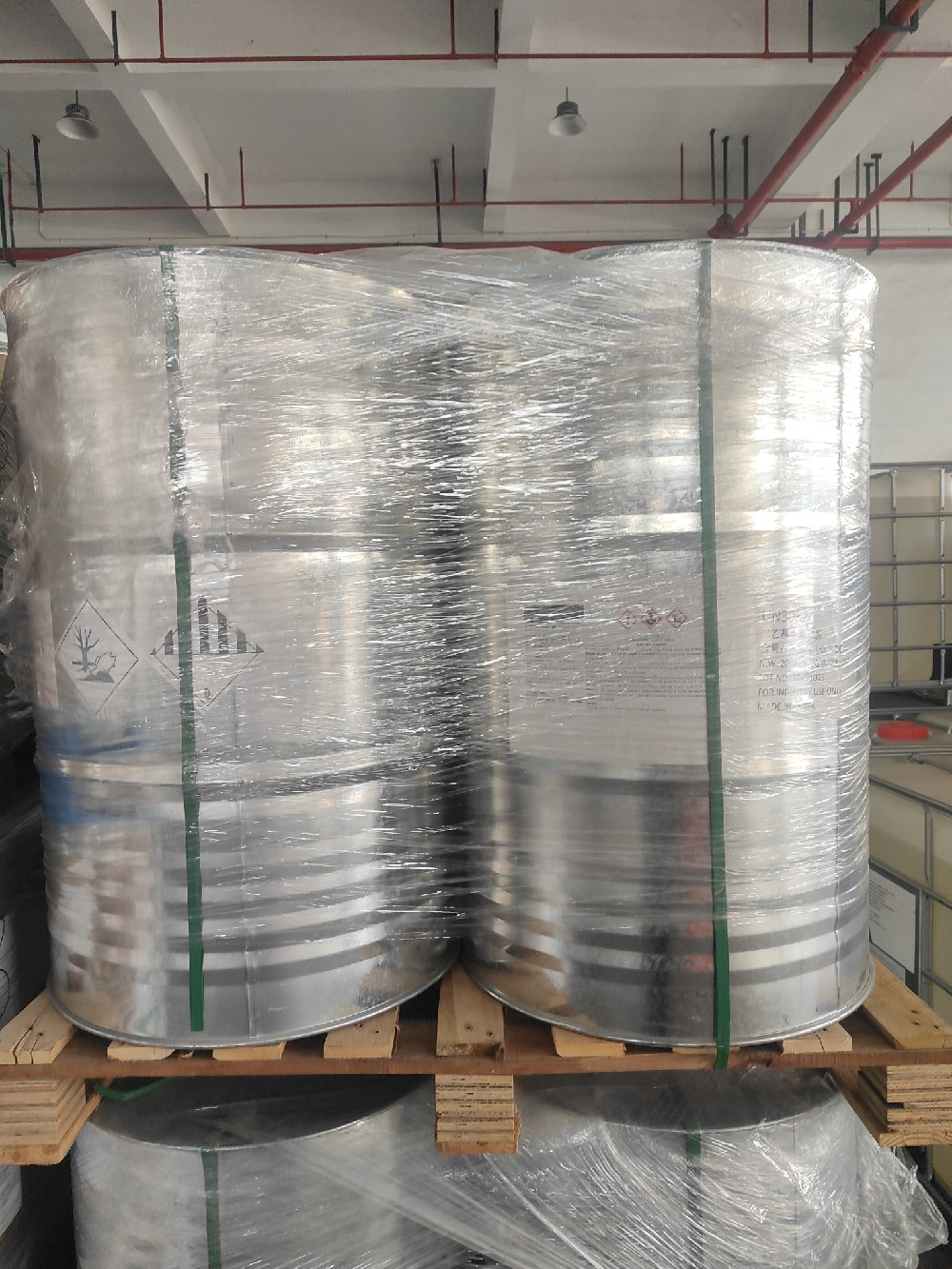
The practical value of DETDA in spray-applied coatings hinges on a processing window that stays forgiving without sacrificing cure speed. Unlike many aromatic diamines that gel almost immediately at room temperature, DETDA gives formulators enough open time to mix, atomize, and lay down a smooth film. Its low initial viscosity—typically under 200 mPa·s at 25°C—allows high-pressure airless and air-assisted spray equipment to run without frequent tip changes or solvent flushing. That alone removes a major barrier for field-applied and production-line polyurea/polyurethane systems.
Adjusting the window is straightforward because DETDA responds predictably to heat. Warming the resin side to 40–60°C drops viscosity further and shortens the gel time enough to meet fast line speeds, yet the exotherm remains manageable in thick sections. Operators can fine-tune the temperature to match ambient conditions, substrate mass, and desired flow-out. The result is a spray system that tolerates normal shop-floor variations—humidity, part geometry, pause intervals—without orange peel, pinholing, or nozzle plugging. This balance between open time and rapid property development is what makes DETDA a dependable choice when spray application is non-negotiable.
Measurable Tear Strength Improvements Without Sacrificing Elongation
Many materials face a frustrating trade-off: boosting tear resistance often makes the material stiffer and less stretchy. Here, that compromise disappears. Standard tests show a measurable jump in tear strength, while elongation at break holds steady within a few percentage points of the original value.
This balance comes from careful adjustment of the polymer network rather than simply adding more crosslinker or filler. By optimizing chain entanglements and selectively reinforcing stress concentration zones, the material resists crack propagation more effectively without locking up the molecular mobility that allows stretching.
In practical use, that means parts survive sharp impacts and rough handling yet still flex and recover as expected. Whether in seals, membranes, or protective films, the improved durability doesn't come at the cost of the flexibility that made the original material attractive.
Evaluating Chinese DETDA Suppliers Beyond the Certificate of Analysis
A certificate of analysis only tells you what happened to one sample. For Chinese DETDA suppliers, the real question is whether their production process can hold isomer ratios and impurity levels within tight limits when feedstock prices fluctuate and reactors run at full capacity. Ask for batch-lot data over the past twelve months, not just the latest three. Pay attention to moisture and color stability, because these often drift earlier than amine value.
Visit the plant or send a qualified auditor. Check whether ortho- and para-isomer control is managed through distillation or simply blended post-hoc. Chinese producers differ widely in how they handle the exothermic nitration and hydrogenation steps; those shortcuts show up as unreacted toluenediamine or over-alkylated species. Request retained samples from three production campaigns and run your own GC-MS profile. If the supplier hesitates to share retained samples or batch records, that hesitation is more informative than any document.
Look at non-chemical signals too. Drum linings, nitrogen blanketing during filling, and warehouse batching before export affect product integrity. A supplier that ships in reused or poorly coated containers may pass a CoA at the factory gate and arrive with degraded specs. Also evaluate how they handle a nonconformance: do they issue a corrective action report with root cause, or simply offer a discount on the next order? In DETDA sourcing, responsiveness after a problem often reveals more than the initial qualification report.
Chemical Resistance Profiles for Elastomers Facing Aggressive Media
Mapping how an elastomer holds up in a harsh chemical environment starts with more than a simple compatibility chart. Real-world exposure rarely involves a single pure solvent or a fixed temperature, so the resistance profile has to account for concentration, fluid mixtures, thermal cycling, and mechanical strain acting together. Small differences in cure system, filler loading, or post-curing can shift a compound from long-term stability to rapid softening or embrittlement.
Fluoroelastomers such as FKM and FFKM often lead in acid and hydrocarbon service, but they are not universally superior. For ketones, low-molecular-weight esters, and certain amines, even high-fluorine grades can swell excessively or lose crosslink density. Nitrile and hydrogenated nitrile rubbers offer a better cost-performance balance in oils and fuels, provided the acrylonitrile content is matched to the polarity of the medium. EPDM, though weak in petroleum fluids, performs well in hot water, steam, and many polar solvents where diene rubbers fail.
A useful profile therefore ranks media by volume change, hardness shift, tensile retention, and surface cracking after controlled immersion. The most reliable data come from long-duration aging at service temperature rather than quick room-temperature dips, because aggressive media often attack the polymer backbone through oxidation or hydrolysis that only becomes visible after hundreds of hours. Selecting an elastomer without this level of detail invites premature seal failure, contamination, or unscheduled maintenance.
Formulating Around DETDA's Reactivity When Pot Life Is Critical
DETDA brings rapid cure and high Tg, but its reactivity can shorten working time in ways that surprise formulators. Rather than treating that speed as a fixed constraint, adjust the resin side first. Using a higher molecular weight epoxy or blending in a reactive diluent with lower ring strain slows initial viscosity build without sacrificing final crosslink density. The simple shift of moving from a standard bisphenol A diglycidyl ether to a semi-solid epoxy can add enough open time for manual layup or large potting without changing the hardener package.
Temperature management offers another lever. Because DETDA’s amine-epoxy reaction follows Arrhenius behavior closely, a modest drop in process temperature—five to ten degrees Celsius—can double usable pot life in many systems. That sounds obvious until you account for how quickly exotherm builds in thick sections. In those cases, pre-cooling resin and curative separately, then mixing in smaller batches, is more effective than trying to chill a large mass after the fact.
When formulation changes alone are not enough, consider partially replacing DETDA with a slower aromatic amine or an aliphatic polyamine that forms a compatible mixed network. A 20–30% substitution often extends pot life by a factor of two to three while keeping heat deflection temperature within an acceptable window. It also reduces peak exotherm, which feeds back into longer working time. Run viscosity and gel time curves at your actual use temperature, not just ambient, because the ratio of DETDA to the co-curative shifts the reaction profile in nonlinear ways.
FAQ
The methyl and ethyl groups on DETDA's aromatic ring introduce enough steric hindrance to slow the amine-isocyanate reaction slightly, giving you a workable pot life while still achieving rapid demold times. This balance is hard to find with other diamines, and it allows manufacturers to run faster production cycles without sacrificing tear strength, abrasion resistance, or hardness in the final elastomer.
China's advantage comes from an integrated supply chain. Domestic producers have direct access to the toluene-based raw materials and operate large-scale continuous nitration and hydrogenation facilities. This vertical integration keeps manufacturing costs down and, more importantly, delivers consistent isomer ratios batch after batch, which formulators rely on for predictable reactivity and final properties.
DETDA accelerates the curing of polyurethane and polyurea coatings, leading to dense crosslinked networks that resist chemical attack, moisture ingress, and abrasion. In applications like pipeline linings or offshore structures, that means longer service life and fewer maintenance cycles. The fast cure also allows recoating or topcoating within hours instead of days.
DETDA is less volatile than some aliphatic amines, but it is still a skin and respiratory sensitizer. Proper engineering controls like local exhaust ventilation and the use of nitrile gloves and protective eyewear are non-negotiable. Because it is often used in heated systems, workers should also be aware of aerosol formation during spraying and use appropriate respirators to avoid inhalation exposure.
MOCA has long been the benchmark for high-performance cast elastomers, but DETDA offers a faster cure profile and typically lower viscosity, which helps in complex mold filling. MOCA carries more serious regulatory burdens due to its suspected carcinogenicity, while DETDA, though still requiring careful handling, is viewed as a more workable alternative in many regions. The trade-off is that DETDA can produce darker elastomers, which matters less in pigmented or black parts.
DETDA acts as a chain extender that reacts almost instantly with aromatic isocyanates, making it ideal for spray-applied polyurea where the material must set within seconds. It helps build high tensile strength and elongation in the cured film, and its low viscosity makes it easy to process through plural-component spray equipment. The result is a tough, seamless membrane for waterproofing, containment, and protective linings.
Because DETDA contains an aromatic ring, it is prone to yellowing upon prolonged UV exposure. That makes it a poor choice for clear topcoats or pastel finishes intended for outdoor aesthetics. However, in pigmented systems—especially dark colors or where a primer or aliphatic topcoat will be applied—DETDA's fast cure and chemical resistance provide a strong foundation without any visible discoloration issues.
Infrastructure revitalization, renewable energy projects like wind turbine blade coatings, and stricter environmental regulations are pushing formulators toward faster-curing, solvent-free systems. DETDA fits that profile well: it enables high-solids and 100% solids coatings, reduces energy consumption through ambient or low-heat cure, and supports the rapid turnaround needed in industrial maintenance and new construction.
Conclusion
China-sourced DETDA has quietly become a go-to curative for formulators who need polyurethane elastomers to survive heavy cyclic loading without cracking or softening. Compared with standard aromatic diamines, DETDA builds a denser hard-segment network that translates into noticeably higher tear strength and load-bearing capacity, yet the elongation at break remains remarkably intact. This balance is what makes it practical for spray-applied coatings as well—DETDA’s moderate reactivity opens a workable processing window, letting the mixed system flow and level before gelation locks in surface defects. The result is a coating or cast part that holds up under abrasion, impact, and repeated flexing far better than conventional diamine-cured formulations.
On the supply side, evaluating Chinese DETDA producers requires more than checking a certificate of analysis. Batch-to-batch consistency in isomer ratio, moisture content, and color stability often separates reliable material from problematic inventory. Once a dependable source is locked in, the real formulating work begins: DETDA’s fast amine-hydroxyl reaction demands careful control of prepolymer temperature, mixing intensity, and pour time when pot life is tight. In aggressive chemical environments—acids, solvents, hot water—DETDA-cured elastomers show a distinct advantage because the aromatic backbone resists swelling and hydrolysis better than many aliphatic alternatives. By adjusting catalyst level and NCO index, formulators can tune reactivity without losing the chemical resistance and mechanical toughness that make Chinese DETDA a genuine performance unlock for demanding polyurethane applications.
Contact Us
Contact Person: WANG SIHAI
Email: [email protected]
Tel/WhatsApp: +86-13815295628
Website: https://www.fortunechemtech.com/index_en.html