
China Aluminum Work Boats: Durable, Efficient, and Built for Demanding Marine Jobs
2026-11-03
When the sea is your workplace, every minute of downtime cuts into your bottom line. That's why savvy operators are turning to China aluminum work boats—craft that combine lightweight strength with fuel-sipping efficiency, built to shrug off the harshest marine conditions. But not all builders are equal. At Allheart, we pair precision manufacturing with rugged designs, delivering vessels that keep working as hard as you do.
Why Aluminum Hulls Outlast Fiberglass in Rough Coastal Waters
In rough coastal waters, hulls take repeated short, sharp wave impacts and occasional contact with rocks or floating debris. Aluminum’s microstructure lets it undergo local plastic deformation, spreading shock energy across a wider area, while a fiberglass hull tends to develop hairline cracks at stress points because its resin matrix is far more rigid. Once those cracks reach the gelcoat, saltwater wicks along the glass fibers and triggers delamination or osmotic blistering, often spreading far beyond what is visible on the surface.
Aluminum does not absorb water and has no gelcoat to maintain. After years of salt immersion, UV exposure, and temperature swings, the oxide layer on aluminum actually seals small scratches on its own, whereas the polyester or vinyl ester resin in fiberglass slowly hydrolyzes under combined UV and moisture. Many ten-year-old fiberglass hulls show blisters or chalky resin near the waterline, but an aluminum hull of the same age usually needs only minor treatment for surface corrosion spots.
When an aluminum boat grounds on a rocky shore or strikes a submerged object, it typically ends up with a visible dent rather than hidden interlayer separation. Repair is also more straightforward: cut out the damaged section, weld in a new plate, and the hull returns to near-original strength without worrying about invisible delamination. That kind of fault tolerance and repairability is why aluminum hulls often remain in service a decade or more longer than fiberglass boats in demanding coastal conditions.
The Welding Standards Behind Leak-Free Chinese Work Boats
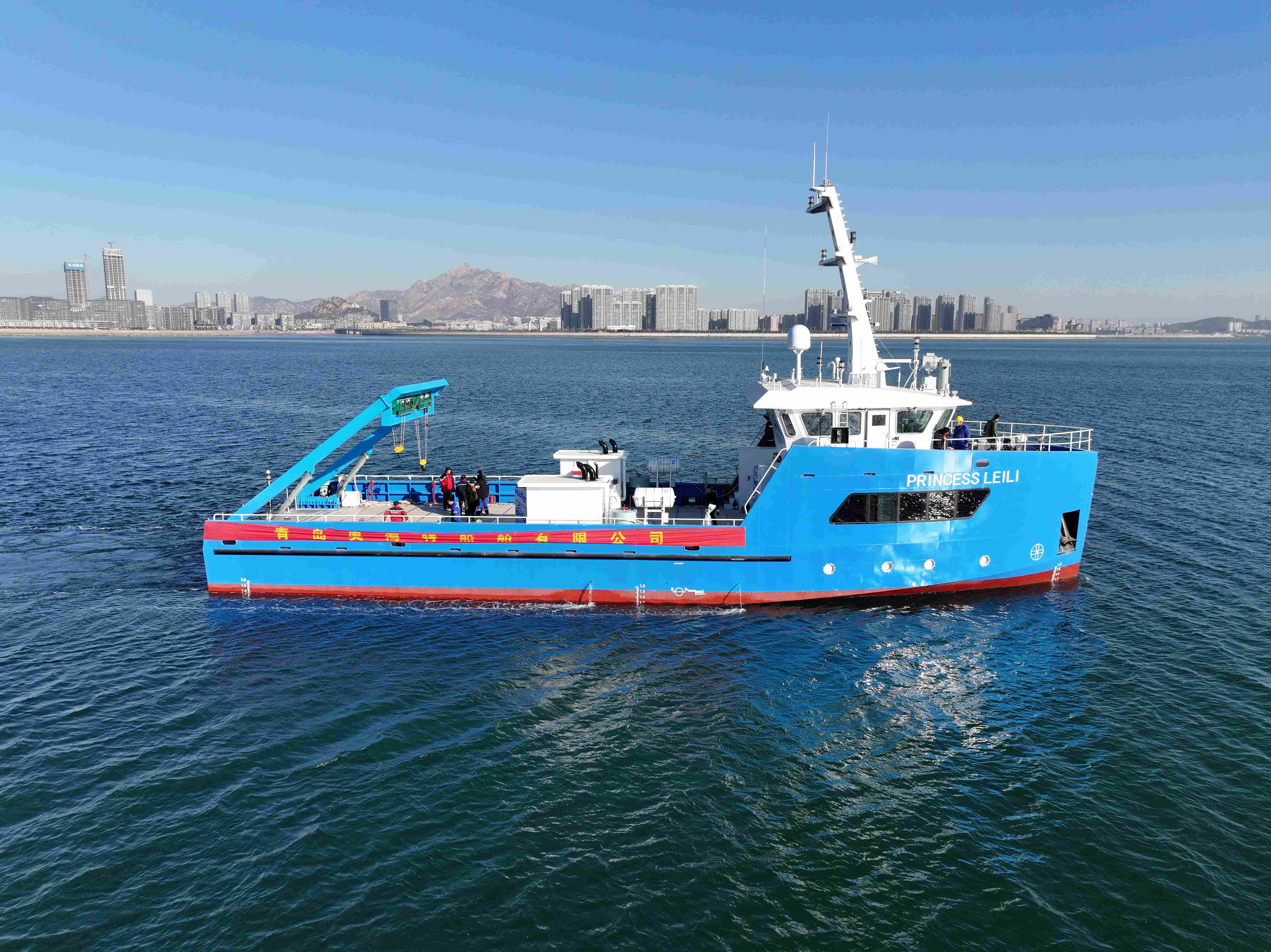
Leak-free starts before the first arc strikes. Yards building Chinese workboats under CCS or similar class rules typically require fitters to hold plate edge gaps within 1.5 mm and bevel angles within 5 degrees of the WPS. Any wider gap gets built up with approved weld metal, never with strip or rod. Preheat for high-tensile plate is checked with a contact pyrometer, not by touch, and interpass temperature is logged at intervals no greater than one meter along the joint.
For the hull envelope, the common approach pairs ceramic-backed one-sided welding for difficult-to-access seams with double-sided FCAW where the back side can be gouged and ground to bright metal before the second pass. Tank boundaries and sea chests get a vacuum box test on all butt and fillet welds, usually at 0.2 bar negative pressure, with soap film. Any indication longer than 3 mm is excavated and rewelded, then retested after a cool-down period to avoid false passes from warm plate.
The final control is distortion aware, not just defect hunting. Welding sequences are staggered to keep the hull from twisting, and critical shell seams are checked by ultrasonic testing on a grid rather than random sampling. Records tie each weld to a welder's stamp, the consumable batch, and the date, which makes a leak investigation straightforward instead of a blame game.
How Lighter Construction Cuts Fuel Costs on Multi-Day Jobs
On multi-day jobs, fuel is one of those quiet expenses that creeps up without anyone noticing until the invoice lands. The heavier the rig, the harder the engine works just to keep it rolling, especially when the route includes highway stretches, soft ground, or stop-and-go traffic near the site. Lighter construction methods—whether it's choosing compact equipment, aluminum-bodied trailers, or modular components that can be hauled in smaller loads—directly reduce the strain on the tow vehicle. The result is a measurable drop in fuel consumption per trip, and over a week of back-and-forth hauling, those savings compound quickly. It's not just about burning less diesel on the road; it's about planning the job so that every pound saved on the trailer means fewer fill-ups, fewer delays, and a tighter budget at the end of the project.
There's also a practical side that often gets overlooked: lighter setups allow for better route flexibility. A crew can take a shorter, steeper route that a heavier load would struggle with, or avoid a weight-restricted bridge entirely. That means less idling, less detouring, and fewer hours where the engine is running but the job isn't moving forward. On a multi-day job, those inefficiencies add up—not just in fuel costs, but in overtime and missed scheduling windows. By reducing the gross vehicle weight through smarter material choices or prefabricated assemblies that get assembled on-site, contractors can run the same number of trips with a smaller fuel bill, or even cut a trip out of the schedule altogether. The lighter the construction footprint, the more control you have over the daily burn rate.
One more angle worth considering: lighter construction isn't just about the equipment you haul to the site—it's also about what you leave behind. Temporary structures, formwork, and bracing that are designed to be lighter but equally strong mean less material transported in the first place, and less waste hauled out at the end. That reduces the total number of loaded miles across the entire job, not just the first day. When you multiply that by three or five or ten days, the fuel savings become a line item that actually moves the profit margin. It's a quieter kind of efficiency, the kind that doesn't show up in a single trip log but is glaringly obvious when you compare fuel receipts between a traditional heavy build and a lighter, more deliberate one.
From Dredging to Fish Farming: Real Tasks These Boats Handle
A single workboat can be seen clearing a silted harbor entrance at dawn, its dredge pump churning mud and gravel into a nearby barge, and by the same afternoon, the same hull is tied up at a salmon pen, delivering feed and checking moorings. These vessels are not built for one job—they are built for whatever the water demands that week. Dredging operators rely on them to keep channels navigable, using a front-mounted excavator or a trailing suction head, often working in tight marinas where a full-size dredger would never fit. The boat's shallow draft and high maneuverability let it cut into corners and along quay walls without disturbing berthed yachts.
When the dredging contract ends, the crew might swap the pump for a crane grab or a net reel and head out to service offshore fish farms. On a typical fish farm run, the boat carries bags of feed, fuel, spare net panels, and a team of divers. A hydraulic crane lowers a work basket to the divers while the deckhand operates a high-pressure washer to clean netting. The same boat can be used for shellfish harvesting, pushing a small dredge or towed rake over oyster beds, then hauling the catch aboard with a pot hauler. It is common to see these vessels fitted with a bulbous bow for fuel efficiency on longer transits, yet still able to beach on a soft tidal flat for hull inspection.
Some operators push versatility even further by adding a towing bit and a small winch, allowing the boat to shift mooring blocks or pull a disabled tender back to port. In the Baltic, a single 15-meter workboat might spend Monday dredging a private slip, Tuesday towing a floating dock into place, and Thursday delivering fresh water to a remote island fish smokehouse. The key is not raw horsepower but smart deck layout—clear side decks, a sturdy A-frame, and quick-release hydraulic couplers let the crew change tools in under an hour. That flexibility is why small workboat fleets are growing faster than purpose-built dredgers or fish farm service vessels; a boat that can do three jobs well is worth more than a boat that does one job perfectly.
Choosing Alloy Grade and Hull Thickness for Heavy Cargo
For vessels hauling dense or concentrated loads, alloy selection often starts with the trade-off between 5083 and 5383 marine-grade aluminum—or their steel equivalents if the design calls for it. 5083 remains the workhorse, but when cargo weight pushes stress limits, moving to 5383 can buy back roughly 10–15% in yield strength without a proportional jump in plate weight. The real decision hinges on how the load sits: point-loaded cargo like machinery or coiled steel demands a hull that resists local deformation, not just global bending.
Hull thickness then becomes a function of stiffener spacing and the unsupported panel area between frames. Instead of simply adding plate everywhere, competent yards will thicken the bottom shell under cargo holds while keeping side and deck plating leaner—this cuts deadweight penalty and keeps the vessel's center of gravity manageable. Classification society formulas give a baseline, but experienced operators push for an extra 10–15% thickness in high-wear zones like the turn of the bilge, where grounding and dock contact are most likely.
Finally, don't treat alloy grade and thickness as independent choices. A higher-strength alloy can be used slightly thinner, but only if the yard's welding procedure and post-weld treatment are proven to recover the heat-affected zone strength. Otherwise the thinner plate may fail earlier at the weld toe under cyclic heavy-cargo loading. Practical rule: if you can't verify weld consistency, stay with the thicker, more forgiving alloy and accept the marginal weight increase.
Simple Saltwater Maintenance Habits That Prevent Pitting
After each saltwater trip, rinse metal parts with low-pressure fresh water before the salt has a chance to set. Pay attention to hinges, threads, and any spot where two surfaces overlap—these are where chloride hides. Let the water run until the surface stops feeling slick. A five-minute rinse right after use beats a thirty-minute scrub later.
Dry everything fully before it goes into storage. Use a blower or compressed air to push water out of recesses, then wipe down with a clean cloth. For areas you can't reach, a thin coat of lanolin or a wax-based spray works well as a barrier. Don't lock gear away damp; even a small fan in the storage area cuts down the humidity that drives pitting.
Check for early pits every few weeks, especially under washers, inside bolt holes, and along welds. If you catch a rough spot while it's still shallow, scrub it gently with a non-metallic pad and touch it up with zinc-rich primer or epoxy. Turn this into a quick routine after every few trips—not a seasonal chore—and you will stop pitting before it starts.
FAQ
Aluminum offers a rare combination of light weight and toughness. It shrugs off corrosion far better than steel when properly maintained, and unlike fiberglass, it won't crack or shatter on rocky contact. That gives operators confidence when working near docks, breakwaters, or debris-filled water.
Many builders use marine-grade 5083 or 5383 aluminum plate, which is specifically alloyed for seawater service. Full-penetration welding, reinforced keel sections, and sealed compartments are standard. Before delivery, welds are often inspected with dye penetrant or X-ray testing to catch weak spots early.
They're used for crew transfer, survey work, fish farming, port maintenance, oil spill response, and cargo runs to remote sites. Some are configured with hydraulic cranes, dive platforms, or towing bitts. The common thread is daily operation in rough conditions where downtime is expensive.
Yes. Hull dimensions, deadrise, and deck reinforcement are commonly tailored. A shallow-draft tunnel hull can be chosen for river or lagoon work, while a deeper V-hull suits open water. Builders routinely move bulkheads and add extra stiffeners under deck machinery to match the owner's load plan.
Because the hull weighs less than an equivalent steel vessel, the engines don't work as hard to reach and hold cruising speed. That typically means lower fuel burn, the option to use smaller engines, and easier trailering or lifting. Over years of daily use, those savings add up significantly.
Rinse the hull with fresh water after saltwater use, keep bilges clean and dry, and inspect anodes every few months. Avoid leaving dissimilar metals like brass or copper in direct contact with the aluminum. Touch up paint or bare areas promptly, and recheck welds around high-stress points annually.
The right design handles both. Smaller work skiffs excel in harbors and rivers, while larger aluminum crew boats with self-bailing decks and deep-V hulls regularly run 20 to 30 nautical miles offshore. The key is choosing a hull that matches the sea state and distance you actually work in.
Conclusion
Chinese aluminum work boats stand out in demanding marine environments because they combine rugged durability with practical efficiency. Unlike fiberglass hulls that crack or absorb water over time, aluminum hulls in rough coastal waters resist impact and corrosion from constant wave pounding, making them a longer-lasting investment for operators who can't afford downtime. The welding standards used in Chinese shipyards are another key reason these boats stay leak-free: instead of relying on flimsy rivets or glued seams, builders use full-penetration welds and rigorous pressure testing, so hulls hold up even when dragging over sandbars or hitting floating debris. Because aluminum is lighter than steel yet just as strong for many tasks, workboats burn less fuel on multi-day dredging, fish farming, or cargo runs, which directly cuts operating costs without sacrificing payload capacity.
Real-world applications prove how versatile these boats are. A single hull might shift from carrying dredge spoil to hauling fish feed or moving heavy equipment, and choosing the right alloy grade and hull thickness for heavy cargo ensures the vessel won't buckle under load while still staying maneuverable in shallow water. Maintenance is straightforward for crews who work in saltwater daily: rinsing decks and hulls with fresh water, checking anodes, and touching up scratches promptly prevents pitting and keeps the aluminum from degrading. By paying attention to these practical details—welding quality, alloy selection, fuel-saving design, and simple upkeep—Chinese aluminum work boats deliver a level of dependability that fiberglass or steel alternatives often can't match in rough, multi-day coastal jobs.
Contact Us
Contact Person: Benny Hu
Email: [email protected]
Tel/WhatsApp: +8618354225697
Website: https://www.allheartmarine.com/