
Bulk Strong Magnet Buying Guide: What to Know Before You Order
2026-09-17
Ordering strong magnets in bulk isn’t just about picking the highest pull force and calling it a day. The wrong grade, coating, or tolerance can turn a promising project into an expensive headache. Before you place that large order, there are a few non-negotiable details worth checking—and DAWA has seen firsthand where buyers usually go wrong.
Not All N52 Magnets Are Created Equal
The N52 label only tells you the maximum energy product, not how a magnet actually behaves in real-world use. Raw material sourcing, pressing density, and the sintering cycle all shift the final performance far more than most people expect. Two magnets stamped N52 can differ by 10-15% in pull force even when their dimensions look identical.
Coatings are another quiet variable. A thin, uneven nickel layer might pass a quick visual check but start flaking within weeks in a damp workshop. Higher-quality magnets use a properly layered nickel-copper-nickel finish with tight thickness control, which keeps corrosion out and preserves the surface under repeated handling.
Temperature tolerance also splits the field. Some N52 grades lose a noticeable chunk of strength above 60°C, while others with higher coercivity keep working past 80°C without permanent loss. If your application involves heat, shock, or tight tolerances, the grade alone won't tell you which magnet survives. You have to look at the full spec sheet, not just the N52 stamp.
The Real Difference Between Pull Force and Holding Power
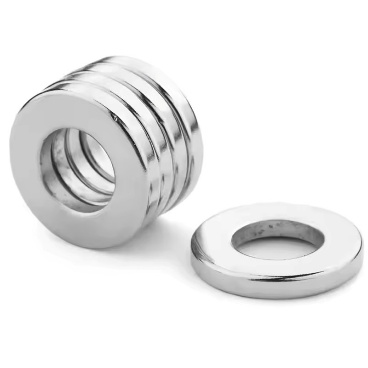
Pull force gets all the attention, but it's a misleading number if you plan to mount something on a wall. Measured as a straight-line separation from a thick, flat steel plate, pull force ignores everything that happens in the real world—gravity, sliding, vibration, surface roughness, you name it.
Holding power, by contrast, is the force a magnet can resist before it slips or fails under an actual load. The distinction matters because a vertical surface turns your magnetic mount into a shear problem. A magnet with a 50-pound pull force might hold only a fraction of that weight on a wall, especially if the steel is thin, painted, or slightly uneven.
So forget the headline number for a moment. Test a magnet in the exact position and on the same material you'll actually use. That's when holding power stops being a rating and starts being the truth.
Why Coating Choice Matters More Than You Think
Most people pick a coating based on color or price, then wonder why surfaces scratch, peel, or lose their nonstick magic within months. The truth is that coating chemistry sets the ceiling for performance long before you ever use the product. A polyester powder coat behaves nothing like a fluoropolymer finish under heat, abrasion, or chemical exposure. If you ignore those differences, you end up replacing pans, machine parts, or architectural panels far sooner than expected.
There is also a quieter cost: safety and maintenance. Some coatings hold up beautifully at room temperature but release fumes or degrade at 400 degrees, while others stay inert but demand aggressive cleaning that shortens lifespan. Choosing a coating means matching the actual operating conditions, not the spec sheet headline. Spend ten extra minutes on this decision and you buy years of trouble-free use instead of a recurring repair bill.
How Tolerance Stacking Affects Your Bulk Magnet Order
When you order magnets in bulk, each dimension carries its own tolerance—length, width, thickness, even chamfer angles. Individually these deviations might seem trivial, often no more than a few microns. But once you start stacking magnets into arrays or assembling them into housings, those small variations don't just add up; they can multiply across the interface. A rotor stack of twenty magnets with a ±0.05 mm thickness tolerance can end up with a total height swing of nearly a millimeter, which may be enough to cause interference or loss of magnetic coupling.
The real trouble usually appears during final assembly. You might find that some stacks fit snugly while others need force, or that air gaps between magnets and pole pieces become inconsistent. This kind of variation shifts the magnetic field distribution and can reduce the performance of a motor or sensor far more than a single magnet's tolerance would suggest. Buyers who only check individual magnet specs often miss this cumulative effect until the parts are already in production.
A practical way to manage tolerance stacking is to ask your supplier for a capability study on the specific batch you're ordering, not just the standard data sheet values. You can also request that magnets be sorted or matched by thickness groups, which reduces stack height variation without paying for unnecessarily tight tolerances across every dimension. Taking these steps early helps avoid costly rework and keeps your bulk order from becoming a recurring assembly headache.
Handling Strong Magnets Without Crushing Fingers or Breaking Parts
Neodymium magnets don't forgive mistakes. The moment one gets within snapping distance of another, it accelerates hard enough to leave a blood blister or crack a ceramic coating. Keep your fingers out of the gap by gripping the magnet against a flat, non-magnetic surface—use a wooden wedge or plastic shim if you need to separate two that have already locked together, and never try to pry them apart with just your thumbs.
Sliding is almost always safer than pulling. Instead of yanking a magnet straight off a steel plate, push it sideways until it clears the edge, then lift it away. For sensitive parts like magnetic encoders or thin metal brackets, tape a piece of cardboard or craft foam over the mounting face before bringing the magnet close; the cushion spreads the impact and prevents chipped edges.
Work on a clean, clutter-free bench and keep only one strong magnet out at a time. If you must store several, place them in individual compartments with plastic dividers between them. Non-ferrous tools—brass tweezers, nylon spatulas, or wooden dowels—let you guide a magnet into place without adding another pinch point or scratching the surface you're trying to protect.
Storing Your Stock So It Doesn't Become a Safety Hazard
Storing stock properly starts with thinking about how people move through your space. Pallets stacked too high or boxes left in walkways can easily cause trips, falls, or blocked exits. Instead of treating storage as an afterthought, make a habit of keeping aisles clear and heavy items at waist height or lower. This reduces the chance of someone reaching for something overhead and losing their grip.
Certain materials need extra attention. Chemicals, flammable liquids, or anything that could leak should sit in a dedicated area away from general inventory. Use sturdy shelving designed for the weight, and never stack items on top of unstable surfaces. If you store things outdoors, cover them to prevent water damage or rust, which can weaken containers and create sharp edges.
A quick weekly check can catch problems before they grow. Look for leaning stacks, damaged pallets, or items that have shifted over time. Rotate older stock to the front so nothing sits forgotten and deteriorates. When everyone on the team knows where things belong and follows the same simple rules, your stock stays organized, accessible, and safe.
FAQ
The N number plus the two digits shows the maximum energy product, so N52 is stronger than N35 by volume. In bulk orders, dropping from N52 to N48 or N42 often cuts cost noticeably while still delivering enough pull for many applications. Just confirm the supplier's stated grade with a pull-force test on a sample batch.
Nickel-copper-nickel is the common default and works fine indoors, but humid or outdoor environments often need epoxy or zinc coatings. Ask for salt-spray test results rather than just the coating name, because plating thickness and quality vary a lot between factories.
Strong magnets can pinch skin or crack when they slam together, and spacers make separation safer and less destructive. In freight, without spacers the magnets can also interfere with sorting equipment or stick to steel surfaces in the truck, causing delays.
Yes, a simple digital force gauge and a clean steel plate give you a repeatable comparison between samples. The key is to test at the same air gap and plate thickness every time, and don't rely only on calculated pull force from the datasheet.
Standard neodymium starts losing strength permanently above about 80°C unless the grade has an H, SH, UH, or EH suffix. If your product sees continuous heat or hot washdowns, specify the working temperature clearly and ask for a demagnetization curve, not just a vague heat-resistance claim.
Most factories can magnetize through thickness, length, or diameter, and multipole patterns are possible with dedicated fixtures. Custom directions usually add a few days to a couple of weeks, but the real delay comes from making the magnetizing coil if it's not a standard setup, so confirm that before you commit.
For small magnets, ±0.05 mm is common for thickness and diameter, but larger or sintered pieces may have wider variation. Always ask for a tolerance chart on the exact size you're buying and request a pre-shipment sample from the production batch, not a perfect hand-picked sample.
Conclusion
Before you place a bulk order for strong magnets, it pays to look past the grade stamped on the label. N52 sounds impressive, but the actual magnetic output can vary noticeably between manufacturers because of differences in raw material purity, sintering density, and quality control. That same caution applies to the specs you see online. Pull force, for instance, measures how much effort it takes to separate a magnet from a clean, flat steel plate under ideal lab conditions. Holding power—what you actually experience when mounting or suspending something—depends on surface finish, material thickness, air gaps, and even the direction of the load. A magnet that wins on paper can underperform in your specific setup. Coatings add another layer of unpredictability. Nickel-copper-nickel is common, but if you're dealing with humidity, salt air, or frequent handling, an epoxy, gold, or polymer coating might save you from rust and flaking later. Tolerances compound as well: a few thousandths of an inch variation per magnet doesn't sound like much, but across hundreds of pieces or assemblies that stack, small deviations can throw off fit, spacing, and overall magnetic performance. Ask for a detailed tolerance sheet and sample batch before committing to a large order.
Once the order arrives, the real test begins. Strong magnets don't just pull toward metal—they pull toward each other with enough force to pinch skin, shatter brittle materials, or launch themselves across a workbench. Handling them demands deliberate planning: keep them separated with spacers, use non-magnetic tools when possible, and never let two large magnets snap together uncontrolled. Wearing cut-resistant gloves and safety glasses is a bare minimum. Storage matters just as much as handling. Stacking magnets haphazardly in a drawer can create a dangerous cluster that's nearly impossible to separate by hand, and it puts constant stress on coatings that may chip or crack. Instead, store them in individual slots, wrapped in padding, or on a steel keeper plate that fields their magnetic lines. Keep them away from pacemakers, electronic devices, and anything sensitive to strong fields. Label the containers clearly so warehouse staff or coworkers don't accidentally grab a wrong piece. A little forethought on the dock and in the stockroom prevents crushed fingers, broken parts, and costly rework down the line.
Contact Us
Contact Person: Kelvin Lo
Email: [email protected]
Tel/WhatsApp: 0769-88561131
Website: https://dawamagnetic.com/