
Bottom Pull Facial Tissue Machine Solutions for Efficient Production
2026-10-22
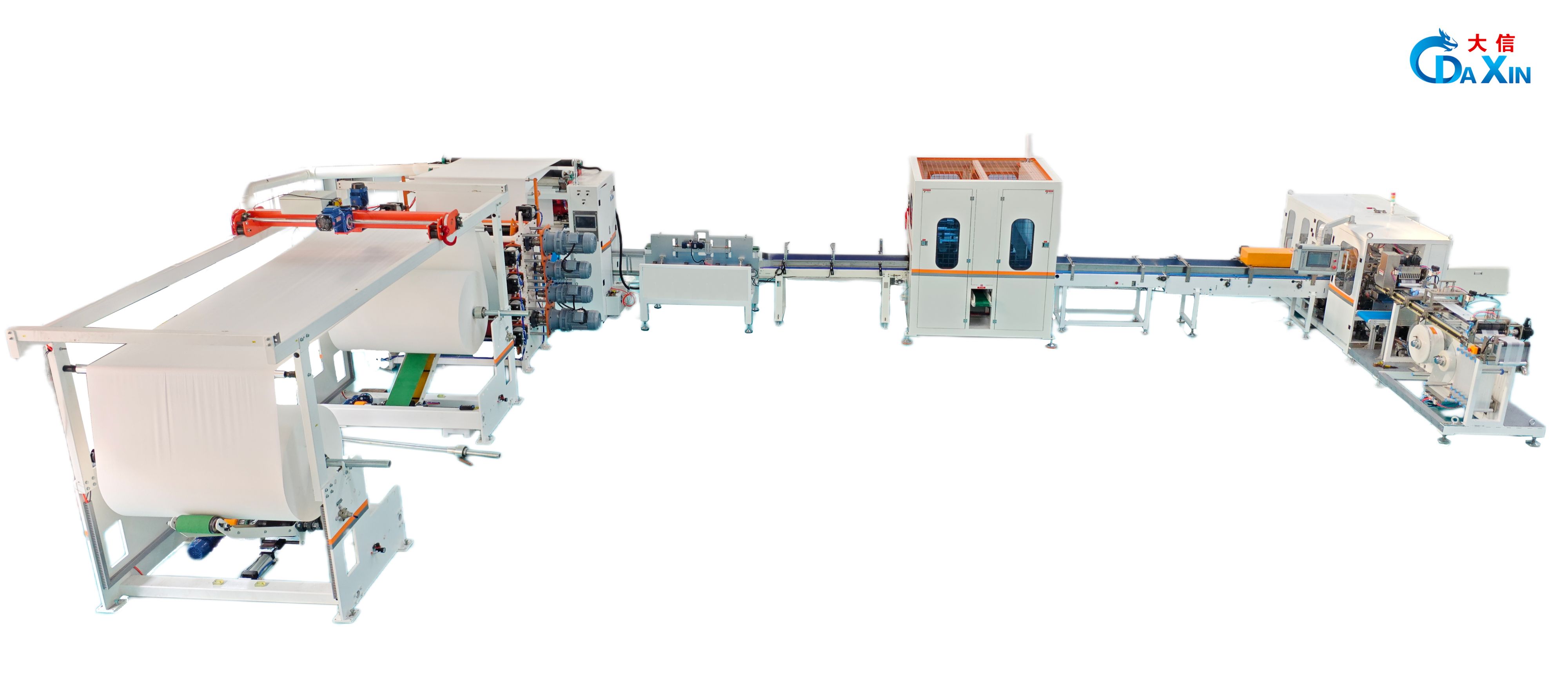
Downtime and inefficiency on a bottom pull facial tissue line can quietly erode your margins. But not all machines are created equal. DAXIN has focused on one goal: engineering bottom pull facial tissue machine solutions that push production efficiency to new levels—without sacrificing softness, fold accuracy, or reliability. In this blog, we dig into what actually matters when choosing or upgrading your equipment, and why these solutions are turning heads.
How Bottom Pull Mechanisms Keep Tissue Stacks Aligned at Speed
A bottom pull setup relies on a continuous belt or vacuum port placed just under the leading edge of the stack. Instead of pushing from the back or lifting from above, this design draws the lowest tissue forward while the remaining sheets stay pressed by a light hold-down plate. That single-point engagement stops the stack from drifting sideways, since the pull force runs parallel to the machine direction and any skew is corrected by side guides before the next sheet enters the folding station.
Speed is where most alignment systems fall apart, but bottom pull units handle acceleration by keeping the drive roller close to the separation point. The short, tight path means the sheet doesn't get a chance to flutter or rotate once it leaves the stack. In many lines, a slight vacuum delay is timed so the next tissue is only grabbed after the previous one has cleared the transfer point, which preserves a neat, square stack edge even at several hundred cycles per minute.
Fine adjustments to belt tension and pickup timing matter more than brute force here. Operators typically watch for signature issues like dog-eared corners or a stack that walks toward one rail, then nudge the cam profile or vacuum bleed to bring the pull back to center. Because corrections happen at the bottom layer, the visible top of the stack stays calm and square, which is exactly what downstream wrapping and case packing need to run without jams.
Reducing Labor Bottlenecks With Smarter Stacking and Counting
Manual stacking and counting often creates hidden delays that ripple through the entire warehouse. Workers walk back and forth to verify quantities, fix unstable pallets, or recount items that were accidentally misaligned. By introducing smart stacking methods—like zone-based staging, adjustable layer patterns, and lightweight guided carts—teams can cut down on double-handling and keep the flow moving without adding headcount.
Counting is another area where small changes pay off quickly. Instead of relying on repeated manual tallies, many operations use visual cues such as color-coded bins, pre-marked stack heights, or simple sensor strips that detect when a layer is complete. These tools don't require a major system overhaul, but they remove the guesswork that slows down pickers and packers, especially during peak shifts.
The real benefit shows up when both stacking and counting work together. A well-stacked pallet makes it obvious how many units are ready, so supervisors spend less time double-checking and more time clearing the next bottleneck. This approach doesn't just speed up one station—it prevents small errors from compounding into larger delays later in the day.
Material Waste Traps That Quietly Drain Your Production Margins
Most production teams track headline costs like raw stock and labor, yet the smaller, recurring bleed from material waste often slips past weekly reports. Offcuts from poorly nested cutting patterns, overruns that end up as dead inventory, and rejects caused by minor setup drift all stack up in ways that feel manageable per job but become significant across a quarter.
What makes these losses quiet is their predictability—nobody raises an alarm over a 2% yield drop until it shows up as hundreds of thousands in missed margin. Tightening your bill-of-materials accuracy, reviewing scrap bin contents at the machine level, and questioning whether current batch sizes match actual demand are low-cost ways to surface these traps before they erode profitability further.
Changeover Flexibility Without Sacrificing Line Stability
Swift product swaps often rattle equipment alignment, but our modular stations let operators shift between formats while the core transfer system stays locked in place. Adjustable guides and quick-release clamps deliver the flexibility you need without nudging the main line out of spec.
Rather than forcing a full stop for recalibration, each tooling change follows preset datum points that preserve conveyor timing and rail parallelism. This means more variants per shift while the backbone of the line remains untouched, so production flow never wobbles.
The real payoff shows up in mixed-batch runs: you can alter pick-and-place patterns or swap end effectors on the fly, and still return to the original setup with zero drift. That keeps your throughput steady even when the product mix gets chaotic.
Why Maintenance Cycles Matter More Than Maximum Rated Speed
A machine's maximum rated speed is often treated as the headline number, the figure that defines its capability on paper. But that figure is typically measured under pristine lab conditions, with fresh lubricants, ideal temperatures, and zero accumulated wear. Out in the real world, where dust settles into bearings and vibration gradually loosens every fastener, the rated speed becomes little more than a theoretical ceiling. What actually keeps a machine running near that ceiling—or prevents it from collapsing under its own ambition—is how faithfully the maintenance cycles are followed.
Consider two identical units: one is pushed to its maximum rated speed daily but receives only sporadic lubrication and filter changes, while the other runs at a steady 85 percent of that speed with disciplined, interval-based upkeep. After six months, the second unit will almost certainly outperform the first in sustained throughput, because its components haven't been degraded by neglect. Maintenance cycles are what preserve the tight tolerances and clean surfaces that high speed demands. Skip them, and the machine doesn't just slow down—it starts eating itself from the inside, turning that impressive maximum speed into a distant memory.
The real question isn't how fast a machine can spin on day one, but how fast it can still spin on day 400. Maintenance cycles answer that question directly. They determine whether the spindle stays true, whether the hydraulic fluid remains viscous enough to transfer force, whether the electrical contacts avoid corrosion. A neglected machine with a high maximum rated speed is like a sports car with bald tires and dirty oil—the potential is there, but the reality is a breakdown waiting to happen.
Achieving Consistent Fold Quality Across Shifts and Operators
Fold consistency rarely falls apart because one person doesn't care. It slips when each shift has its own quiet habits - a slightly different starting crease, a faster double-check, a tolerance for edges that don't quite line up. We found the fastest fix wasn't another poster or a longer training video. It was pulling two people from different shifts and asking them to fold the same five pieces side by side. The small differences in hand placement and pressure showed up immediately, and once they could see it, they stopped defending their own way.
What held after that wasn't a rulebook. It was a shared reference set: three sample folds kept at the folding station, one clearly too loose, one just right, one over-creased. Operators could feel the target instead of guessing what "firm" meant. New people checked against the samples during their first week, not just during orientation. When someone rotated in from another line, the first five minutes were spent matching their output to those physical standards. That shift in feedback - from "do it like I showed you" to "compare it to the sample" - cut most of the shift-to-shift drift.
The last piece was making quality visible at shift change. A simple board next to the line showed the last ten folds from the outgoing shift and the first ten from the incoming one. If the edge alignment or crease depth looked off, the two leads adjusted together before production ramped up. It took less than three minutes and stopped the usual blame game. Consistency became a handoff conversation, not an inspection surprise.
FAQ
The main difference lies in the folding and dispensing orientation. Bottom pull machines are set up to fold and stack tissues so that each sheet is pulled from the bottom of the pack rather than the top. This affects the folding plates, stacker alignment, and packaging sequence. The goal is a pack that opens from the underside, which many consumers find easier to handle and refill.
Efficiency gains usually come from reducing changeover time, optimizing the folding speed without increasing jams, and using automatic splice systems for raw material rolls. Many plants also add inline vision inspection to catch misaligned stacks early. Keeping the rotary folding drums clean and properly timed is important, because even slight drift can cause uneven stacks and downstream slowdowns.
Frequent issues include sheet misalignment during bottom folding, uneven stack compression, and film packaging that tears near the dispensing slot. These can be addressed by fine-tuning the folding drum gaps, using servo-driven stackers for precise count, and selecting packaging film with better tear resistance. Regular audits of the pull slot position help maintain a consistent opening for consumers.
You would want to look at the rated speed in packs per minute, the supported sheet count and ply range, and how quickly the machine can switch between different pack formats. Floor space and utilities also matter, since some bottom pull lines need extra room for bottom-loading cartons. Service support, spare parts availability, and whether the control system integrates with existing plant networks are practical points to evaluate.
With bottom pull, the tissue pack is inverted during filling, so the first sheet is always accessible from the underside. This affects the positioning of the dispensing opening and the film seal. For users, it means they can grab a tissue without lifting the entire pack, and the unused sheets stay protected from dust. Packaging designs often add a wider bottom gusset to make the opening more stable.
Daily cleaning of folding plates and vacuum ports prevents dust buildup that can affect sheet control. Lubricating the cam followers and checking belt tension on the pull rollers are also important. Many plants schedule a monthly inspection of the bottom stack alignment mechanism and the sealing jaws. Using original spare parts and keeping a log of minor adjustments helps reduce unexpected downtime.
Yes, most modern bottom pull machines are designed for quick adjustments. Changeover kits allow switching between 2-ply and 3-ply tissue, and the stacker can be programmed for different sheet counts such as 100, 150, or 200 sheets per pack. Some machines use automatic recipe management, where an operator selects a product code and the machine adjusts folding depth, stack height, and film length accordingly.
Common features include servo-driven folding heads, automatic web tension control, and robotic case packing for bottom-load cartons. Many systems also have touchscreen interfaces with production dashboards, remote diagnostics, and automatic rejection of underweight or misaligned packs. Some advanced lines integrate automatic film roll splicing and conveyor-based buffering to keep the line running without stops for material changes.
Conclusion
Running a bottom pull facial tissue line at high output rarely fails because the motor lacks horsepower; it fails when stacks drift out of alignment, counts drift, or the changeover process eats into a shift. The bottom pull design solves a core problem by keeping the tissue stack under constant, even tension from below, so sheets settle flat instead of shifting at speed. This alone cuts the micro-jams that force operators to pause and reset. Pair that with smarter stacking and counting—where sensors verify each bundle rather than relying on a preset cycle—and you remove the second biggest labor bottleneck. Waste doesn't usually come from dramatic spills; it comes from a miscount of one or two sheets per pack, repeated thousands of times. Those small overruns or rejected bundles are a quiet drain on margin, and they are exactly what a well-tuned bottom pull system prevents.
Changeovers are where many high-speed lines lose their advantage. The goal isn't just to swap film or size quickly; it's to do it without knocking the folding rollers out of spec. A bottom pull machine that keeps the pull geometry independent of the folding path lets you adjust format without re-zeroing every station, so line stability holds. Maintenance thinking also has to shift away from chasing the maximum rated speed. Running flat out may look good on paper, but if you skip the 200-hour belt checks or ignore wear on the pull fingers, you inherit crepe wrinkles and uneven folds. The real efficiency comes from consistent fold quality across every shift and every operator—so training burden drops, rejects stay low, and the line runs predictably whether it's Monday morning or Saturday night.
Contact Us
Contact Person: Sam Xie
Email: [email protected]
Tel/WhatsApp: 86-18938538530
Website: https://www.daxin321.com/