
BOPP Masterbatch: What Makes a Good One and How to Choose It
2026-08-17
Every BOPP film producer knows the frustration of inconsistent color, poor dispersion, or unpredictable processing. The culprit is often the masterbatch. But what actually separates a mediocre BOPP masterbatch from one that runs smoothly on high-speed lines, delivers razor-sharp opacity, and holds up under heat? At Xinwancai, we’ve spent years reverse-engineering those failures—and the answer isn’t just pigment quality. In this post, we’ll break down the real selection criteria most suppliers won’t tell you, so you can stop guessing and start choosing with confidence.
What Actually Separates a Reliable BOPP Masterbatch from the Rest
A dependable BOPP masterbatch isn't just about hitting a target opacity or color match on day one. It's the quiet consistency across batches, the way it flows through your extruder without sudden pressure spikes, and how it holds up under high line speeds without creating gels or fisheyes. Many suppliers can ship a sample that looks good in a lab trial, but the real distinction emerges after the third or fourth production run, when the same pigment loading, carrier resin, and dispersion quality still deliver identical film properties. That kind of repeatability comes from tight control over raw material sourcing, precise melt filtration, and a willingness to reject lots that are merely acceptable on paper.
Another factor that rarely shows up on a spec sheet is how the masterbatch behaves during reclaim and edge trim recycling. BOPP lines generate substantial scrap, and a formula that degrades or shifts color after a few heat histories will quietly erode your margins and film clarity. Reliable products are engineered with stabilizer packages and pigment systems that tolerate multiple extrusion passes without forming black specks or yellowing. This matters especially when you're running thin films at high output, where even minor thermal instability becomes visible as haze or reduced gloss. The best suppliers will openly share their accelerated aging data and let you run your own recycling simulation before committing.
Finally, a trustworthy masterbatch partner understands that your process is not identical to another converter's. They ask about your screw design, your die gap, your downstream stretching ratios, and your target film gauge before recommending a product. They don't push a generic "white for BOPP" and walk away. Instead, they offer adjusted carrier systems—homopolymer, copolymer, or a blend—to match your base resin viscosity, and they tailor additive levels for your specific corona treatment or metallization plans. That level of technical engagement, combined with on-time batch documentation and quick response when something drifts, is what actually separates a supplier you can build a long-term operation on from one that just fills a purchase order.
The Role of Carrier Resins in Film Clarity and Strength
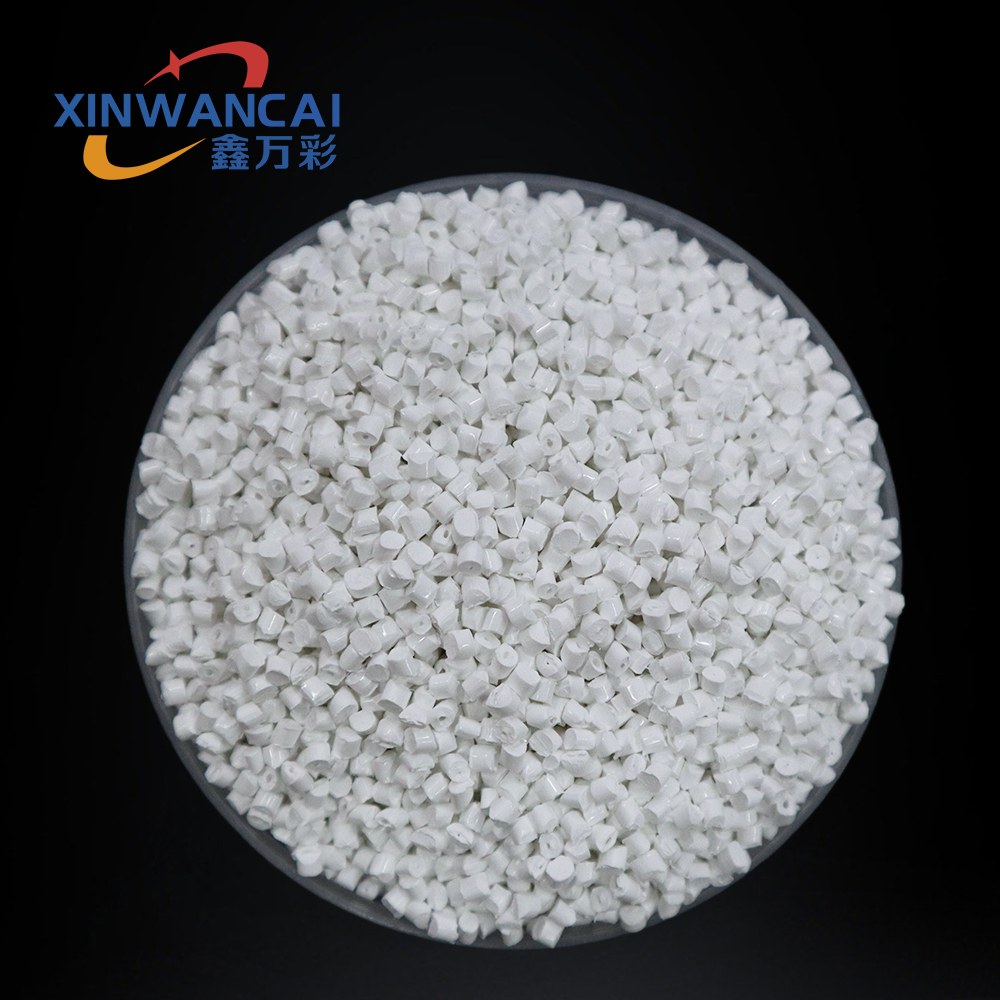
The choice of carrier resin directly shapes how pigments and additives disperse inside a film. A well-matched carrier wets the pigment surface and breaks up agglomerates during compounding, so the final film contains fewer large particles that scatter light. This keeps haze low and clarity high, especially in thin-gauge packaging where even small defects are visible. When the carrier is incompatible with the base polymer, it can form tiny domains that refract light differently and create a milky or cloudy appearance.
Strength is influenced in a less obvious way. A carrier that remains as a separate phase, even at low loading, can act as a stress concentrator under tension or impact. In polyethylene films, for instance, using a carrier with a similar melt index and density allows it to blend more uniformly with the matrix, so tear resistance and puncture strength are not sacrificed. On the other hand, a carrier with much lower viscosity may migrate to the surface over time, leaving voids or weak boundary layers that reduce overall toughness.
Practical formulation often involves balancing optical and mechanical demands. A carrier with a slightly higher melt flow can improve pigment distribution but may lower the film's dart impact if it disrupts the crystalline structure. Some processors choose a carrier resin with a refractive index close to that of the main polymer to minimize light scattering, while also keeping the molecular weight high enough to preserve entanglement and load transfer. These small adjustments in carrier selection can mean the difference between a film that looks sharp and one that fails on the packaging line.
Why Dispersion Quality Decides Whether Your Film Runs Clean
Poorly dispersed pigments or fillers create agglomerates that show up as fisheyes, streaks, or gel particles on the film surface. These defects not only ruin the visual clarity but also act as stress concentrators during winding and converting, leading to scratches and even web breaks. A clean-running film starts with every additive particle fully separated and stabilized in the polymer melt.
Dispersion quality directly affects filtration pressure. Well-dispersed material passes through the screen pack with stable delta-P, while poorly dispersed batches clog screens rapidly, forcing operators to either change filters more often or lower the mesh count. Lower mesh lets larger contaminants through, depositing them directly onto the finished film and making the surface look dirty under inspection lights.
Good dispersion also reduces light scattering within the film. Undispersed clusters act as haze centers, giving the film a cloudy or mottled appearance even when the base resin is crystal clear. By maximizing dispersion, you eliminate these micro-optical defects, so the film achieves a uniform, clean look that customers expect from premium grades.
Additive Loadings That Work Without Compromising Printability
Focus on filler geometry and surface treatment rather than maximum loading percentages. In filament-based printing, pushing additive content beyond 15–20% by weight often turns a usable spool into a clog-prone headache. But the real limit isn't the loading itself—it's how the particles interact under shear. Near-spherical powders with a narrow size distribution, or short fibers under 100 microns, tend to flow through a 0.4 mm nozzle far more reliably than long, high-aspect-ratio fillers. A silane coupling agent or a thin polymer coating on the filler surface can drop melt viscosity enough to keep extrusion steady without sacrificing stiffness or thermal stability.
For PLA or PETG, carbon fiber at 10–15 wt% and glass beads at 20–30 wt% usually print with only minor tweaks. Raising the nozzle temperature by 5–10°C and widening the nozzle to 0.6 mm compensates for the added viscosity. Avoid "more is better" thinking; a 5 wt% increase in filler can demand a 15°C jump in temperature and still produce brittle interlayer bonds. Adding 0.5–1 wt% of a zinc stearate lubricant or a maleic anhydride-grafted compatibilizer often does more for printability than reducing the filler load.
Run a simple purge test at your target speed: if the extruder motor skips or the filament buckles, back off the loading by 2–3% or increase the nozzle diameter. Melt flow index (MFI) measurements at the printing temperature give a quick comparison, but a 30-minute test print with a small calibration cube tells you more about layer adhesion and warping than any datasheet. Document the exact drying conditions too—many fillers are hygroscopic, and moisture turns into steam pockets that ruin surface finish long before a clog appears.
A Simple Pre-Production Check Before Committing to a Supplier
Before you sign anything or wire a deposit, take half a day to run a small batch through the supplier's actual production line. Not a sample they handpicked, but your own material, your own specs, and a realistic order quantity. Watch how they handle the awkward corners, the tolerance drift, and the late-stage substitutions that always seem to appear when nobody is looking. If the first ten units come out inconsistent, imagine what five hundred will look like.
Ask for the exact machine settings, the name of the operator, and the maintenance log from the last run. If they hesitate or give you a verbal assurance instead of a sheet, that's a signal. A decent supplier will volunteer this without being pushed. Then compare the pre-production output against the golden sample you approved months ago—not just visually, but with a simple go/no-go gauge or a quick functional test. If it drifts more than a few percent, walk away before the purchase order locks you in.
One more thing: check who actually does the work. Sometimes the factory you toured is not the one running your order. Subcontracting happens quietly, especially in busy months. So ask for a line video or a live call from the shop floor during your trial run. And if they can't show you that, treat the pre-production check as failed. It costs you a morning; it saves you a container full of regrets.
How to Read a Technical Data Sheet Without the Marketing Hype
Forget the headline numbers for a moment. Flip to the fine print where test methods, temperature ranges, and load conditions are spelled out. A tensile strength listed without the ASTM or ISO standard behind it tells you almost nothing. Real comparisons come from identical test setups, not from a glossy bullet point.
Watch how values are labeled. A typical figure often comes from a small batch or ideal conditions, while a guaranteed minimum is what you can actually rely on. If the sheet mixes both, treat the typical number as a starting point, not a promise.
Finally, read the footnotes and the shape of the curves. A graph with a steep drop-off at your operating temperature matters more than a single point on page one. Those tiny asterisks usually tell you where the marketing answers are hiding.
FAQ
It is a concentrated blend of pigments or functional additives carried in polypropylene, engineered for biaxially oriented film lines. The quality of this material quietly controls whether the final film has uniform color, stable slip, low haze, or a surface free of gels and fisheyes.
Look at dispersion quality, thermal stability during stretching, low gel and speck count, batch-to-batch consistency, controlled additive migration, and low odor or volatile content. A good product also maintains optical clarity in clear films and hides well in white or opaque grades.
The carrier needs to match the base polypropylene in melt flow and compatibility. If the melt flow is too different, you may see poor mixing, uneven stretching, or weak points in the film, while a properly matched carrier helps the masterbatch melt and distribute without disturbing the orientation process.
Pigments must withstand high processing temperatures without degrading or shifting color, and they must be finely dispersed to avoid visible specks. Functional additives such as slip, antiblock, or antistatic agents have to migrate at the right rate, otherwise you get problems like blocking, poor winding, or surface deposits.
Ask for dispersion ratings, pressure rise during filtration, thermal gravimetric analysis, gel counts from trial film, color difference values, and migration or blooming tests. Real trial results on BOPP lines matter more than a polished datasheet.
Yes, it can create film breaks during stretching, die lip build-up, roller contamination, uneven thickness, lower heat seal strength, or visible dots in the film. Some problems appear only after storage, when additives migrate and change surface properties.
Start by defining the film's end use and critical requirements, such as clarity, coefficient of friction, antistatic performance, or white opacity. Then run small-scale trials, compare total cost including scrap and downtime, and verify that the masterbatch performs reliably over several production lots.
It can, especially if low molecular weight components migrate to the film surface over time. That may reduce ink adhesion, create poor metal laydown, or change surface wetting behavior, so the masterbatch formulation must be considered together with the converting process.
Conclusion
A BOPP masterbatch earns its keep long before the film reaches the converter. The carrier resin has to match the base polypropylene closely; a mismatch shows up as haze, visible gels, or weak spots that tear under tension. But the real differentiator is dispersion quality. Poorly dispersed pigment agglomerates don't just look bad—they raise screen pack pressure, force frequent filter changes, and leave surface defects that ruin print registration and lamination. The best formulations pair a compatible carrier with tightly controlled particle size reduction so the concentrate flows like the base resin and lets the line run at full speed without breaks.
When comparing suppliers, ignore the glossy brochure and look at the technical data sheet as a set of testable claims rather than a promise. Melt flow index, filler type and loading, and thermal stability at actual processing temperatures matter more than color strength on paper. Before committing to a volume order, run a small trial on your own line: monitor pressure buildup over two hours, check film clarity with a haze meter, and test print adhesion with your actual ink system. If the masterbatch requires a higher let-down ratio than the supplier claims just to hide imperfections, that is a red flag. A good masterbatch should disappear into the process—no extra adjustments, no increased scrap, no surprises on press.
Contact Us
Contact Person: JACK
Email: [email protected]
Tel/WhatsApp: 86 18650130917
Website: https://www.xinwancai.com/