
Best PCB Assembly: Mastering High-Quality Electronics Manufacturing
2026-06-10
In the fast-paced world of electronics, the backbone of any reliable device is a perfectly assembled PCB. Yet, achieving consistent quality requires more than just advanced machinery—it demands precision engineering and deep expertise. That's where TPS comes in, redefining standards in high-quality electronics manufacturing. Whether you're prototyping a groundbreaking innovation or scaling up production, understanding the key aspects of PCB assembly can make or break your project.
The Hidden Art of Precision Soldering
Precision soldering is less a mechanical task and more a quiet dialogue between hand and material. The iron becomes an extension of your fingers, and the solder flows only as steadily as your breath allows. It’s the pause before the touch that defines a clean joint—the moment you read the heat, the flux, the surface readiness. No two components receive the melt quite the same way, and that subtle negotiation is where real skill hides.
Temperature control often gets reduced to a number on a dial, but those who master the craft sense it through the work itself. You learn to spot the slight color shift in a copper pad, or hear the faint sizzle of flux reaching activation. A perfect fillet isn’t shiny because you followed a datasheet—it’s shiny because you pulled away at exactly the right instant, neither rushing nor lingering. That instinct can’t be taught in steps; it grows slowly, shaped by a thousand tiny failures and the willingness to really look at what went wrong.
There’s also an overlooked poetry in the tools themselves. A well-tinned tip, a chisel ground just so, a holder that lets you rest mid-motion—these aren’t luxuries; they’re the quiet partners in every successful connection. And when the tip finally oxidizes beyond saving, it’s not a frustration but a reminder that even the best tools are temporary. The real tool is the awareness you build over time: the ability to adjust pressure, angle, and dwell time without conscious thought, turning a technical operation into something almost meditative.
Material Choices That Make or Break Your Board
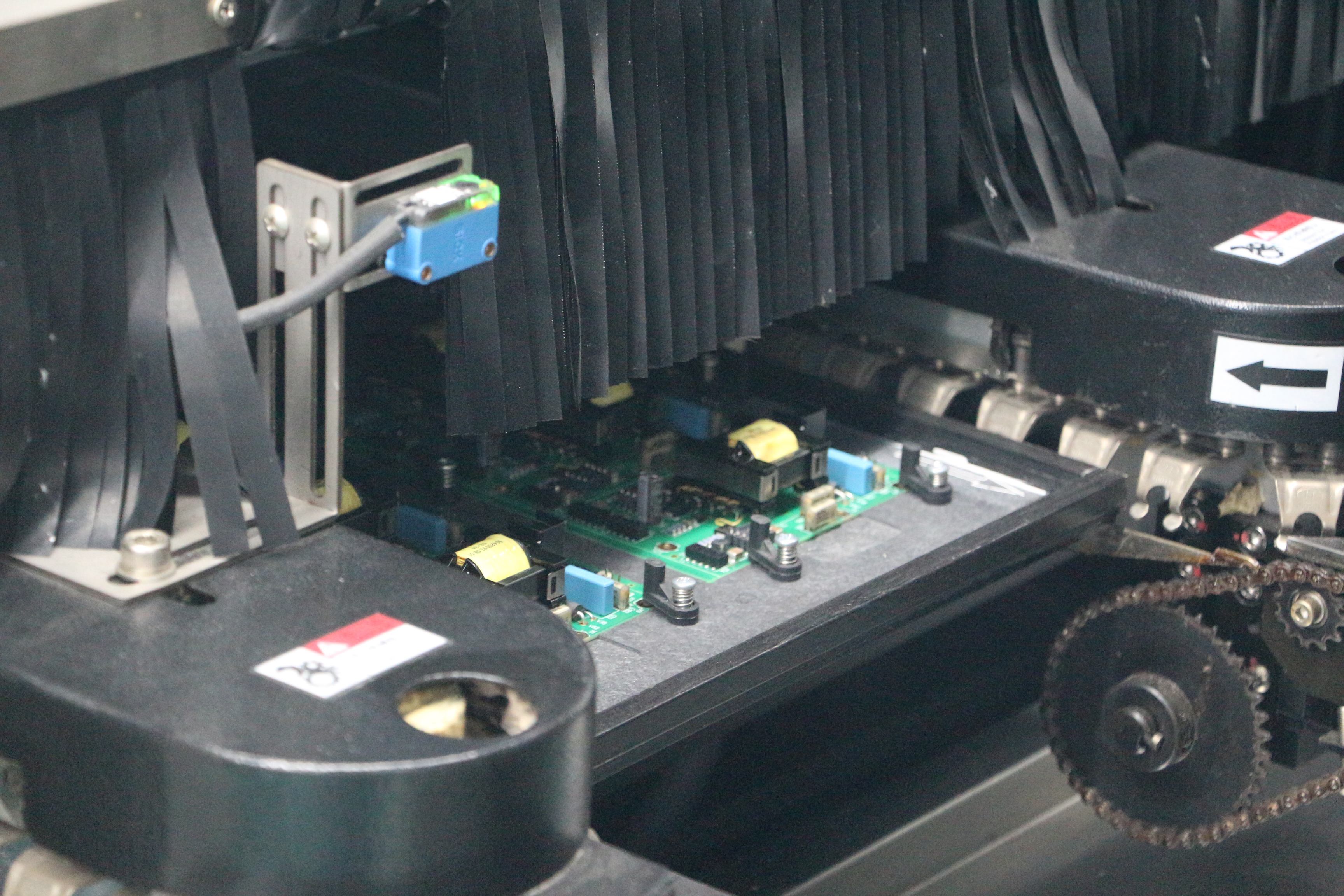
The substrate you pick isn’t just a canvas for your circuit—it’s the silent partner that handles heat, flex, and signal integrity. FR4 might be the go-to for cost-sensitive projects, but push it past a few gigahertz and you’ll watch your impedance control fall apart. Polyimide steps in when things get toasty or when the board needs to bend without snapping, while PTFE-based laminates keep insertion loss low in RF designs. Ignoring the dielectric constant or thermal expansion mismatch between layers can turn a sleek prototype into a warped mess after the first thermal cycle. Sometimes, a mixed-material stackup is the only way to balance performance and budget, but it demands a careful eye on the coefficient of thermal expansion across every interface.
Conductor selection goes beyond chasing the lowest resistance. Rolled copper often outperforms electrodeposited foils in dynamic flex applications because its grain structure handles repeated bending without microcracking. In high-current paths, wider traces and thicker copper weight are obvious choices, but edge-coupling effects and skin depth at elevated frequencies might force you toward surface finishes that feel counterintuitive—like swapping a shiny immersion silver for a matte electroless nickel to curtail intermodulation distortion. Even the solder mask can’t be an afterthought: a glossy finish might trap flux residue in fine-pitch areas, while a low-gloss variant sheds it readily during cleaning, reducing post-assembly surprises.
Surface finishes tie the whole system together, yet they’re frequently treated as a last-minute checkbox. Hot air solder leveling might seem cheap, but the uneven pad topography it creates can haunt you when 0201 passives start tombstoning during reflow. Electroless nickel immersion gold offers a flat, solderable surface, but over-specify the gold thickness and you’re inviting brittle intermetallics that crack under vibration. Organic solderability preservatives keep things flat and are low-cost, but they demand pristine handling—a stray fingerprint can render pads unwettable. When the board must survive high-temperature storage or multiple rework cycles, immersion tin or silver may be the smarter pick, provided you account for their respective tarnish and creep corrosion quirks in the end-use environment.
From Blueprint to Reality: Streamlining Design for Assembly
Transforming a product concept into a physical reality hinges on how seamlessly its components come together. Design for Assembly (DFA) scrutinizes every fastening, insertion, and alignment step, questioning whether a simpler joint, a snap-fit, or a reduced part count could eliminate bottlenecks before they reach the factory floor. By integrating assembly thinking during the early design phases, teams can dramatically reduce manual handling, minimize the need for specialized tools, and shorten the production timeline. This proactive approach not only cuts labor costs but also mitigates the frustration of late-stage redesign that often derails even the most promising projects.
The real magic occurs when the digital blueprint begins to mirror the physical assembly logic. Engineers who adopt DFA principles use a “touch-time” mindset—evaluating how many seconds each component adds to the build and whether that time could be eliminated through part consolidation or self-locating features. For instance, replacing a dozen screws with a single molded clip or joining a bracket via a living hinge can transform a tedious multi-step sequence into a one-motion installation. The payoff extends beyond cost savings: products become lighter, easier to service, and less prone to warranty issues caused by loose fasteners or misalignments.
Ultimately, streamlining assembly is a discipline of empathy—for the line worker, the repair technician, and the end user. When designers hold a physical prototype and feel the awkward twist required to reach a screw hidden behind a panel, they internalize why DFA matters. Cross-functional workshops that bring together industrial designers, manufacturing engineers, and suppliers early in the process often uncover simple yet brilliant simplification opportunities that no single department would spot alone. The result is a product that doesn’t just look elegant on a screen but also glides through production with a quiet efficiency that turns a complex assembly into a series of intuitive, error-proof steps.
Quality Control Protocols That Ensure Zero Defects
Achieving zero defects isn't a slogan; it's a relentless pursuit baked into every stage of production. It starts with meticulous supplier vetting — we don't just accept materials, we audit the source. Incoming components face a barrage of inspections, from dimensional checks to metallurgical analysis, before they ever touch the assembly floor. This upstream rigor prevents headaches down the line.
On the production line, our approach blends timeless discipline with modern automation. Statistical process control monitors real-time data, catching deviations before they become defects. Automated optical inspection systems scan with micron-level precision, but human expertise remains the final check. Operators are empowered to stop the line if something feels off — that gut instinct, built from years of experience, is a safeguard no machine can replace.
Finally, finished goods undergo simulated lifecycle testing that mirrors real-world stress. We cycle temperatures, apply mechanical loads, and run extended operational tests — actively trying to break our own products. If a unit survives, it ships. If not, root-cause analysis kicks in, and we fix the process, not just the part. That feedback loop is how we sustain zero-defect quality over time.
Testing Strategies for Uncompromising Performance
Crafting a robust testing strategy is the backbone of achieving consistent, high-level performance. It begins by defining clear, measurable benchmarks that mirror real-world usage scenarios. Rather than relying on generic metrics, tailor your tests to reflect actual user journeys, peak traffic patterns, and the specific demands of your application. This targeted approach ensures that every optimization decision is grounded in reality, not guesswork.
Embrace a multi-layered testing methodology that goes beyond simple load tests. Combine stress testing to expose breaking points, endurance testing to uncover memory leaks over time, and spike testing to simulate sudden traffic surges. Integrating these techniques into your continuous delivery pipeline allows you to catch performance regressions early. Automate the collection of critical indicators like response times, throughput, and resource utilization, and set thresholds that trigger alerts the moment deviation occurs.
Finally, treat performance as a shared responsibility across development and operations. Encourage a culture where performance data is reviewed collaboratively, and test results directly inform architectural choices. Regularly revisit and refine your testing scenarios as your system evolves, ensuring they stay aligned with new features and shifting user expectations. This dynamic, proactive stance transforms testing from a final checkpoint into an ongoing dialogue that safeguards uncompromising performance at every release.
Innovations Reshaping Assembly Line Efficiency
A quiet shift is underway on factory floors, where adaptive robots now work alongside humans without safety cages. These cobots learn tasks through demonstration rather than code, adjusting their movements in real time when parts arrive misaligned. One automotive supplier slashed changeover time by 70% simply by redeploying a single cobot across three workstations overnight.
Sensor-driven analytics are turning assembly lines into self-correcting systems. Instead of relying on batch inspections, tiny vibration and thermal sensors embedded in tooling flag microscopic defects mid-cycle. A recent deployment at an electronics plant caught solder joint flaws before they cascaded into field failures, cutting warranty claims by a third within months.
Something less tangible but equally powerful is the move toward digital thread integration, where every component carries its own history from supplier to final test. When a turbine blade enters the line, its unique identifier triggers machine settings and inspection criteria automatically. This not only eliminates manual data entry errors but also lets engineers trace root causes in minutes, not days, reshaping how efficiency itself is measured.
FAQ
It often boils down to meticulous process control and a genuine commitment to craftsmanship. Top providers invest in skilled technicians who understand the nuances of solder paste application, reflow profiling, and contamination management—details that fly under the radar in cheaper, high-volume lines.
They lean heavily on rigorous process documentation and real-time monitoring. By analyzing yield data and catching deviations early, they prevent rework and scrap. Smart factory setups also help streamline material flow, so labor and component waste stay minimal.
It’s a game changer. When designers loop in assembly experts before freezing a layout, they can tweak pad geometries, component spacing, and thermal reliefs to match real-world soldering dynamics. This avoids costly re-spins and boosts first-pass yield dramatically.
Reliability gaps often trace back to hidden stress points—like improper via-in-pad filling, insufficient underfill for BGAs, or using borderline-spec components in harsh environments. Top manufacturers stress-test early prototypes and enforce strict incoming QC on every reel.
It’s absolutely central. Even a perfectly tuned assembly line can’t mask counterfeit or moisture-damaged parts. Seasoned manufacturers cultivate vetted supplier networks and run full traceability, so every resistor and IC can be tracked back to its original date code and lot.
Beyond basic ICT or flying probe, the real differentiators include in-circuit functional test with environmental cycling, boundary scan for dense digital boards, and automated optical inspection with 3D solder paste analysis. Combined, they catch defects that simple pass/fail checks miss.
Absolutely. Slow-profile reflow, manual paste application with vision-guided dispensers, and bake protocols to prevent moisture popcorning on sensitive parts all make a surprising difference. These steps are often skipped in fast-turn shops but pay off in long-term reliability.
Conclusion
The secret to top-tier PCB assembly lies in mastering the delicate balance between skilled handwork and smart engineering. Precision soldering isn’t just about melting metal—it’s an art that demands intimate knowledge of thermal profiles, flux chemistry, and joint inspection. It requires a craftsman’s feel for temperature control, an understanding of intermetallic growth, and a patience that no machine has yet replicated. But even the finest soldering can’t compensate for poor material choices. Laminates, copper weights, and surface finishes dictate a board’s thermal and mechanical resilience, directly influencing reliability. Choosing the right substrate isn’t just about dielectric constant—it’s about predicting how a board will survive thousands of thermal cycles and harsh environments. Early collaboration between designers and assembly teams transforms blueprints into manufacturable realities; streamlining pad geometries, component spacing, and panelization saves rework and elevates yield. When design and assembly speak the same language, the result is a board built for consistency.
Once assembly begins, rigorous quality control protocols catch anomalies before they become failures—automated optical inspection, x-ray, and in-circuit testing form a defensive triad. Beyond conventional tests, strategies like boundary scan and functional stress screening push performance boundaries without compromise. But testing alone isn’t enough; the real shift comes from the line itself. Innovations in closed-loop process control, where every solder paste deposit is measured and corrected in real time, and AI-driven defect prediction systems that learn from millions of joints, are redefining what’s possible. Robotic soldering with adaptive feedback eliminates variability, and automated conformal coating inspection guarantees protection in the harshest conditions. These technologies don’t just accelerate production—they embed a culture of precision where every step, from stencil printing to final packaging, is monitored and optimized. The result is not just a board that passes tests, but one that excels in the field, cycle after cycle.
Contact Us
Contact Person: Lily
Email: [email protected]
Tel/WhatsApp: +49 (0) 2161 49526-0
Website: https://tps-elektronik.com/en/