
Best Caster Wheels Wholesale Options for Smooth and Durable Mobility
2026-10-02
Wholesale caster wheels often force a trade-off: cheap price or dependable performance. That's not a compromise worth making when equipment uptime depends on smooth, durable mobility. CMCL has built its reputation by eliminating that false choice, offering wheels that roll quietly and hold up under heavy use—at wholesale quantities that make sense for growing operations. Below, we break down the options that deliver both value and longevity.
Heavy-Duty Casters That Keep Warehouse Carts Moving Without Constant Replacements
Warehouse carts roll through tight aisles, over expansion joints, and across uneven concrete every single day. Most standard casters start to wobble, flatten, or seize within months, forcing maintenance crews to swap them out — often during peak shifts. Heavy-duty casters built with forged steel brackets and heat-treated raceways change that equation. They handle side-load impacts from sharp turns, absorb vibration from dock plates, and shrug off debris that would chew through softer wheels. Instead of scheduling replacements every quarter, teams can focus on moving inventory, not repairing the equipment meant to move it.
The real difference lies in how these casters distribute load and resist abrasion. A precision ball bearing swivel, combined with a hardened kingpin, keeps the wheel tracking straight even under 2,000-pound loads. Tread materials like polyurethane on cast iron cores offer a sweet spot between floor protection and cut resistance — important when carts routinely roll over metal shavings or gravel near loading areas. When one caster does eventually wear, you replace a single wheel or bearing, not the entire bracket. That modular approach cuts downtime and spare parts inventory dramatically.
Installation also matters more than people expect. Heavy-duty casters with top plates that match the cart’s existing bolt pattern eliminate drilling or welding. Using a slightly larger wheel diameter than the original spec reduces rolling effort by up to 30%, which means fewer strain injuries for workers pushing full carts. Combine that with a thread-locking compound on the axle nut, and you get months of quiet, dependable rolling without the telltale squeak of a failing caster. The goal isn’t just durability — it’s making warehouse carts feel new for years, not weeks.
Floor-Friendly Polyurethane Wheels for Hospitals and Quiet Workspaces
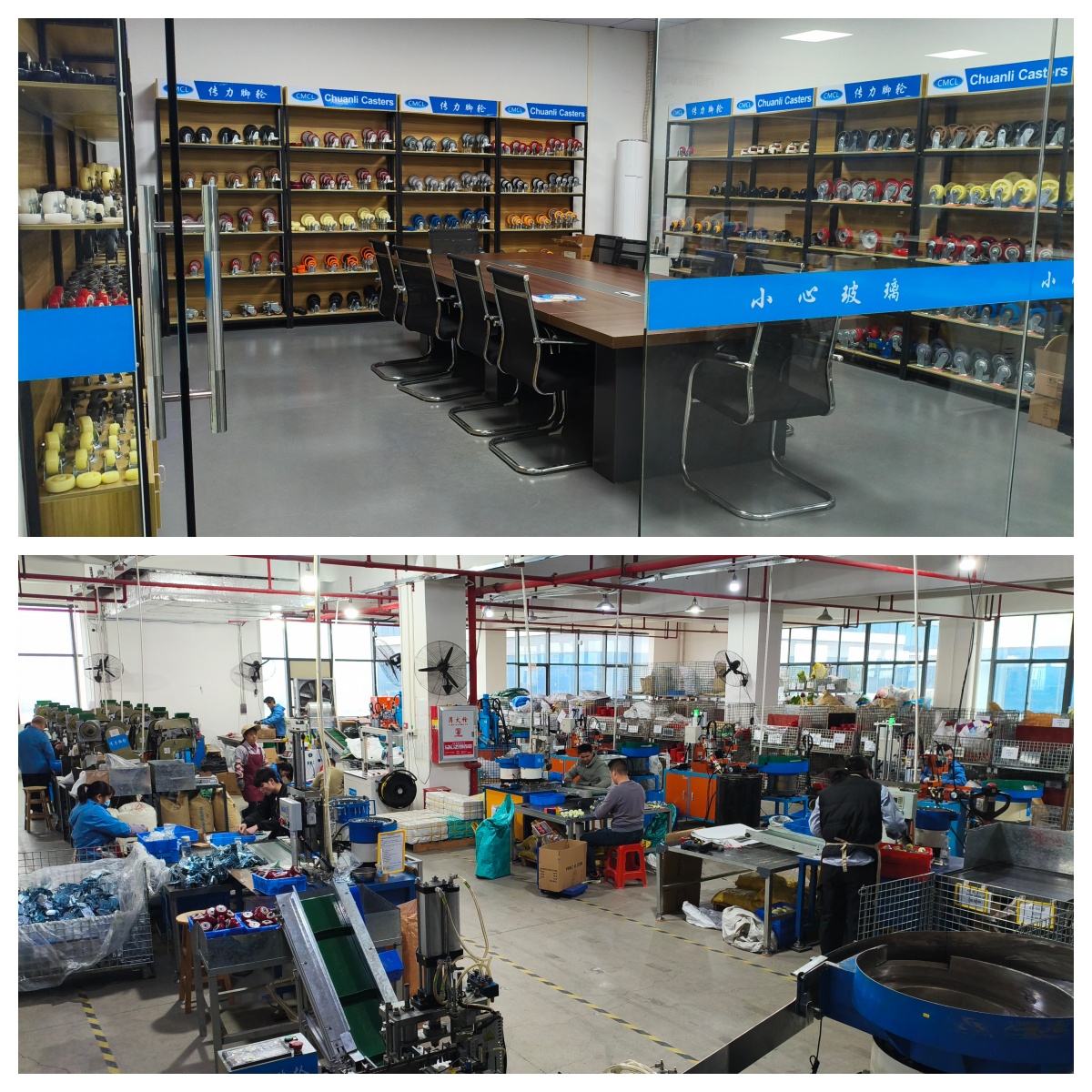
Hospitals and quiet workspaces demand wheels that won't mar floors or disrupt concentration. Polyurethane wheels answer both needs with a tread that's tough on smooth surfaces yet gentle on tile, vinyl, and sealed concrete. Unlike hard rubber or metal casters, these wheels roll without leaving skid marks or gradual scuffing, even under frequent direction changes.
The material's natural shock absorption also cuts down on vibration and rolling noise. Carts, medical carts, and mobile workstations glide instead of clatter, keeping hallway chatter low and patient areas calm. Maintenance teams appreciate the reduced need for floor refinishing, while staff can move equipment without straining against wheel chatter or resistance.
For spaces where both floor longevity and acoustic comfort matter, polyurethane wheels offer a practical middle ground. They hold up to daily cleaning agents and occasional debris without hardening or cracking, so performance stays consistent over years of use.
Weather-Resistant Casters Built for Outdoor Equipment and Rough Surfaces
Outdoor jobsites punish ordinary casters with mud, gravel, rain, and temperature swings. These weather-resistant units are built around 304 stainless steel forks and sealed precision ball bearings, so water and grit don't get inside and grind things to a halt. The wheels themselves use a solid polyurethane tread that won't crack in freezing temperatures or soften under direct sun, giving carts and racks a stable footprint on broken concrete, packed dirt, and loose stone.
Rather than relying on a single oversized wheel, the design pairs a wider tread with corrosion-resistant zinc-plated hardware and a swivel lock. That combination keeps equipment from drifting on slopes while still letting you reposition heavy loads with one hand. Drainage channels around the swivel race help shed water after a downpour, and the fork geometry leaves extra clearance for pebbles and debris instead of jamming against the hub.
For seasonal crews, the practical difference shows up after the first winter. There's no flaking chrome, no seized swivel joint, and no flat-spotting from sitting in a cold trailer. It just rolls.
How to Pair Load Ratings and Stem Types Without Second-Guessing Your Setup
Matching a stem to your caster’s load rating isn’t about memorizing charts—it’s about seeing how force travels. A stem that locks into the mounting surface too loosely will wobble under load, even if the wheel itself can handle the weight. Start by checking the stem’s diameter and length against the frame or socket, then think about the angle of impact. Side loads from turning or bumping into thresholds stress the stem differently than straight-down weight, so a threaded stem with a tight tolerance beats a generic press-fit every time.
When you’re torn between two stem types, look at what the caster actually does in motion. A round stem with a smooth shank works fine for light carts that glide in straight lines, but if your setup gets yanked or pivoted often, opt for a square or hex stem that resists rotation inside the mount. For heavier loads, friction alone won’t cut it—pair a high load rating with a stem that has a positive lock, like a grip ring or a bolt-on plate. The goal is to make the connection boring, so you never have to glance down and wonder if it’s shifting.
A practical trick is to test the stem fit before you load the cart fully. Slip the caster in, give it a hard sideways tug, and listen. Any clunking means the stem is flexing, which will fatigue the mount over time. Also keep an eye on how the stem sits relative to the wheel centerline—an offset stem on a heavy load creates a lever effect that can bend or snap even a high-rated caster. By pairing the stem’s grip style with the real work pattern, you stop second-guessing and start rolling with confidence.
Bulk Caster Sourcing That Keeps Maintenance Costs From Creeping Up
When your operation leans on dozens of casters across loading docks, assembly carts, and mobile workstations, the temptation is to buy whatever’s cheapest in the moment. That approach quietly drains your budget. Mixed brands, mismatched wheel materials, and inconsistent mounting patterns force your maintenance crew to stock a messy inventory of spare parts. Before long, a simple wheel swap turns into a scavenger hunt, and downtime stretches while someone drives across town for a bracket that only fits one cart in the fleet.
A smarter sourcing strategy treats casters as a system, not a series of one-off purchases. Standardizing on a few proven designs—same top plate dimensions, same bolt hole spacing, same wheel durometer for your floor conditions—means one spare caster can serve multiple pieces of equipment. That kind of interchangeability keeps repair kits lean and lets your team fix most failures in minutes instead of hours. It also gives you leverage with suppliers. When you commit to predictable volumes across a small handful of SKUs, you can negotiate better unit pricing without sacrificing quality or chasing bulk discounts on components you rarely use.
Watch out for the hidden costs that creep in after the invoice is paid. A bargain caster with a soft tread might wear smooth in six months on abrasive concrete, forcing you to replace the whole assembly instead of just the wheel. A premium caster built for heavy shock loads might be overkill for a light utility cart, but its longer service life and sealed bearings can still pay off if it prevents even one mid-shift breakdown. Look for sourcing partners who track failure data with you and recommend downgrades or upgrades only where the numbers justify it. The goal isn’t the lowest purchase price—it’s the lowest total cost per year of rolling that load without a surprise repair bill.
What Actually Fails on Cheap Casters and How to Avoid Those Issues
The first thing that dies on a cheap caster is usually the swivel mechanism. Manufacturers stamp thin steel races, pack them with undersized ball bearings, and call it a day. Under a real load the race deforms, the balls get pinched, and the caster starts to chatter or refuse to turn. If you want to dodge this, skip casters with exposed or single-row ball swivels and check for a hardened double-ball raceway. It costs a few dollars more but eliminates the most common failure point.
Wheel material is the next weak link. Low-density polyethylene and PVC wheels flatten overnight when left loaded, develop flat spots, and pick up debris that grinds into the floor. Polyurethane treads on a metal or nylon core resist that deformation and roll quieter, while solid nylon wheels handle rough floors without chunking. Match the wheel hardness to the floor type instead of grabbing the cheapest red plastic wheel.
Bearings and fasteners get overlooked until they fail. Cheap casters often skip wheel bearings entirely, running a steel axle directly through a plastic hub. That creates drag and uneven wear, so you push harder and replace the caster sooner. Ask for precision ball bearings in the wheel hub, and pay attention to the top plate thickness and mounting hardware. A flimsy plate bends under side load, loosens bolts, and turns a steady cart into a wobbling headache.
FAQ
Look beyond the wheel itself. A smooth roll comes from the bearing type, the hardness of the tread, and how well the swivel race is machined. Cheaper casters often use plain bushings that bind under weight. For daily heavy carts, you want sealed precision ball bearings in the wheel and a double-ball race in the swivel. That combination keeps friction low even when the cart is fully loaded.
Polyurethane treads bonded to a hard core are the workhorse choice. They resist flat-spotting, absorb shock from cracked floors, and won't mark tiles like rubber can. For wet or chemically exposed areas, consider nylon or phenolic wheels, which shrug off moisture but ride a bit harder. Soft rubber is fine for light carts, but it wears quickly and can leave streaks.
Yes, a medium-hardness polyurethane (around 85-90 Shore A) is the best compromise. It rolls smoothly over small debris and expansion joints without tearing, yet it's gentle enough for polished concrete or vinyl. Some suppliers offer dual-durometer wheels with a softer outer layer for grip and a firmer core for load support, which works well for mixed routes.
Check the top plate dimensions and bolt hole pattern first—they must match your existing carts or equipment. Then look at the swivel offset. A larger offset gives easier turning but can cause shimmy at higher speeds. For straight-line warehouse duty, a smaller offset or a fixed caster on one end improves tracking. Also verify the kingpin is riveted or bolted, not just press-fit, so the swivel doesn't loosen after months of abuse.
Start with the floor condition, not just the load. A 4-inch wheel works for smooth indoor surfaces and lighter loads, but step up to 6 or 8 inches if there are door thresholds, grates, or rough patches. Larger wheels bridge gaps and reduce rolling effort significantly. As a rule of thumb, every extra inch of diameter cuts starting force by roughly 10-15%, which matters when operators push carts all day.
Most reputable suppliers have total-lock and directional-lock brake options on medium and heavy-duty casters. Total locks stop both wheel rotation and swivel action, which is critical for safety on sloped docks or when workers load heavy parts. Directional locks keep a cart moving in a straight line, useful for long assembly lines. Specify the brake type per caster—you rarely need brakes on all four corners, just enough to prevent unwanted movement.
Beyond the unit price, ask about packaging, palletizing, and whether the quote includes axle nuts or mounting hardware. Some suppliers charge extra for zinc plating or stainless steel parts, which you'll need in washdown or outdoor environments. Also check the lead time—casters made to order with non-standard stems can add weeks. Factor in replacement availability: a slightly higher upfront cost for a standardized size often pays off because you can reorder from multiple sources later.
Yes, many manufacturers can add custom tread colors or print a logo on the wheel hub for large orders, usually starting around 500-1000 units. This works well for branded medical carts or retail display fixtures. Be aware that colored polyurethane may have slightly different wear properties than natural clear or gray, so request a sample run before committing to a full container.
Conclusion
Finding caster wheels that don't just roll but hold up under daily abuse comes down to a few practical choices. Heavy-duty options with reinforced brackets and hardened bearings keep warehouse carts moving for years, sidestepping the constant swap-outs that eat into budgets. For hospitals or any space where noise and floor damage are dealbreakers, polyurethane treads make a quiet, non-marking difference—they glide over tile and laminate without leaving scuffs. And if your equipment lives outside, weather-resistant casters with sealed bearings and corrosion-proof finishes handle rain, gravel, and uneven ground without seizing up or rusting through.
The real trick is matching load ratings and stem types before you order in bulk. A wheel that's undersized for the load will flatten or split, while the wrong stem means wasted time and returns. Buying wholesale only works in your favor if the quality holds—cheap casters often fail at the swivel race or the axle, so look for forged steel or double-ball bearing designs. When you source smarter, you avoid the creeping maintenance costs and keep every cart, rack, or workstation rolling smoothly from day one.
Contact Us
Contact Person: Ruby
Email: [email protected]
Tel/WhatsApp: +86 13360379367
Website: https://www.cmcl-casters.com