
5-Panel Baseball Caps Maker Essentials for Custom Headwear
2026-09-19
Custom 5-panel caps can go one of two ways: a forgettable freebie or the hat people refuse to take off. The gap between them isn't luck—it's a few non-negotiable construction choices. From crown fit to brim curve, we're breaking down the maker essentials that determine whether your headwear holds up after months of wear. If you're tired of inconsistent blanks and want components that actually match your design vision, 4ugear has the sourcing depth to back it up.
Panel seam alignment and why it matters before embroidery
Getting panel seams perfectly aligned before you even thread a needle changes everything about how the finished piece behaves. When two fabric sections meet at a slight angle or with uneven tension, the embroidery hoop can actually exaggerate that mismatch, pulling the seam into a visible ridge or causing the decorative stitching to drift off center. You might think you can hide a small discrepancy under dense fill, but once the piece is washed and worn, that buried misalignment often comes back as puckering or a twisted silhouette.
Think of the seam line as the skeleton of your project. If a side seam on a hoodie is rotated just a couple of degrees, any embroidery placed near it will look like it was applied to a different garment, even if your digitizing is flawless. The same issue appears on quilt blocks or tote bags where a misaligned center seam makes symmetrical designs look lopsided. The fix is simple but non-negotiable: press both seam allowances open or to one side before hooping, use a ruler or grid mat to confirm the seam sits exactly where your template expects it, and avoid stretching the fabric while aligning. A few extra minutes here saves you from ripping out stitches later.
Different fabrics react differently to seam stress, so what works on a stiff canvas won't automatically work on a soft knit. For stretchy or slippery materials, basting the seam in place with a wash-away adhesive or temporary spray can lock the alignment without adding bulk. If you're working with a pre-made garment, try it on inside out and mark the true center front or back rather than trusting the factory stitching. Your embroidery will only ever be as straight as the foundation it sits on, and seam alignment is where that foundation starts.
Fabric weight, weave, and stretch for long-lasting caps
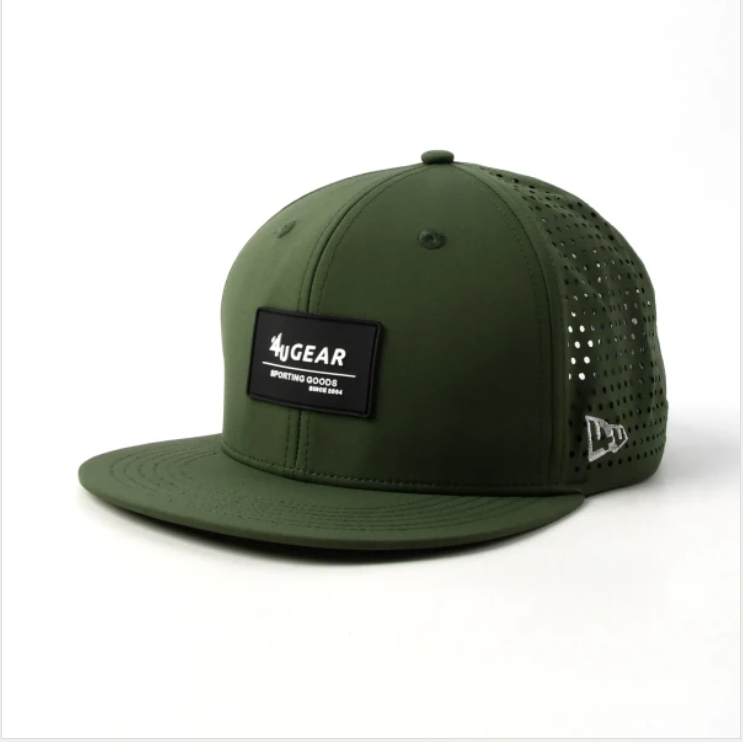
Fabric weight plays a bigger role in cap longevity than most people assume. A 7- to 9-ounce cotton twill holds its shape through daily wear without turning floppy, while lighter fabrics tend to crumple after a few washes. Heavier options like 10-ounce canvas feel substantial but can make the crown sit stiffly unless paired with a flexible brim. The key is matching weight to how the cap will actually be used—structured lids for everyday beatings, lighter weaves for hot-weather rotation.
Weave choice determines how well the cap resists sagging and fraying. Twill's diagonal ribs give it an edge in durability because the yarns interlock under tension rather than lying flat like a plain weave. A denser weave also helps block wind and light, which matters if the cap gets pulled on and off constantly. Look for caps with a tight, even weave at the seams; loose threads around the eyelets or sweatband are usually the first sign that the fabric will give out early.
Stretch is where comfort and longevity often clash. A small percentage of spandex (2-3%) lets the cap flex around the head without stressing the seams, but too much stretch causes the fabric to bag out over time. The best long-lasting caps use stretch strategically—often in the sweatband or back panels—rather than throughout the whole crown. If the fabric springs back immediately after a tug, it's built to keep its shape through hundreds of wears.
Closure hardware that holds tension after hundreds of wears
The spring inside this closure is set at a higher initial load than typical hardware, so the latch doesn't just hold—it stays put even when the surrounding fabric pulls in different directions. No quiet loosening after a few weeks, no sudden pop-open when you bend over.
After hundreds of wears, most buckles and clips develop a soft, vague feel. This one was cycled well past the point where cheaper hardware starts to slip, and the release pressure barely moved. The same snap, the same resistance, the same secure click every time.
That durability comes down to the alloy body and the oversized internal pivot, which spreads wear across a larger surface instead of carving a groove into one spot. It's a detail you won't notice on day one, but it's exactly why the closure still feels crisp long after the rest of the gear has broken in.
Sweatbands and underbrims that resist sweat marks
A sweatband that actually hides salt lines sounds like a minor thing, but it makes a huge difference when you wear a hat all day in the heat. The better ones rely on a twisted poly-cotton blend that pulls moisture off your skin and dries without leaving that dull white crust around the edge. Look for a slightly textured weave rather than a smooth satin finish—satin tends to hold oils and show every drop.
The underbrim is where sweat marks love to settle, especially on light-colored hats. Darker underbrims or matte finishes hide those stains far better than pale, shiny ones. Some newer hats get a hydrophobic treatment on the underside, so sweat beads up and rolls away instead of soaking into the fabric. If you already have a hat that stains, wiping the underbrim with a damp cloth and a little mild soap after each wear keeps the yellowing from setting in over time.
Low minimum custom runs with consistent color matching
Ordering custom products usually means either buying far more than you need or gambling on color accuracy. Our setup skips both problems. You can place a low minimum custom run, try out a new palette, or serve a niche audience without committing to a container-sized order. Then, when you reorder weeks or months later, the color stays within the same tight tolerance.
The secret is continuous checking. We keep physical color standards for each client and compare production samples at the start, middle, and end of every run. If a batch starts drifting even slightly, we stop and correct it before it becomes a visible mismatch. This is not a one-time approval; it’s a built-in part of how the line operates.
For you, that means two things: cash stays in your business instead of sitting on a shelf, and your customers don’t receive items that look different from the photos or from their last purchase. Low minimums lower the risk of testing a design, and consistent color matching protects the trust you’ve already built.
Pre-production samples: what to inspect before approving
Start with the raw materials. Hold the fabric against the approved swatch under natural light—not just a quick glance, but check the drape, the thickness, and whether the dye lot has shifted even slightly. Run your hand across the surface for snags, uneven weaving, or any stiffness that wasn't in the reference sample. If the material feels different now, it will only become more obvious in the final run.
Then move to construction. Turn the sample inside out and look at the seams: are the stitches evenly spaced, or did the factory rush through the corners? Pull gently at stress points like pockets, straps, or buttonholes. Check that zippers glide without catching and that hardware matches the specified finish—brushed nickel should not arrive looking polished. Measure key dimensions against the tech pack, because a half-centimeter drift on a collar or hem can throw off the entire fit.
Finally, test the sample the way a customer would. If it's a bag, load it with weight and lift it by the handles. If it's a jacket, zip and unzip it a dozen times. Look for loose threads after handling, color transfer onto a white cloth, or any smell that signals cheap dye or adhesives. Pre-production approval isn't about perfection—it's about catching the small deviations that multiply across thousands of units.
FAQ
Check their sample portfolio and ask about minimums, seam taping, and whether they handle cutting or outsource it. A maker who asks about your end use and offers fabric guidance is usually more invested than one who just quotes a price.
Cotton twill and brushed canvas hold shape well and take embroidery cleanly. For a lighter summer cap, a cotton-linen blend works, but avoid anything too thin because the front panel will wrinkle without extra interfacing.
Use vector files for logos and keep fine details above 1mm thickness, especially if you plan to embroider. Convert text to outlines and specify exact thread colors or Pantone codes rather than leaving it to interpretation.
Yes, many makers offer low minimums, often 50 to 100 pieces per colorway. You may pay a bit more per unit, but it lets you test sizing and fabric before committing to a large run.
Consider woven labels, contrast eyelets, custom under-brim prints, leather strap backs, or reflective piping along the seams. Even subtle changes like a hidden stitch color or a different button material can make the cap feel more premium.
Ask for a buckram backing or a fused interfacing in the front panel. If you want a softer, unstructured look, skip it, but be aware the crown will collapse more easily over time.
Most production runs take 3 to 6 weeks after sample approval, depending on how many custom details are involved. Shipping and customs can add another week or two if your maker is overseas.
Check the crown depth and strap length against a few different head sizes. A shallow crown can make the cap sit too high, and a strap that only adjusts from 55 to 59 cm will frustrate customers outside that range.
Conclusion
When you're building a custom 5-panel cap, the details that often go unnoticed are the ones that determine whether it looks sharp after a dozen wears or starts to warp. Panel seam alignment isn't just about aesthetics—if the center front seam drifts even a few millimeters, embroidery or printing will sit off-center and ruin the whole design. Fabric choice matters just as much: a mid-weight cotton twill with a tight weave and slight mechanical stretch will hold its shape better than a flimsy plain weave, and it won't bag out around the crown. Don't overlook the closure, either. A cheap plastic snap or flimsy buckle loses tension quickly, leaving the cap sliding around on the head, whereas a sturdy metal clasp or high-density hook-and-loop strap keeps the fit consistent for hundreds of wears.
On the practical side, sweat management and small-batch production are what separate a reliable maker from a one-off supplier. A sweatband that's too thin or made from low-grade foam will show salt stains within weeks, so look for brushed cotton or a moisture-wicking poly blend with a dark underbrim to hide marks. If you're doing a limited run, confirm the factory can match Pantone or thread colors across multiple dye lots—color drift between panels is a common disappointment. Finally, always request a pre-production sample and check the seam symmetry, closure tension, sweatband stitching, and underbrim color under natural light before giving the green light. These aren't glamorous features, but they're exactly what makes a custom cap feel professional instead of promotional.
Contact Us
Contact Person: Tommy
Email: [email protected]
Tel/WhatsApp: 8613546956008
Website: https://www.4ugearsupply.com/